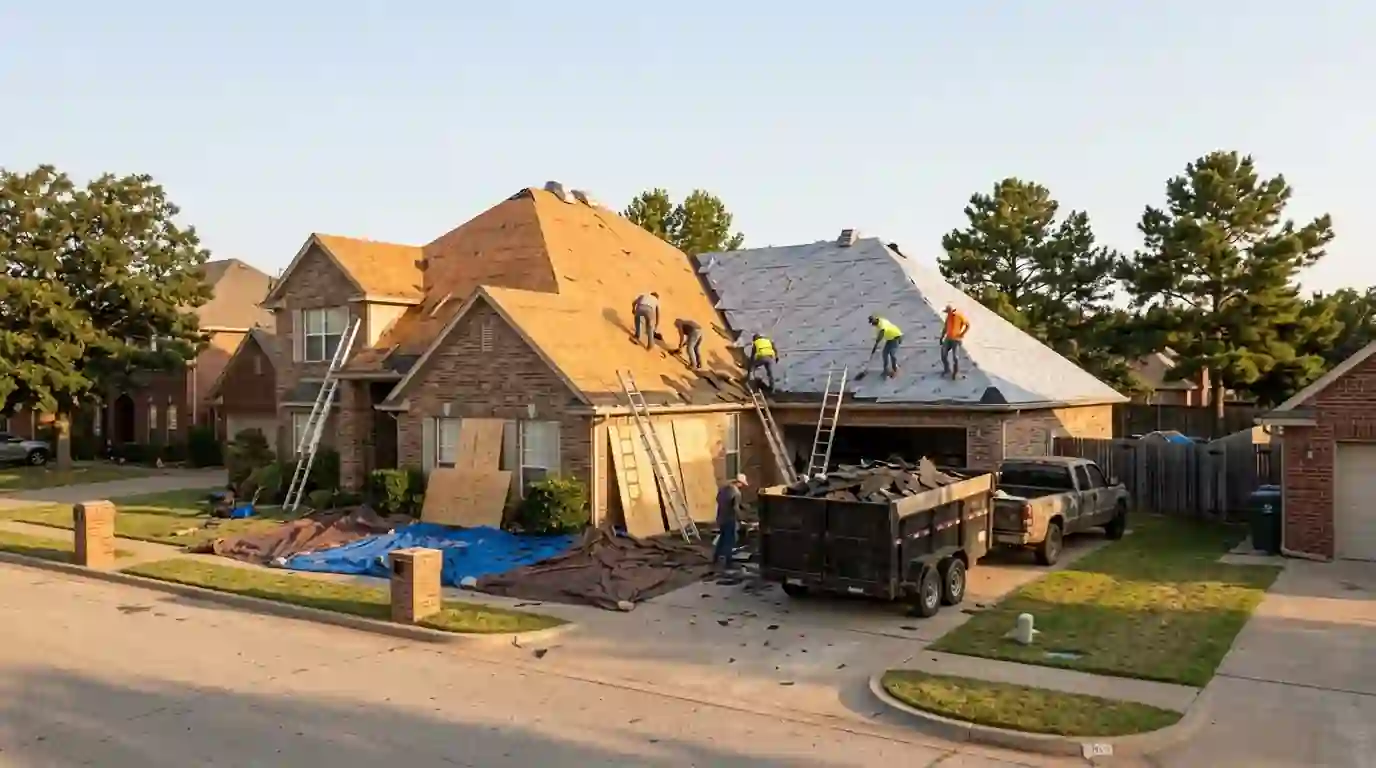
Most shingle roof replacements on an Oklahoma City house take one to two days. Materials arrive the day before. On install day the crew tears off old shingles, repairs any bad decking, lays underlayment and flashing, installs shingles and vents, then sweeps the yard for nails. Larger, steeper or multi-layer roofs and weather delays can stretch that.
A roof replacement is loud, fast and a little chaotic if you have never been through one. Knowing the order of work helps you prepare the house, keep pets and kids safe, and know what questions to ask the crew lead as the day goes on.
Here is how a typical asphalt shingle replacement runs on an Oklahoma City home, from the delivery the day before to the final magnet sweep of your lawn. Metal and low-slope roofs follow a similar arc with different materials.
The day before: delivery and prep
Shingles, underlayment, drip edge, vents and flashing usually arrive a day or two ahead, either on a pallet in the driveway or loaded straight onto the roof by a boom truck. A dump trailer or roll-off container may also be parked near the house. Expect some noise and plan for the driveway to be partly blocked.
Use the evening to prepare. Move cars out of the garage and away from the eaves, and pull patio furniture, grills and potted plants at least ten feet from the house.
- Take pictures, mirrors and shelf items off walls on the top floor, since hammering shakes the framing
- Cover belongings in the attic with old sheets to catch dust and debris
- Mark sprinkler heads, septic lids and landscape lighting so the crew can avoid them
- Plan for pets to stay inside or away from the house all day
- Unlock side gates so the crew can reach every side of the roof
Morning: setup and tear-off
Crews start early in Oklahoma, often around sunrise in summer, to beat the afternoon heat. The first job is protection: tarps over shrubs and flower beds, plywood against windows and AC units on the drip line, and a catch system or tarps along the walls to guide debris into the trailer.
Then the old roof comes off. Workers strip shingles, underlayment, old pipe boots and worn flashing down to the deck, working one section at a time so the house is never wide open if weather moves in. This is the loudest part of the day, and it goes faster than most people expect.
Inspecting and repairing the deck
With the deck bare, the crew lead walks every slope looking for soft, delaminated or rotted sheets, and for gaps in old board decking that are too wide for modern shingles. This is the first moment anyone can truly see the deck, so it is common for decking needs to change from the estimate.
Damaged sheets are cut out and replaced, and loose sheathing is renailed. A good crew shows you photos of any rot before replacing it and explains why it failed, whether from a long-term leak, poor attic ventilation or old hail damage.
Midday: drip edge, underlayment and flashing
Next comes the layer you will never see again but that matters most. Metal drip edge goes along the eaves, then ice and water shield (a self-sealing membrane) goes in valleys, around penetrations and often along the eaves. Synthetic underlayment covers the rest of the deck, overlapped and fastened in rows.
Flashing gets attention here too. Step flashing where the roof meets a wall, counter-flashing at chimneys, and new pipe boots around plumbing vents are replaced rather than reused whenever they are worn or rusted. Most leaks on a new roof trace back to flashing, so this step is worth asking about.
Skylights and chimneys slow this stage down. A skylight may get a new flashing kit, and a brick chimney often needs counter-flashing ground into the mortar joints. If your house has either, expect the crew to spend extra time there before any shingles go near it.
Afternoon: shingles, vents and ridge
Shingles go on from the eave up, starting with a starter strip and working in staggered courses to the ridge. Nails go in the manufacturer's nailing zone, and the number per shingle follows the product instructions for high-wind areas. On a hot Oklahoma afternoon, crews take care not to scuff the softening asphalt.
Near the top, the crew cuts in exhaust vents. Many homes get a continuous ridge vent paired with soffit intake, while others keep box vents or power vents. Ridge cap shingles finish the peaks and hips, sealing the last open line on the roof.
On a typical single-story ranch, shingles can be finished by late afternoon. A two-story home with several valleys, dormers or a steep pitch often runs into a second day, since crews need roof jacks and harness lines and every cut around a dormer takes time. Ask the crew lead in the morning whether they expect to finish the same day.
Weather and how a job pauses
Spring weather in Oklahoma City can turn in an hour. Crews watch radar through the day and only open as much roof as they can dry in before rain. If a storm approaches, exposed areas get underlayment and tarps, and the work picks back up when the roof dries.
High winds also stop work, since sheets of underlayment act like sails and loose shingles can blow off the roof. A delay of a day or two in storm season is normal. What matters is that the house stays watertight overnight.
Cleanup and final walkthrough
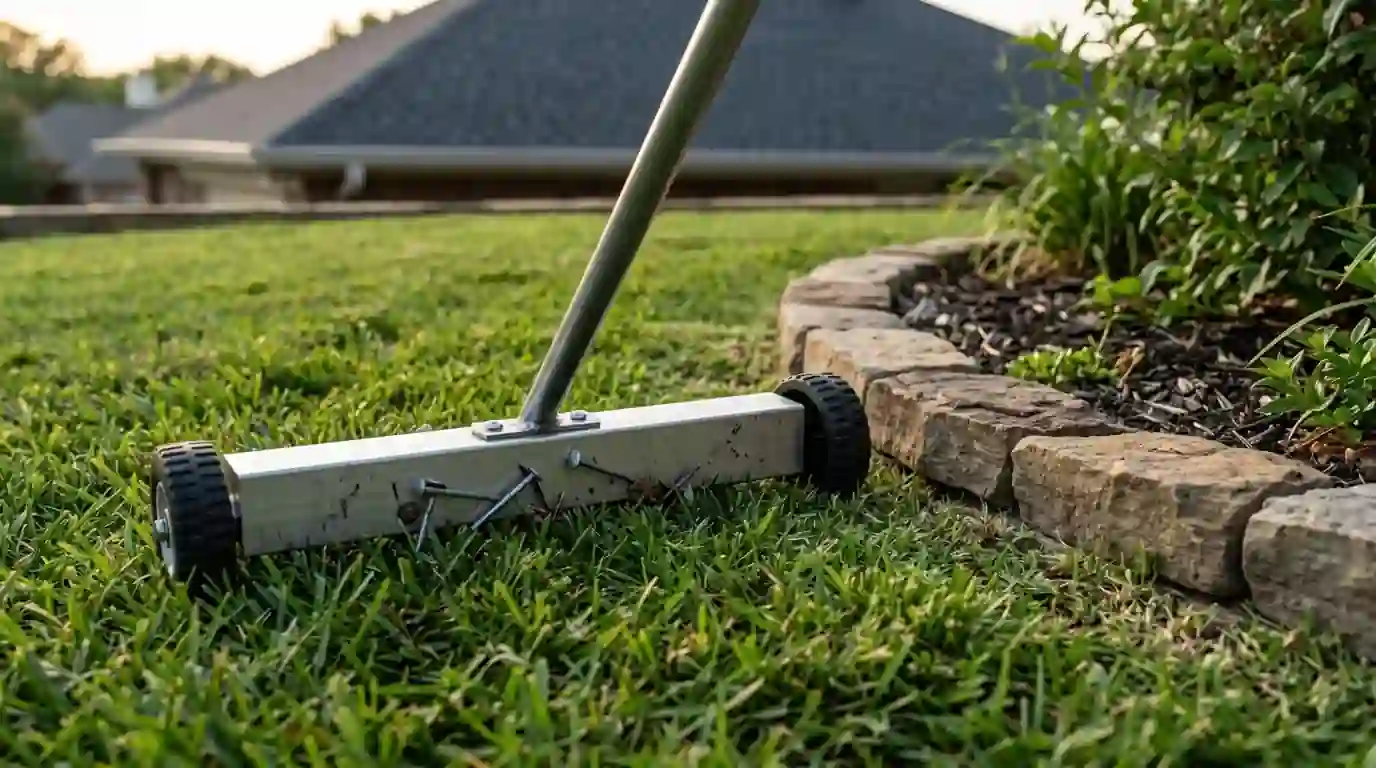
Once the last ridge cap is down, cleanup starts. Tarps come off the landscaping, debris is cleared from gutters, and the crew runs rolling magnets across the lawn, driveway, flower beds and street to pick up stray nails. A careful crew does this twice, once at the end of the day and again the next morning.
Ask the crew lead to walk the property with you. Look at the gutters, the ridge line, flashing around the chimney and the yard. Keep your photos, invoice and product details together, since you may need them for insurance or a future sale.
How Sapphire runs replacement days
Our own crew handles the tear-off, decking, flashing and shingle work, and the crew lead stays on site from setup to cleanup. We photograph the deck before covering it, so you see what is under your roof, and we explain any decking changes before we make them.
If you have questions the night before or during the job, call us. We answer 24/7, and our south Oklahoma City and Guthrie offices cover the whole metro.