Roof Leak Repair
We trace a leak back to its true entry point, often feet away from the ceiling stain, and seal the real opening for good.
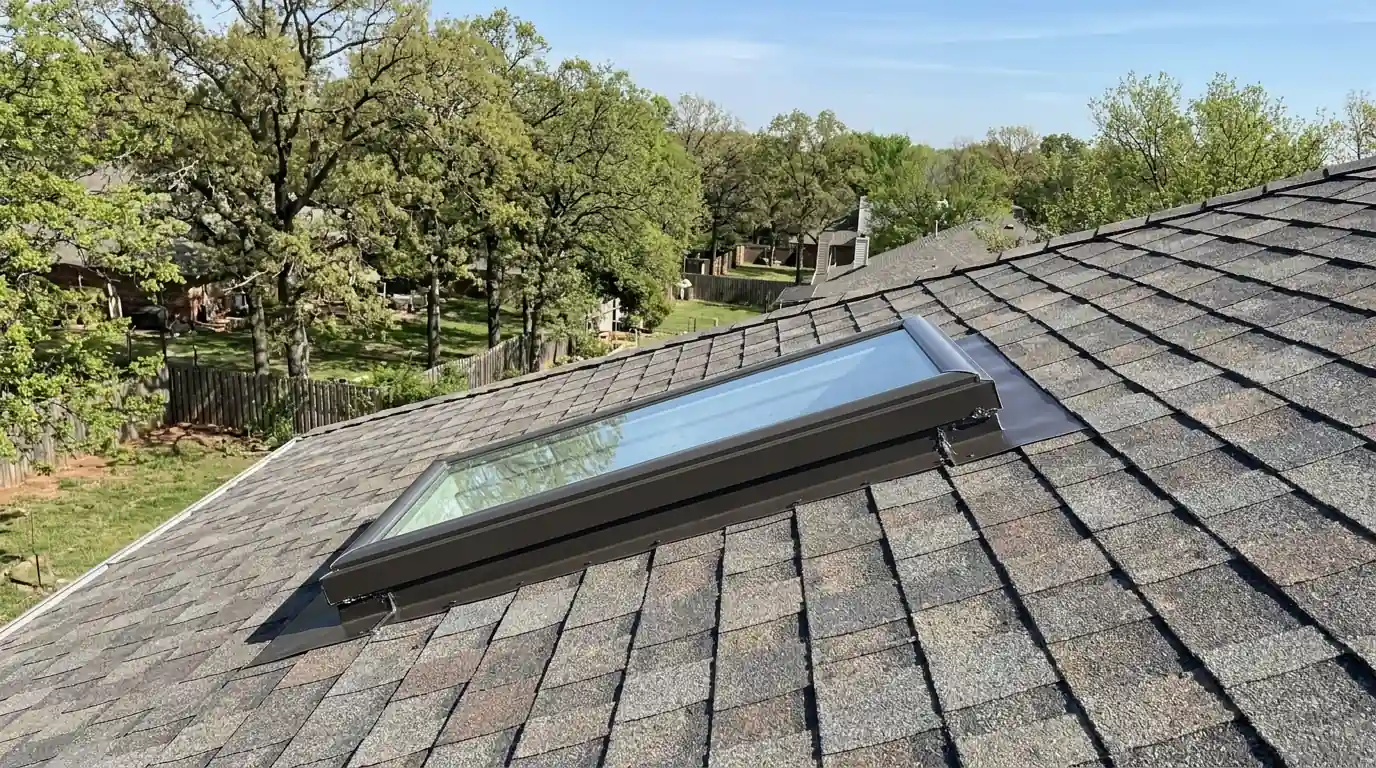
Learn moreA skylight is a hole in the roof with glass in it, and its whole job depends on the flashing around it. When a skylight leaks, homeowners often blame the glass or the seal, but most of the time water is getting in at the curb, the step flashing or the head flashing where the shingles above meet the unit.
Answered 24/7Call (405) 864-0080 and talk to Sapphire.
Skylight services cover installing new skylights, fixing leaks around existing ones, and replacing old units. Most skylight leaks in Oklahoma City come from failed flashing or old curbs, not the glass. The best time to replace an aging skylight is during a roof replacement, when new flashing can be woven into new underlayment and shingles from the start.
Sapphire installs, repairs and replaces skylights on homes across the Oklahoma City metro. We see a lot of 1980s and 1990s bubble domes and wood-curb skylights in Edmond, Quail Creek and northwest OKC that have reached the end of their life. Our crew handles the roofing side and the skylight together, so there's one team responsible for keeping it dry.
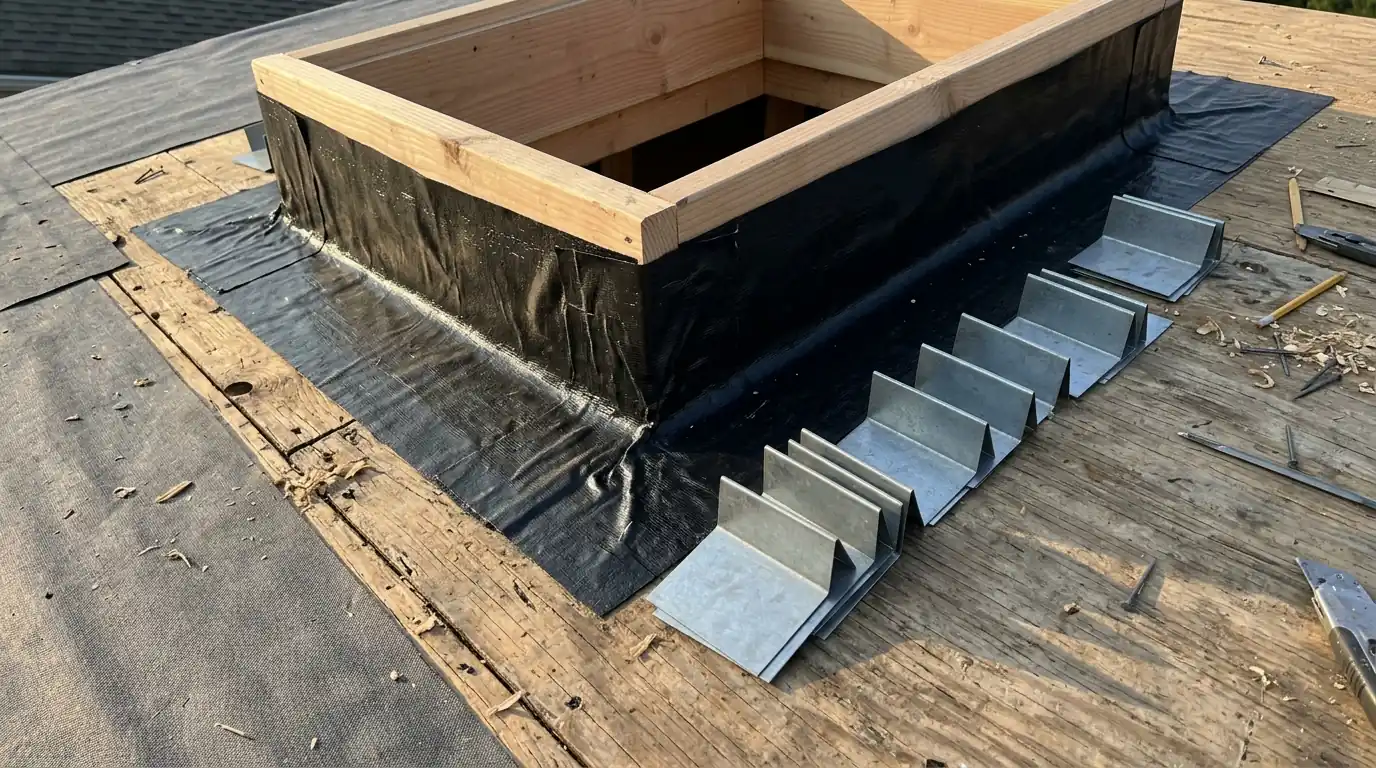
A curb-mounted skylight sits on a raised wood frame, called a curb, built on top of the roof deck. The curb is flashed into the roof like a small chimney, and the skylight sits on top. Many older skylights and most flat-roof skylights are curb-mounted, and the curb lifts the unit above standing water.
A deck-mounted skylight attaches directly to the roof deck with its own built-in frame and a matched flashing kit. It sits lower, looks cleaner on a pitched roof, and has fewer joints for water to find. On pitched shingle roofs, we usually recommend deck-mounted units with the manufacturer's flashing kit.
A flashing kit is a set of metal pieces made for one skylight size: a sill piece at the bottom, step flashing up each side, and a head piece at the top. Each piece is shaped to overlap the next so water always runs out and down. Many skylight leaks we see came from units installed with improvised flashing, caulk and roofing cement instead.
We pair every new skylight with its matched kit and add a self-adhering underlayment collar around the opening before the flashing goes on. That collar is the backup layer: if wind drives rain past the metal during a spring storm, the membrane still sheds it.
Drips at the top of a skylight shaft usually point to the head flashing or shingles above. Water running down the side walls of the shaft often comes from the step flashing. Moisture only on the glass on cold mornings may be condensation, not a roof leak, especially over bathrooms and kitchens with high humidity.
We inspect from the roof and from inside, sometimes with a controlled water test, to find the real entry point. Small leaks from a lifted shingle or a cracked sealant bead can often be fixed. Leaks from rotted curbs, corroded flashing or cracked domes usually mean replacing the unit.
Older skylights in the metro are often acrylic bubble domes. Years of Oklahoma sun make acrylic brittle and cloudy, and a hailstorm can crack or punch through them. A cracked dome lets water straight into the shaft, and even small crazing cracks spread with heat cycles.
Modern skylights use tempered or laminated glass that stands up to hail much better. Laminated glass on the inner pane holds together if it does break. When a hail claim includes the roof, damaged skylights are usually documented on the same inspection with photos of the cracks and dents.
If your skylight is more than 15 or 20 years old and you're getting a new roof, replacing it at the same time is almost always the right call. The shingles around it are coming off anyway, so new flashing and underlayment can go in correctly without tearing up a fresh roof later.
An old skylight left in a new roof often becomes the first leak in that roof. Its flashing has been bent and resealed, its seals are aging, and the new shingles have to be worked around old metal. Swapping it during tear-off costs far less than coming back later.
Adding a skylight means cutting the roof deck, framing a header between rafters, and building a shaft through the attic to the ceiling. We check rafter layout, wiring and ductwork before cutting, and we place the unit to avoid valleys and areas where debris collects.
For hallways, closets and small bathrooms, a tubular skylight or sun tunnel is often a better fit. It uses a small dome on the roof and a reflective tube to carry light down, with far less framing and a smaller roof penetration. In Oklahoma summers, we also think about heat gain and suggest low-E glass or shades on south and west faces.
Brown stains or peeling paint on the skylight walls or ceiling around it point to a flashing leak.
Yellowed, crazed or cracked acrylic domes are brittle and often fail in the next hailstorm.
Leaks only during storms from one direction usually mean side or head flashing is letting water in.
Soft, dark wood at the base of a curb-mounted skylight means water has been getting under the flashing.
Moisture trapped between glass layers means the insulated seal has failed.
If you're planning a reroof and your skylight is decades old, it's time to replace it.
The same people who look at your roof are the ones who do the work, and they explain each step before it happens.
Call (405) 864-0080We check the glass, curb, flashing and shingles on the roof, and the shaft and ceiling inside.
We explain whether the leak can be fixed or whether a new deck-mounted or curb unit makes more sense.
Old flashing and shingles come off, damaged decking or framing is replaced, and an underlayment collar is applied.
The skylight is set, leveled and fastened, and the matched flashing kit is woven into the shingles.
We repair interior drywall if needed, water test the skylight and clean up inside and out.
Every roof is priced after we have seen it. These are the things that move the number up or down.
Call any hour. Our own crew inspects, photographs and explains the fix before any work starts.
Wind-driven rain can push water sideways under step flashing or past the head flashing that holds up fine in a gentle rain. That pattern points to a flashing issue rather than the glass. A roof inspection and water test usually find it.
If it's more than 15 to 20 years old, usually yes. The surrounding shingles are already off, so a new unit with a matched flashing kit can be installed cleanly. Leaving an old skylight in a new roof often leads to the roof's first leak.
On most pitched shingle roofs, deck-mounted units with factory flashing kits have fewer leak points and a lower profile. Curb-mounted units still make sense on low-slope roofs and when replacing a unit on a sound existing curb.
Older acrylic domes, especially sun-aged ones, can crack or break in hail. Modern skylights with tempered outer glass and laminated inner glass hold up much better, and laminated glass stays in place if it cracks.
If it appears on cold mornings and the glass is wet but the shaft walls are dry, it's likely condensation from indoor humidity. Stains on the shaft walls or ceiling, or drips during rain, point to a real leak.
We trace a leak back to its true entry point, often feet away from the ceiling stain, and seal the real opening for good.
Learn moreRepair and replacement of step, counter, chimney, wall, valley and pipe boot flashing, the joints where most roof leaks begin.
Learn moreFull tear-off roof replacement in Oklahoma City, from decking checks and underlayment to a magnet sweep of your yard.
Learn moreAir sealing first, then blown-in or batt attic insulation with baffles, so OKC homes stay cooler in summer and warmer in winter.
Learn moreOklahoma City and the surrounding metro, including:
Canadian CountyLansbrook, Oklahoma CityCrown Heights, Oklahoma CityGatewood, Oklahoma CityWestmoore, Oklahoma CityYukonChoctawThe VillageAll service areas