Roof Flashing Repair
Steep Tudor gables, dormers and old masonry chimneys mean flashing is the leading leak source we find in Edgemere Park homes.
Learn moreSapphire Roofing repairs and replaces roofs across Edgemere Park, the historic district between Walker and Robinson from NW 30th to NW 36th. Most homes here date from the 1920s and 1930s, so we focus on steep Tudor roof lines, old flashing, chimneys and decking, and we plan any visible change around the district's preservation review. We answer 24/7.
Answered 24/7Our own crews work in Edgemere Park.
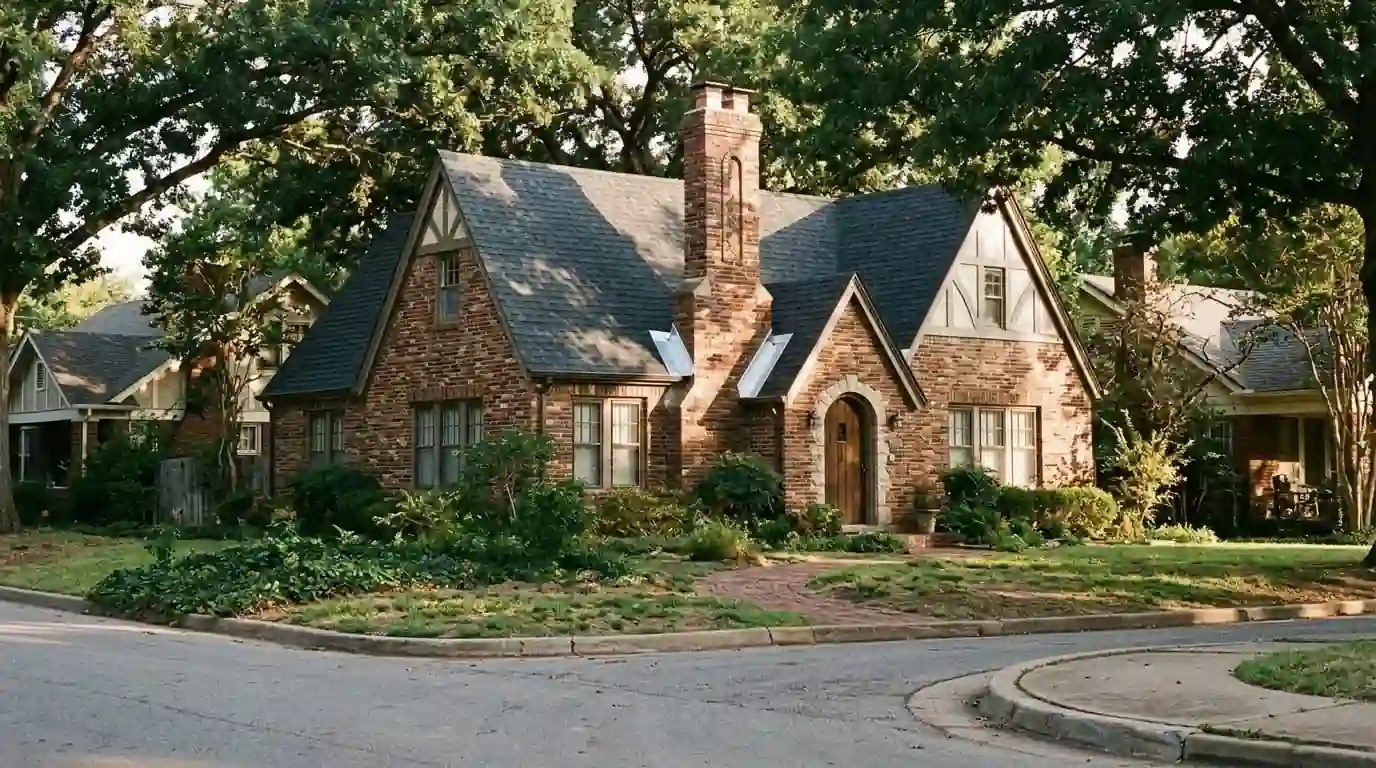
Edgemere Park is one of the most recognizable historic neighborhoods in Oklahoma City. Its streets curve around the park at its center, and most of its houses went up in the 1920s and 1930s, with Tudor Revival the dominant look and Colonial Revival, Spanish Eclectic and Art Moderne homes mixed in.
Those houses have steep gables, multiple valleys, tall masonry chimneys and decks that are now close to a century old. A roof problem here is rarely just a few shingles. Our crews come up from our south Oklahoma City office ready to deal with the whole assembly: flashing, wood decking, ventilation and gutters, done in a way that respects the district.
The neighborhood was laid out starting in 1926, and the district is listed on the National Register of Historic Places, roughly bounded by Robinson, Walker, NW 30th and NW 36th. Its period of significance runs from the early 1900s through the 1940s, which matches what we find in the attics: plank or board decking, older rafters, and framing that has been patched more than once.
Tudor Revival roofs are the hardest-working roofs in the area. Steep front gables, eyebrow details and cross gables create valleys that collect leaves and water. Where an asphalt roof has been laid over the original surface, we often find two layers, and the added weight and trapped heat shorten the life of the top layer.
Edgemere Park is a city historic preservation district, so changes you can see from the street can require review by the city's preservation staff before work starts. Swapping roof material, changing a roof line, adding skylights on a street-facing slope or removing a chimney are the kinds of changes that tend to need approval.
We photograph the existing roof, note materials and colors, and give you a written scope you can use when you talk with the city. For like-for-like shingle replacement the path is usually simpler, but we always tell homeowners to confirm with the preservation office first rather than assume.
Mature elms, oaks and pecans shade much of Edgemere Park. The October 2020 ice storm broke limbs all over central Oklahoma City, and many roofs here took point damage that was patched in a hurry and never fully repaired. We still find cracked decking under those patches when we open a roof.
Shade also keeps north slopes damp, which feeds moss and algae streaks on shingles and rot along the eaves. Masonry chimneys from the 1920s often have worn mortar, loose crowns and step flashing that was tarred over instead of replaced, and those are some of the most common leak sources we trace in this neighborhood.
Central Oklahoma City sits in the same spring hail corridor as the rest of the metro, and steep historic roofs take hits on every face. After a storm we look for bruised shingles, cracked ridge caps, dented gutters and downspouts, and damage to copper or metal details that a homeowner can't see from the yard.
Because many homes here carry higher dwelling values, a percentage wind and hail deductible can be a large number. We document the damage with dated photos so you can read your policy and decide whether a claim makes sense before anything is filed.
Our main office on S Santa Fe Ave in south Oklahoma City is roughly a 20-minute drive up I-35 and I-235 to NW 36th Street in normal traffic. That puts Edgemere Park well within our regular service area for inspections, tarping and full replacements.
When a storm hits overnight, call us any hour. We can get a crew out to cover an open roof or a limb strike and come back in daylight to inspect and write up the repair.
Steep Tudor gables, dormers and old masonry chimneys mean flashing is the leading leak source we find in Edgemere Park homes.
Learn moreMany 1920s and 1930s chimneys here have worn crowns, loose brick and tarred-over flashing that let water into the attic and walls.
Learn moreNear-century-old plank decking often has rot or old limb damage that only shows once shingles come off.
Learn moreLarge mature trees over most lots mean broken limbs on roofs after ice and wind storms.
Learn moreOlder layered roofs on these homes often need a full tear-off planned around the district's preservation review.
Learn moreCall Sapphire. Our own roofers inspect, photograph and fix the problem, and we explain it first.
Edgemere Park is a local historic preservation district, so visible exterior changes can need review before work begins. Like-for-like shingle replacement is usually simpler than changing material or roof lines, but confirm with the city's preservation office first. We give you photos and a written scope to bring to that conversation.
The chimneys are mostly original masonry, and over decades the mortar wears, crowns crack and step flashing gets covered with tar instead of being replaced. Water then runs behind the flashing and into the attic. A proper fix pulls the old flashing, repoints where needed and installs new step and counter flashing.
Yes. We match shingle color and profile to the house style, keep original roof lines and rebuild details like ridges and eave returns the way they were. If you want a different material, we talk through what the district is likely to allow before you commit.
We answer 24/7 and dispatch from our south Oklahoma City office, about 20 minutes away in normal traffic. For an open roof or a limb strike we tarp first, then inspect and document the damage in daylight.