Roof Leak Repair
We trace a leak back to its true entry point, often feet away from the ceiling stain, and seal the real opening for good.
Learn moreShingles handle the open field of a roof well. The weak points are the places where something interrupts that field: a brick chimney, a second-story wall, a dormer, a plumbing vent, a valley where two slopes meet. Flashing is what keeps water out at those joints, and it's behind a large share of the leaks we trace.
Answered 24/7Call (405) 864-0080 and talk to Sapphire.
Flashing is the metal or rubber that seals the joints where a roof meets a wall, chimney, vent or another slope. When it rusts, pulls loose or was installed wrong, water gets behind it. Sapphire replaces failed step, counter, chimney, valley and pipe flashing with new material lapped correctly, rather than covering problems with caulk.
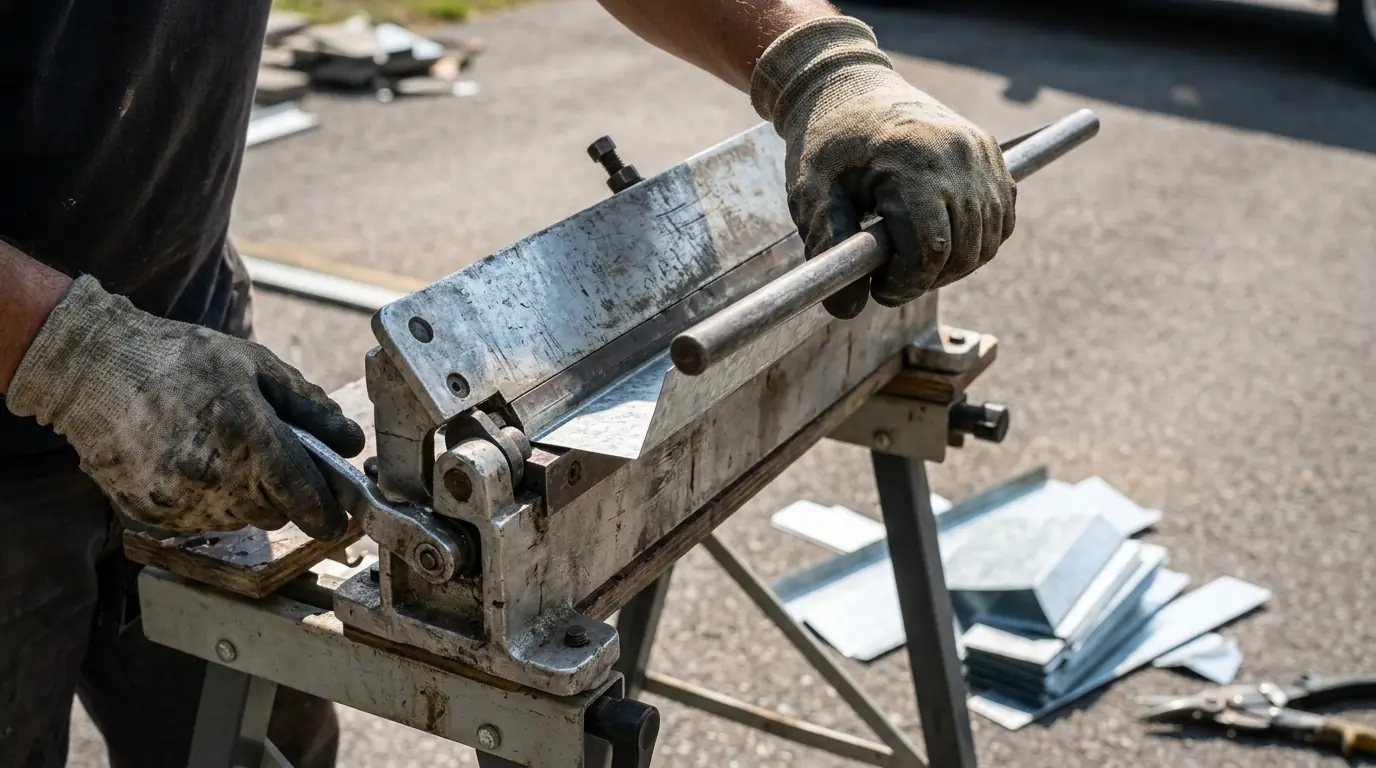
Sapphire's crews repair and replace flashing across the Oklahoma City area. We cut and bend new metal on site to fit your roof, lap it so water always flows over and away, and show you photos of every joint before we close it up.
Most houses have several kinds of flashing, and each fails in its own way. Knowing which one is leaking tells us how much of the surrounding roof has to be opened to fix it correctly.
On a typical Oklahoma City home, the list looks like this, and a single roof can have every one of them.
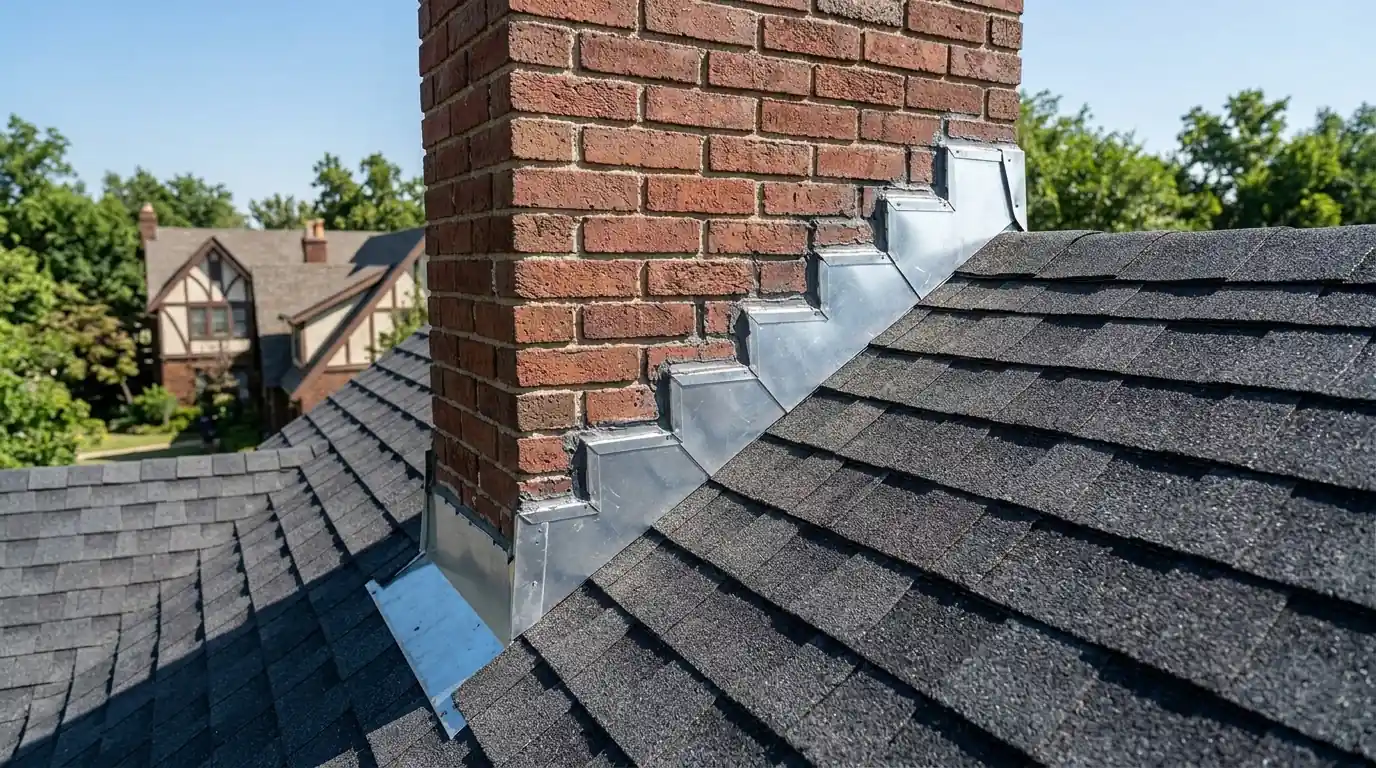
Where a roof slope runs alongside a wall, each shingle course should get its own piece of step flashing, overlapping the piece below like the shingles themselves. Counter flashing or siding then laps over the top so water can't get behind the step pieces.
We often find one long piece of bent metal in place of individual steps, or steps missing entirely and the joint sealed with caulk. Those hold for a while, then let water run behind the siding and down inside the wall. Replacing them means removing the siding trim along the joint and rebuilding the steps course by course.
Brick chimneys are a frequent leak source in the older central neighborhoods, where many homes still have their original chimneys. Mortar joints erode, counter flashing that was set into those joints pulls out, and the gap behind it fills with water every storm.
A proper repair cuts a fresh reglet into the mortar, sets new counter flashing into it and seals it, with new step flashing up the sides and an apron at the front. Chimneys wider than about thirty inches should have a cricket on the uphill side to split water around them. If the brick itself is failing, that's a job for our chimney repair crew first.
Valleys carry more water than any other part of the roof, and leaves and red clay dust tend to collect in them. Open metal valleys can rust through, and closed-cut shingle valleys can fail if the underlayment beneath them wasn't installed correctly. We rebuild valleys with new underlayment and metal or properly woven shingles.
Pipe boots are rubber collars around plumbing vents, and Oklahoma sun dries them out until they crack. A cracked boot drips water down the outside of the pipe into the attic. We replace boots with new ones and work the shingles around them so the base laps correctly.
Roof cement and caulk have a place: sealing a fastener head, bedding a counter flashing into a reglet, touching up a small gap. They aren't a substitute for metal lapped correctly. Sealant shrinks and cracks under heat and cold, and a big smear of it usually means someone was covering a flashing problem instead of fixing it.
When we find layers of old caulk, we remove them to see what's underneath. More often than not there's a missing step piece, a reversed lap or rusted metal. Fixing that is what actually stops the leak.
We use galvanized steel or aluminum for most residential flashing, chosen to suit the roof and the materials it touches. Aluminum shouldn't sit directly against fresh mortar or treated lumber without a barrier, and dissimilar metals in contact can corrode each other, so we pay attention to what's next to what.
Painted or pre-finished metal can be matched to brick, siding or trim colors where the flashing is visible. Well-installed metal flashing should last the life of the shingles around it, which is why replacing it during a reroof is usually smart.
Water marks on the ceiling beside a fireplace usually mean the chimney flashing has failed.
Damp spots where a lower roof meets an upper wall often trace back to step flashing.
Orange streaks or pinholes in valley or chimney metal mean it's thinning out.
Heavy sealant around a chimney or wall usually hides a flashing problem.
Metal that's separated from the brick leaves the top of the joint wide open.
A split rubber collar lets rain run straight down the vent pipe.
The same people who look at your roof are the ones who do the work, and they explain each step before it happens.
Call (405) 864-0080We check the attic and roof to confirm which flashing is letting water in.
Shingles, siding trim or old sealant are removed to expose the full flashing detail.
We cut and bend new flashing on site to fit your wall, chimney or valley.
Each piece overlaps so water runs over it, then shingles and trim go back in place.
You get photos of the flashing before it's covered so you know what's under there.
Every roof is priced after we have seen it. These are the things that move the number up or down.
Call any hour. Our own crew inspects, photographs and explains the fix before any work starts.
Leaks near chimneys, walls, skylights and vents point to flashing, while leaks in the middle of a slope point to shingles. Rust, separated metal and heavy caulk at a joint are visible clues. An attic inspection confirms it.
Yes. We remove the shingles around the chimney, install new step, apron and counter flashing, and weave new shingles back in. The rest of the roof stays as it is.
A cricket is a small peaked structure behind a chimney that splits water around it. Chimneys wider than about thirty inches across the uphill side should have one to keep water from pooling against the brick.
Strong sun and heat dry rubber out, and boots on south and west slopes often crack well before the shingles around them wear out. Check them from the ground every year or two.
In most cases, yes. Reusing old flashing under new shingles risks leaks from rusted or bent metal, and replacing it is much easier while the roof is already open.
We trace a leak back to its true entry point, often feet away from the ceiling stain, and seal the real opening for good.
Learn moreChimney masonry and roof tie-in repair: crowns, spalling brick, mortar joints, caps, crickets and flashing.
Learn moreSkylight installation, leak repair and replacement, with curb or deck-mounted units and proper flashing kits.
Learn moreTargeted fixes for missing shingles, worn flashing, cracked pipe boots and small leaks, done by Sapphire's own crews across OKC.
Learn moreOklahoma City and the surrounding metro, including:
Del CityPiedmontShawneeMcClain CountyLake Hefner, Oklahoma CityHeritage Hills, Oklahoma CitySouthern Hills, Oklahoma CityNormanAll service areas