Metal Roofing
Metal roofing for Oklahoma City homes and outbuildings, from exposed-fastener panels to concealed-fastener systems.
Learn moreSome homeowners want the strength of steel but not the look of a metal roof. Stone-coated steel fills that gap. From the street it reads as tile, shake or dimensional shingles, but each panel is a sheet of steel underneath.
Answered 24/7Call (405) 864-0080 and talk to Sapphire.
Stone-coated steel roofing is made from steel panels coated in stone granules fixed to the metal, pressed into shapes that look like shingles, wood shake or clay tile. It weighs far less than tile, stands up well to Oklahoma City wind, and the textured granules hide minor hail marks better than smooth painted metal.
Sapphire installs stone-coated steel roofs on homes around the Oklahoma City metro, including houses in Edmond, Yukon and the Village where homeowners want a tile or shake look without the weight. Here is how the product is made, the profiles available, how it is fastened, and what to expect when hail hits.
Stone-coated steel starts as a sheet of steel with a metallic coating that helps resist corrosion. A layer of acrylic resin goes on top, followed by crushed stone granules, and then a clear overglaze that locks the granules in place.
The granules do several jobs. They give the panel color and a matte texture that does not glare in the sun, they soften the sound of rain, and they break up the surface so small dents are much harder to spot. The color comes from the stone itself, so it holds up well under Oklahoma sun.
Stone-coated panels are pressed into different shapes. Barrel and Spanish tile profiles copy the rounded look of clay tile. Shake profiles copy split wood shakes with deep shadow lines. Other profiles imitate architectural shingles or flat slate.
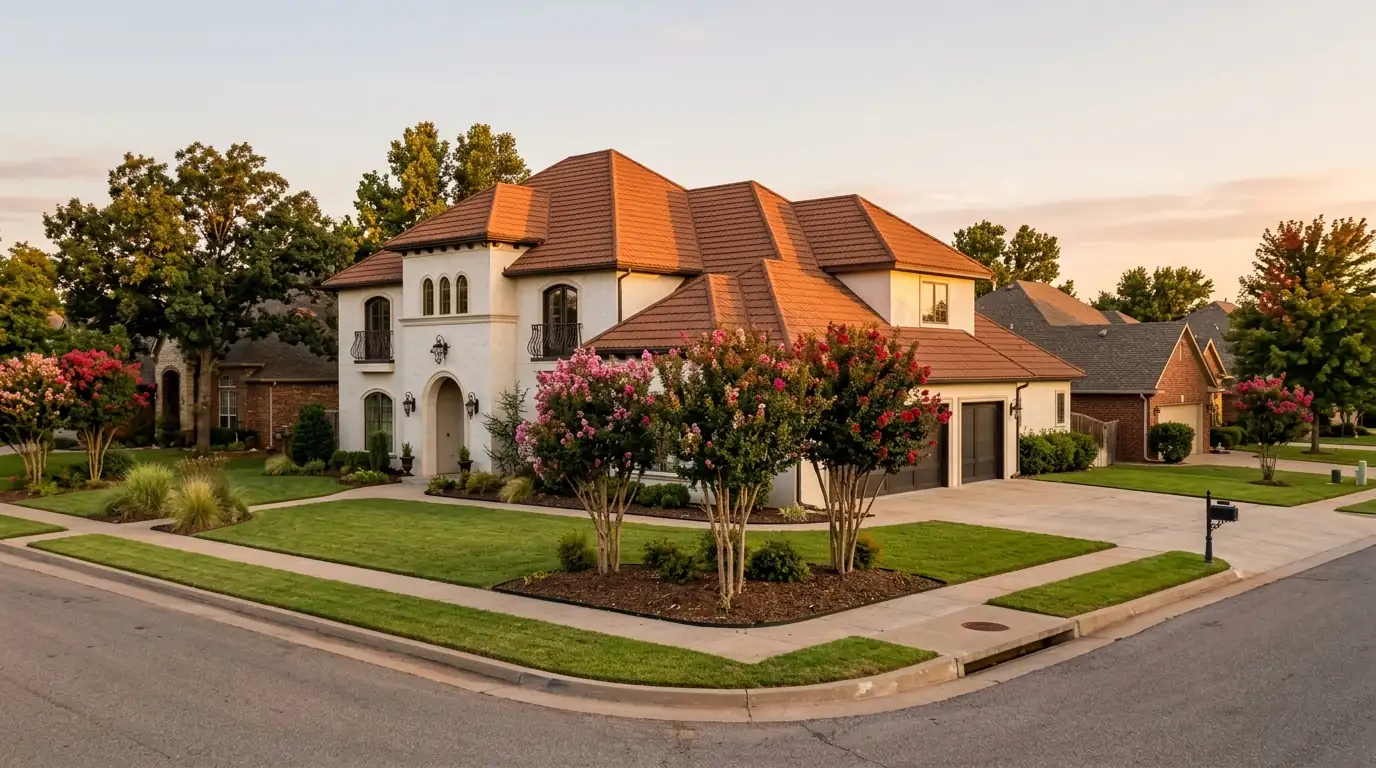
That range makes stone-coated steel useful on homes where the original roof style matters, such as a Mediterranean-style house that once had tile or a Tudor that once had shake. You get the outline and color without the brittleness of clay or the fire risk of wood.
Many stone-coated steel roofs are installed on battens, which are strips of wood or metal fastened across the roof deck. Panels hook over and fasten to the battens, which creates an air gap between the panel and the deck.
That gap lets heat escape before it reaches the attic and gives any water that gets past the panel a path to drain. Some profiles can also be installed directly to the deck. Which method we use depends on the profile, the manufacturer's instructions, and your roof's pitch and ventilation.
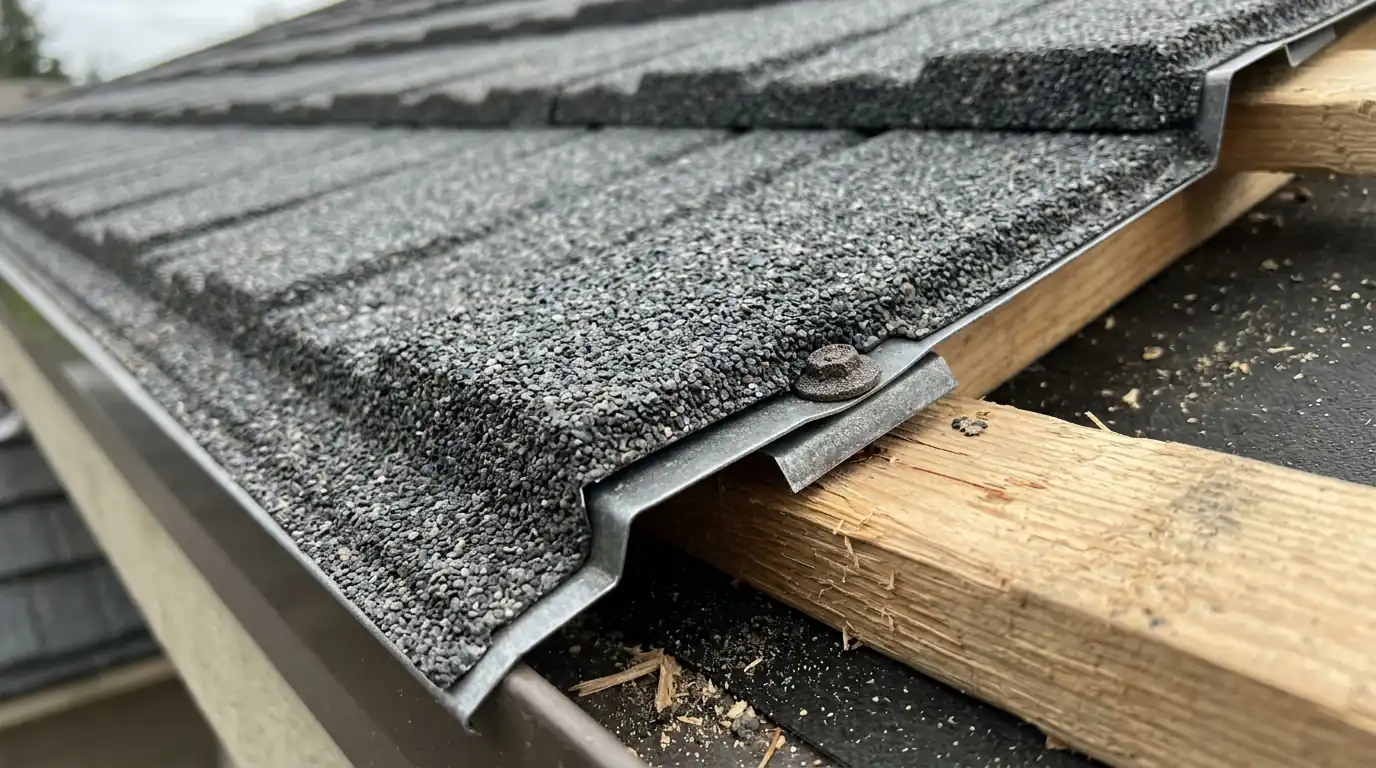
Steel does not crack or shatter the way clay tile can. Many stone-coated products carry a UL 2218 Class 4 impact rating, though you should confirm the rating for the specific product you choose.
Very large hail can still dent the steel or knock granules loose in spots. Because of the textured surface and the shaped profile, minor dents are often hard to see from the ground. Like any metal roof, a dent is not the same as a leak, and we check seams, laps and flashings after a storm rather than counting marks.
Stone-coated steel is far lighter than clay or concrete tile. That matters on older homes built for asphalt shingles, where adding heavy tile would require an engineering review and possibly new framing. Steel panels can usually go on without reinforcing the roof structure.
The interlocking panels and fasteners also resist wind uplift well. On homes in open areas toward El Reno and Piedmont, where wind sweeps across flat terrain, that interlocking design is a big part of the appeal.
Stone-coated steel needs less upkeep than most roofs. Keep valleys and gutters clear, trim back overhanging branches, and look for loose granules collecting at the downspouts, which is normal in small amounts on a new roof.
If a panel is damaged by a falling limb, it can often be lifted and replaced individually. Walking on these roofs takes care, since stepping in the wrong spot can bend a profile. Our crews know where to step, and we ask that other trades, like satellite or solar installers, check with us first.
Because the panels have a raised profile, flashing has to follow their shape. Where a roof meets a brick wall or chimney, we use pre-formed or hand-formed flashing that sits under the panel lap and turns up the wall, then cover it with counterflashing so water cannot run behind it.
Valleys get a wide metal valley pan, and pipe vents get flexible lead or aluminum boots that can be dressed down over the panel texture. On many Oklahoma City homes the chimney and plumbing vents were flashed for flat shingles, so they need new pieces made for the steel profile rather than reused parts.
Stone-coated steel gives a tile or shake outline without adding heavy load to older framing.
If your tile roof keeps breaking in hail, steel may be a lighter, tougher alternative.
Shake roofs dry out and split, and stone-coated steel can recreate the look with steel.
Homes that need roof work after every major storm may benefit from a steel product with a high impact rating.
Interlocking steel panels hold up well where wind has nothing to slow it down.
Some subdivisions require a certain style, and stone-coated steel can meet it in many cases.
The same people who look at your roof are the ones who do the work, and they explain each step before it happens.
Call (405) 864-0080We check the existing roof, decking and attic, and confirm the structure and pitch for the product.
We show you tile, shake and shingle profiles and help you match the style of your home and any HOA rules.
Old roofing comes off, decking is repaired, and underlayment and battens go down where the system calls for them.
Panels are hooked, fastened and lapped, followed by matching hip, ridge and rake trim.
We check every edge and flashing, touch up cut edges per the manufacturer, and sweep the property.
Every roof is priced after we have seen it. These are the things that move the number up or down.
Call any hour. Our own crew inspects, photographs and explains the fix before any work starts.
Not usually. The granular coating and pressed profile make it read as tile, shake or shingles, and the matte finish does not have the shine of painted metal.
The granule layer and the deck underneath dampen sound, and on a batten system the air gap helps too. Most homeowners say it sounds similar to a shingle roof.
A small amount of loose granules is normal on a new roof. The granules are set in resin and sealed with a clear coat, so heavy ongoing loss is not typical and should be checked.
Usually, yes. It weighs much less than clay or concrete tile, so it puts less load on the framing. We still inspect the structure before quoting.
A damaged panel can often be lifted out and replaced on its own. Minor dents that do not affect the laps or seal are often left in place, since they are hard to see and do not cause leaks.
Metal roofing for Oklahoma City homes and outbuildings, from exposed-fastener panels to concealed-fastener systems.
Learn moreClay and concrete tile roof repair and installation in Oklahoma City, from cracked tile swaps to new underlayment.
Learn moreUL 2218 Class 4 impact-resistant shingles for Oklahoma City hail country, explained honestly and installed by our own crew.
Learn moreFull tear-off roof replacement in Oklahoma City, from decking checks and underlayment to a magnet sweep of your yard.
Learn moreOklahoma City and the surrounding metro, including:
Putnam Heights, Oklahoma CityEarlywine, Oklahoma CityMidwest CityGuthrieNichols HillsCleveland CountyGaillardia, Oklahoma CityBelle Isle, Oklahoma CityAll service areas