Roof Ventilation
Balanced intake and exhaust for OKC attics: ridge vents, soffit vents and fans set up to cut summer heat and winter moisture.
Learn moreClimb into a lot of attics around the metro and you will find the same picture: a thin, uneven layer of insulation, low spots where someone walked through, bare patches around the hatch and old batts pushed against the eaves. On a hot afternoon, that attic radiates heat straight down through the ceiling drywall.
Answered 24/7Call (405) 864-0080 and talk to Sapphire.
Attic insulation slows heat moving between your living space and the attic. In Oklahoma City, the right sequence is air sealing first, then baffles at the eaves, then an even layer of blown-in or batt insulation to the depth your house needs. Done in that order, it cuts summer heat gain and winter heat loss without blocking roof ventilation.
Sapphire handles attic insulation as part of our roofing and storm work because the attic and the roof are one system. Our own crews air seal, install baffles and add insulation, and we check the roof's ventilation at the same time so the two work together. We serve homes across Oklahoma City and the surrounding counties from offices in south OKC and Guthrie.
Heat flows from warm to cold, and in an Oklahoma summer the attic is the hottest space attached to your house. The ceiling below it is a large, flat surface with nothing but drywall between your bedrooms and that heat. Insulation slows the transfer.
In winter the flow reverses. Heat from the living space rises through the ceiling into the attic and out through the roof. Hard freezes here can arrive fast after mild weeks, and a thin attic layer lets furnace heat escape just when you need it most.
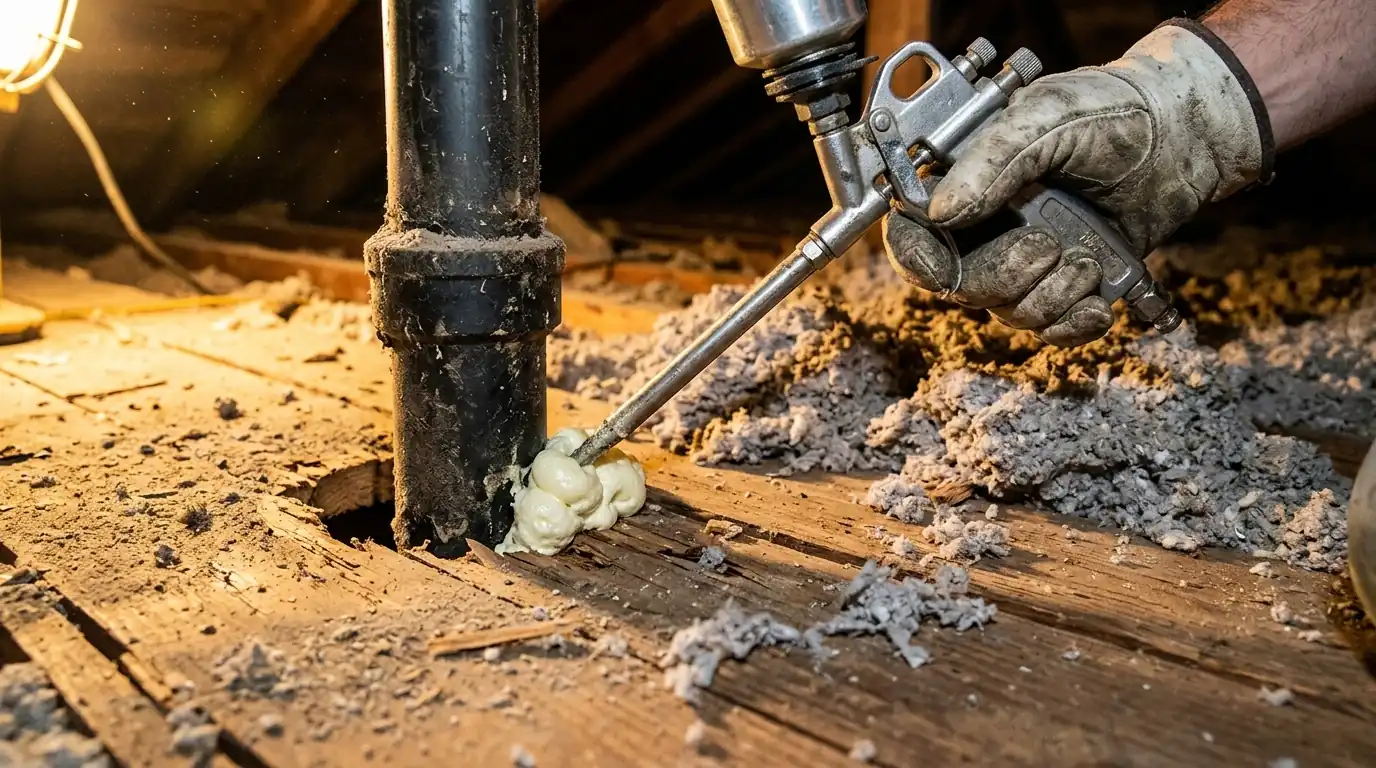
Insulation slows heat moving through materials, but it does very little to stop air moving through gaps. Most attic floors are full of holes: around recessed lights, plumbing stacks, wiring runs, the attic hatch, duct boots and the tops of interior walls.
Warm, moist household air rides up through those gaps in winter, which is one of the main causes of condensation on attic decking. Conditioned air escapes the same way in summer. We seal these openings with foam, caulk and fire-rated materials where required before adding a single inch of new insulation.
Blown-in insulation, either fiberglass or cellulose, is the most common choice for topping up an existing attic. It fills around joists, wiring and irregular framing and settles into an even blanket. It is also the fastest way to add depth over an old layer.
Batts, the pre-cut rolls, work well in open, regular framing and where future access matters, such as over a ceiling with mechanical equipment nearby. Their weakness is gaps: a batt cut short or compressed around a wire leaves a channel for heat. In most retrofit attics we recommend blown-in over the existing layer, with batts used in specific spots.
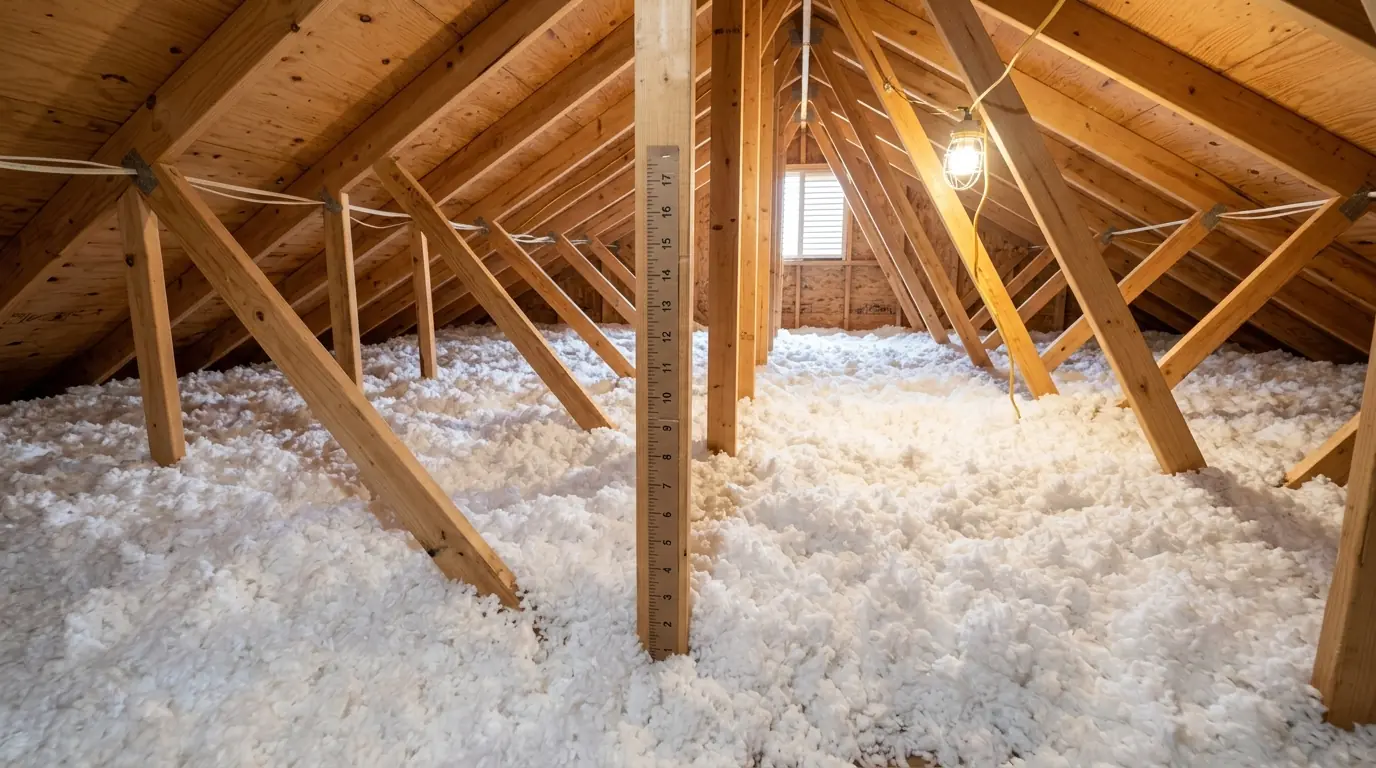
R-value is a measure of how well a material resists heat flow. A higher number means more resistance. For loose-fill insulation, the R-value depends mostly on depth, so an attic with only a few inches of old material has much less resistance than one with a deep, even layer.
Recommended levels vary by climate zone, and energy guidance for central Oklahoma generally calls for far more than many older attics have. We measure what is there, explain the target depth for your attic and mark rulers on the joists so you can see the finished depth for yourself.
Insulation keeps heat in the right place, and ventilation flushes heat and moisture out of the attic. If insulation is blown right into the eaves, it blocks the soffit vents and chokes off intake. The attic then runs hot in summer and damp in winter even with plenty of insulation on the floor.
That is why baffles matter. These rigid channels fit between rafters at the eaves and hold insulation back so air can move from the soffit up along the underside of the deck. We install baffles in every rafter bay that has soffit intake before we blow any material.
We do not cover up problems. Insulation that is wet from a roof leak, matted with rodent droppings or scorched near a flue gets flagged and, where needed, removed before new material goes in. Wet insulation loses most of its value and can hold moisture against the drywall below.
Some older homes in neighborhoods like Putnam Heights and Capitol Hill still have vermiculite insulation, a gray-brown pebbly material. Some vermiculite contains asbestos, so we do not disturb it. If we see it, we stop and recommend testing by a qualified lab before any work continues.
Many homeowners call us about insulation after a reroof or a storm repair, when they notice how hot the attic is or how thin the old layer looks. Doing the insulation right after roof work means the ventilation is fresh and we already know the attic well.
It also works the other way. If we are in the attic for insulation and see stained decking, daylight at a nail line or a cracked rafter, we photograph it and explain what it means for the roof. One visit can cover both sides of the deck.
If the tops of the ceiling joists are visible, the insulation layer is too thin to do much.
Ceilings that feel warm to the touch on summer afternoons point to heat pouring through the attic floor.
Low spots, footpaths and compressed areas leave weak points where heat moves freely.
Air you can feel around recessed lights or the attic hatch means air sealing is needed first.
Damp or discolored insulation under a past leak has lost most of its value and should be replaced.
Bills that jump sharply in July and January can trace back to a poorly insulated attic.
The same people who look at your roof are the ones who do the work, and they explain each step before it happens.
Call (405) 864-0080We measure the existing depth, check for moisture, pests and old materials, and photograph the attic.
Our crew seals gaps around fixtures, chases, top plates and the hatch before adding insulation.
Baffles go in at every vented eave so insulation never blocks soffit airflow.
We blow or lay insulation evenly to the target depth, marking rulers on the joists.
We show you before and after photos and confirm ventilation paths are open.
Every roof is priced after we have seen it. These are the things that move the number up or down.
Call any hour. Our own crew inspects, photographs and explains the fix before any work starts.
It depends on the material and your current depth, but many older OKC attics have far less than current energy guidance suggests. We measure what is there and explain the target depth for your attic before quoting.
Only if it is wet, moldy, contaminated by pests or a suspect material like vermiculite. Clean, dry insulation can stay, and new material goes on top after air sealing.
For most retrofits, blown-in fills around framing and wiring more evenly. Batts work well in open framing and specific spots. Many attics end up with a mix.
It can if insulation blocks the soffit vents, which traps heat and moisture under the deck. Installing baffles at the eaves first prevents that.
Yes, and it is a good time to do it. The ventilation is new, we already know the attic, and one crew handles both jobs.
Balanced intake and exhaust for OKC attics: ridge vents, soffit vents and fans set up to cut summer heat and winter moisture.
Learn moreFull tear-off roof replacement in Oklahoma City, from decking checks and underlayment to a magnet sweep of your yard.
Learn moreRoof inspections in Oklahoma City covering shingles, flashing, attic and decking, with photos and a plain-language report.
Learn moreSoffit and fascia repair for rot, squirrel and bird entry, and blocked attic intake vents, finished in aluminum wrap.
Learn moreOklahoma City and the surrounding metro, including:
Oklahoma CountyQuail Creek, Oklahoma CityWindsor Hills, Oklahoma CityEdgemere Park, Oklahoma CitySouthern Oaks, Oklahoma CityMooreBethanyWarr AcresAll service areas