Roof Certification for Home Sales
A written roof condition report for buyers, sellers, lenders and agents, with photos and an honest read on remaining life.
Learn moreMost roof problems start small and quiet. A lifted shingle, a cracked pipe boot or a little daylight around a vent will not show up on your ceiling until water has been getting in for weeks. An inspection finds those problems while they are still simple to fix.
Answered 24/7Call (405) 864-0080 and talk to Sapphire.
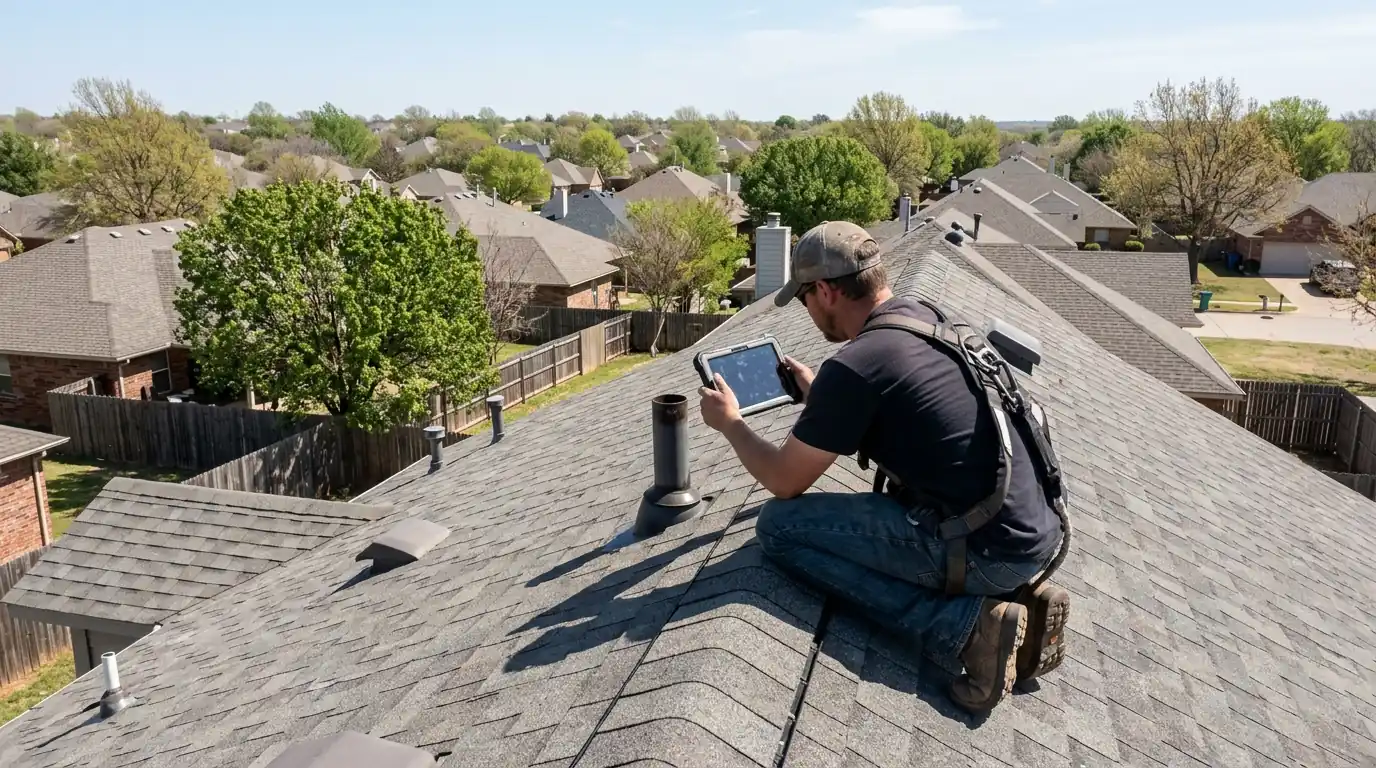
A full roof inspection looks at the roof surface, flashing, vents and pipe boots, gutters, the attic and the decking from below. Sapphire photographs what we find and explains it in plain language. Oklahoma City homeowners usually call for one after a hail or wind storm, before buying or selling a home, or when a roof reaches its later years.
Sapphire inspects roofs across the Oklahoma City metro from our offices in south Oklahoma City and Guthrie. Below is exactly what we check, what the photos show, and when an inspection makes the most sense for your home.
We walk the roof when it is safe to do so and look at every slope, not just the one facing the street. On shingles we look for hail bruises, creased or missing tabs, granule loss, cracking, blistering and nails that have backed out and lifted a shingle.
On metal, tile and flat roofs, the checks change. We look at fasteners and seams on metal, broken or slipped tiles on clay and concrete, and blisters, splits and ponding on low-slope membranes. Each roof type fails in its own way, and we inspect accordingly.
Flashing is where most leaks start. We check step flashing along walls, counterflashing on chimneys, valley metal, and drip edge at the eaves for gaps, rust, loose nails and dried-out sealant.
Every penetration gets a close look. Rubber pipe boots crack in Oklahoma sun after several summers, bathroom and kitchen exhaust vents can come loose, and skylights depend on their own flashing kits. We photograph each one so you can see its condition, not just read about it.
The attic often tells more than the roof. With a flashlight we look for water stains on rafters and decking, dark streaks around nails, damp or compressed insulation, and daylight around vents and penetrations.
We also check ventilation from inside: whether soffit vents are blocked by insulation, whether baffles are in place, and whether bathroom fans are venting into the attic instead of outside. In Oklahoma City summers a poorly vented attic bakes the shingles from below, and in winter, trapped moisture can frost on the underside of the deck.
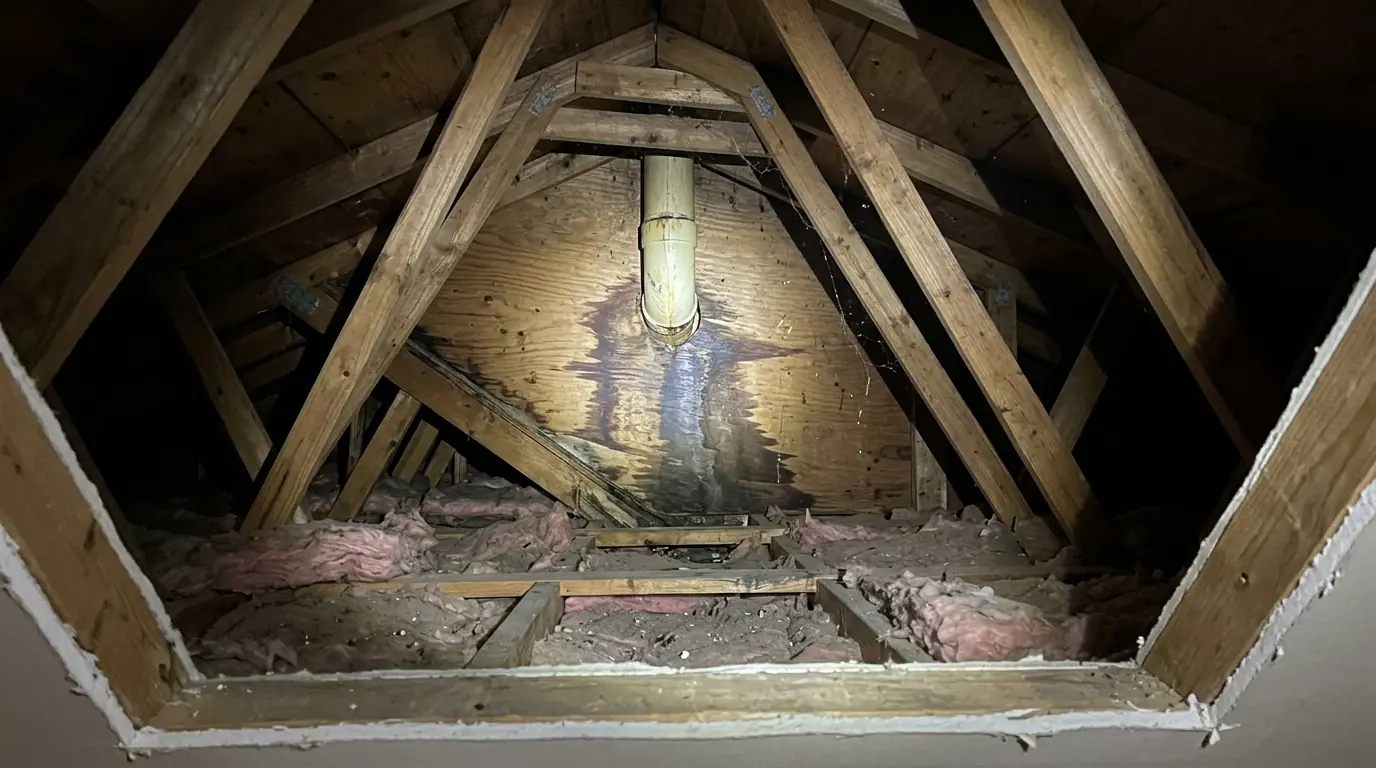
From the roof, we feel for soft spots underfoot, especially near valleys, chimneys and the lower edge of the roof where water collects. From the attic, we look for delaminated plywood, swollen OSB edges and old repairs.
Bad decking does not always show on the surface. On older homes with plank decking, we note gaps and wide spacing that could affect a future replacement. Knowing about decking issues ahead of time keeps a later project from turning into a surprise.
We take photos of every slope and every problem area, and we label them so you can tell where each one sits on your roof. We walk you through them in person or by phone and explain what each finding means and how urgent it is.
Not everything we find needs action. We separate items into those that need repair now, things to watch, and normal wear. That way you can plan instead of reacting to a list of scary-looking pictures.
The most common reason in Oklahoma City is a storm. After spring hail or a strong straight-line wind event, an inspection tells you whether there is damage worth discussing with your insurance company, and the date-stamped photos help if you file.
Other good times include before buying a home, before listing your own, when your roof passes the fifteen-year mark, after a tree limb hits the house, and before winter so problems get fixed before the first ice storm. Some homeowners just like a yearly check, which can catch small issues early.
An inspection does not end at the roofline. We look in the gutters for piles of granules, which can point to hail bruising or an aging roof, and we check that gutters are pitched toward the downspouts and fastened tight to the fascia.
At the edges we look for soft or stained fascia boards, gaps where drip edge was never installed, and soffit vents clogged with paint or debris. Around the foundation, red clay splash marks and washed-out beds under a corner often show where a roof is dumping water in the wrong place.
Hail damage is often invisible from the ground, and the inspection photos help if you decide to file.
An inspection gives buyers and sellers a clear picture of the roof before negotiating.
Even a small stain means water got past the roof somewhere and needs tracking down.
Shingle roofs past about fifteen years benefit from regular checkups to plan for replacement.
Heavy granule runoff can mean hail bruising or advanced aging.
A limb strike can crack shingles, decking or flashing even when nothing looks broken.
The same people who look at your roof are the ones who do the work, and they explain each step before it happens.
Call (405) 864-0080We check gutters, downspouts, siding near the roofline and visible slopes from the ground.
We inspect each slope, the flashing and every penetration, and take labeled photos.
We look for stains, wet insulation, daylight and ventilation problems from inside.
We walk you through the photos and separate urgent repairs from items to monitor.
You get a clear recommendation, whether that is a small repair, a claim discussion, or nothing at all.
Every roof is priced after we have seen it. These are the things that move the number up or down.
Call any hour. Our own crew inspects, photographs and explains the fix before any work starts.
Most inspections take about an hour, including the roof, the attic and walking you through the photos. Large, steep or tile roofs can take longer.
If hail was large enough to dent cars, gutters or outdoor furniture, an inspection is a good idea. Small hail often causes no damage, and we will tell you if that is the case.
Yes, whenever there is safe access. The attic shows leaks, ventilation issues and decking problems that cannot be seen from the roof.
We can give an honest estimate based on age, material and condition, but weather has the final say. A roof in good shape can still be damaged by one bad storm.
Many home inspectors look at the roof from the ground or a ladder. We walk the roof, check flashing and penetrations up close, and go into the attic, so our inspection is more detailed on the roof itself.
A written roof condition report for buyers, sellers, lenders and agents, with photos and an honest read on remaining life.
Learn moreHail inspections that look for bruised shingles, granule loss and fractured mats, plus repair or replacement after an OKC hailstorm.
Learn moreHelp with Oklahoma City roof insurance claims: damage photos, adjuster meetings and documented supplements. You own the claim.
Learn moreYearly and after-storm roof tune-ups in the OKC metro: sealant at penetrations, clear valleys and gutters, fix small issues early.
Learn moreOklahoma City and the surrounding metro, including:
MooreBethanyWarr AcresOklahoma CountyQuail Creek, Oklahoma CityWindsor Hills, Oklahoma CityEdgemere Park, Oklahoma CitySouthern Oaks, Oklahoma CityAll service areas