Siding Installation
New fiber cement, vinyl or engineered wood siding over a proper house wrap, chosen for how each one stands up to Oklahoma hail.
Learn moreA few cracked panels look like a cosmetic problem, but a hole in the siding is an opening in the wall. Wind-driven rain gets behind it, the house wrap may already be torn, and in a few seasons the sheathing around a window can be soft. Fixing it early is cheaper than fixing what it causes.
Answered 24/7Call (405) 864-0080 and talk to Sapphire.
Siding repair replaces damaged panels or boards without re-siding the whole house. In Oklahoma City, most repairs follow hail that cracks vinyl or dents fiber cement and engineered wood. The hard parts are matching faded colors and profiles, and finding moisture damage behind the siding before it spreads. We inspect behind every damaged section before closing it up.
Sapphire repairs siding across Oklahoma City and the surrounding towns, from vinyl-sided homes in Moore and Norman to older hardboard and wood lap in Bethany and Warr Acres. We pull damaged pieces, check behind them, and replace them with the closest match we can find, then tell you honestly how close that match is.
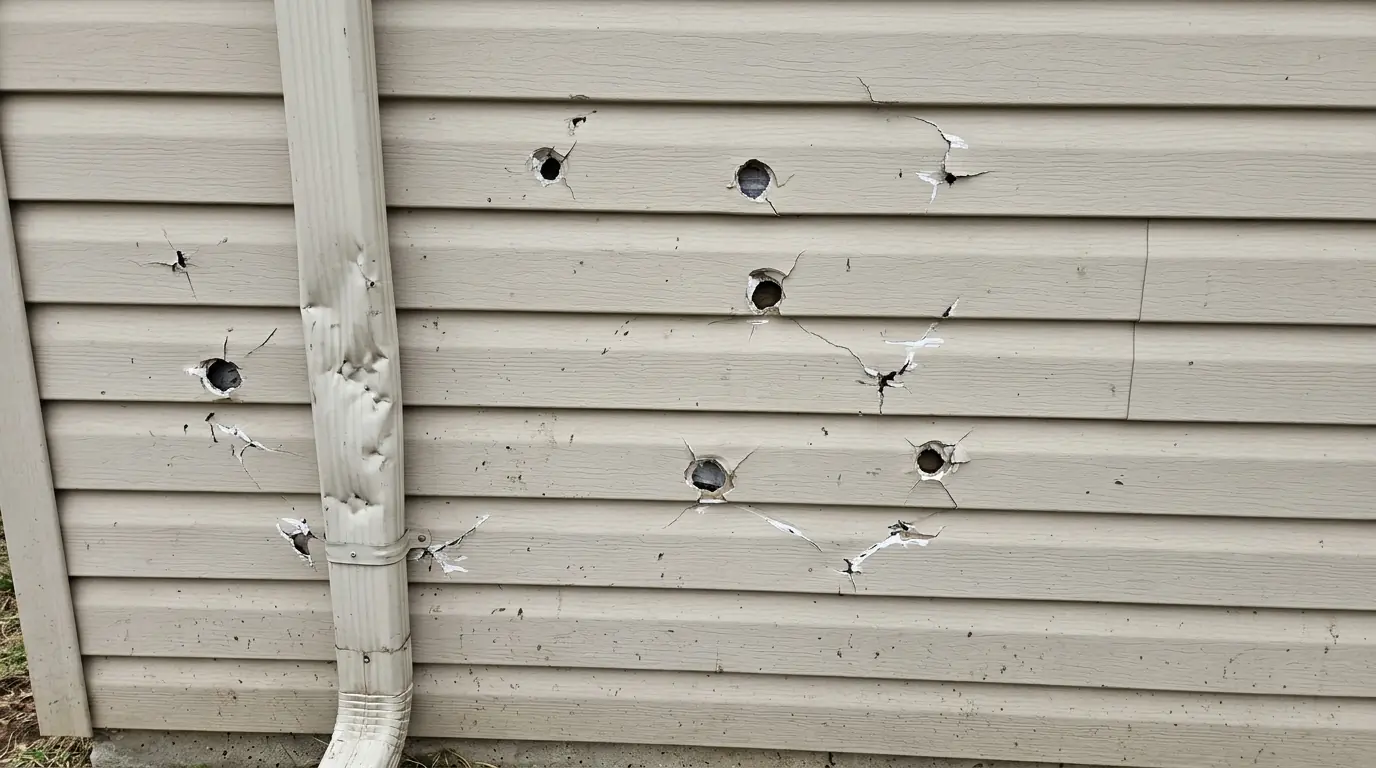
Vinyl panels crack in a few typical ways after hail. You'll see round punctures with radiating cracks, split lower lips where a panel locks to the one below, and chips knocked off at corners and J-channel. Damage clusters on the walls facing the storm, often west and north in central Oklahoma.
Vinyl is repairable panel by panel. We use a zip tool to unlock the panel above, remove the nails on the damaged piece, slide a new panel in, nail it in the slot centers so it can move, and lock the panels back together. The wall isn't disturbed beyond the damaged courses.
Matching is the hardest part of siding repair. Vinyl colors fade differently on sunny and shaded walls, product lines are discontinued, and profiles such as double 4-inch, Dutch lap and double 5-inch look similar until they sit side by side. A new panel from the same color name can still look brighter than a 12-year-old wall.
We bring a removed piece to suppliers to compare profile, exposure and color. When an exact match isn't available, one approach is to take panels from a hidden wall, like behind a fence or AC unit, use them on the visible repair, and put new siding on the hidden spot. We'll explain the options before anything comes off.
Fiber cement planks rarely crack from hail, but they do chip at corners, break where they were overnailed, and crack if something heavy hits them. Damaged planks are cut out carefully, new planks are fastened and caulked at the butt joints, and the repair is primed and painted to blend with the wall.
Older hardboard siding, common on 1970s and 1980s homes in the metro, swells and crumbles along the bottom edges once water gets in. Engineered wood and real wood lap can split or rot at the ends. We replace these with matching profiles where they're still made, or the closest modern equivalent, and seal every cut edge.
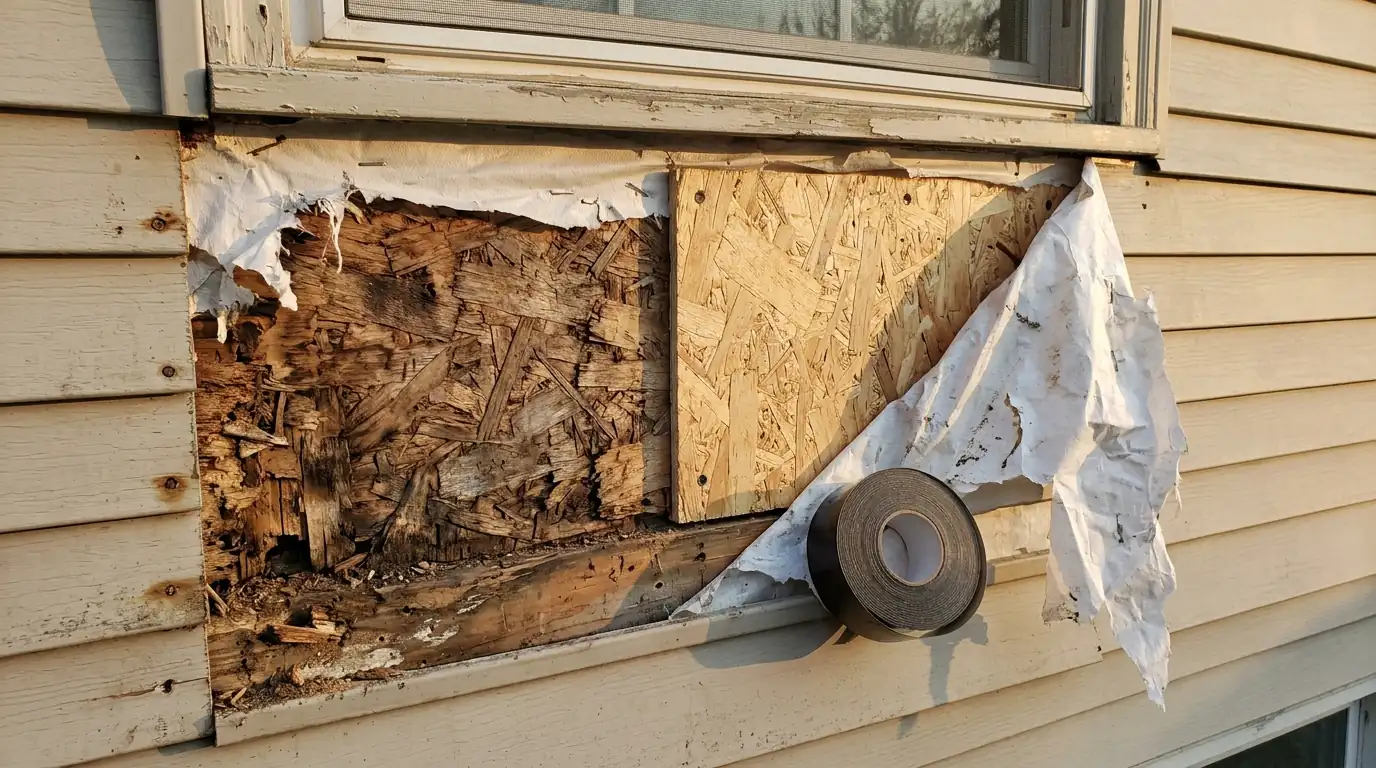
When we remove damaged siding, we look at the house wrap and sheathing behind it. Dark stains, soft oriented strand board, and wet insulation tell us water has been getting in. The most common entry points are under window sills, where a roof meets a wall without kickout flashing, and around hose bibs and dryer vents.
Wet sheathing is cut out and replaced, the wrap is patched and taped, and the source of the leak is fixed before the siding goes back. Covering wet framing with new siding just traps the problem and lets it grow.
After hail, siding damage is often included on the same claim as the roof. We photograph each wall, count damaged panels, note the profile and color, and record whether matching material is available. That information helps the adjuster understand the scope.
Some policies and state rules address how mismatched repairs are handled, and every policy reads differently. We document the facts and walk the walls with the adjuster, but we are not public adjusters and do not negotiate the claim. Reading your own policy and asking your agent is the best first step.
Not every repair is storm-related. Loose panels flapping in Oklahoma wind, J-channel pulled away from a window, gaps in caulk at trim, and holes left by old satellite dishes or cable lines all let water in. Fixing them takes a short visit and closes off the most common leak paths.
We also check clearances. Siding should stay a few inches above soil and mulch, and a gap above the roofline on dormer walls. Mulch piled against siding wicks moisture and invites termites, which are active across central Oklahoma.
Punctures and splits on the storm-facing side should be repaired before wind-driven rain gets behind them.
Panels that rattle in wind have unlocked from the course below and can tear off in the next gust.
Hardboard or wood siding that's puffy and soft at the bottom has absorbed water.
Streaks or soft spots below sills often mean flashing has failed and water is reaching the wall.
Musty odors near exterior walls can point to moisture trapped behind damaged siding.
Open joints at corner posts, J-channel and trim let rain run straight behind the siding.
The same people who look at your roof are the ones who do the work, and they explain each step before it happens.
Call (405) 864-0080We photograph damage wall by wall and identify the siding type, profile and color.
We compare a removed piece with available products and explain your matching options.
Damaged siding comes off and we inspect the wrap and sheathing for moisture and rot.
Wet sheathing and wrap are replaced, leaks are flashed, and new siding is installed.
Trim and joints are sealed, painted siding is touched up, and the work area is cleaned.
Every roof is priced after we have seen it. These are the things that move the number up or down.
Call any hour. Our own crew inspects, photographs and explains the fix before any work starts.
Yes. Vinyl is designed to be unlocked and replaced panel by panel. The real question is matching, since faded colors and discontinued profiles can make new panels stand out.
We can borrow panels from a hidden wall for the visible repair and put new material in the hidden spot, or replace a whole wall section so the change lands at a corner. We'll show you the options before work starts.
Signs include soft spots, swollen boards, stains under windows and musty smells inside along exterior walls. The only sure way is to remove a section and look, which we do on every repair.
Often siding is included when the same storm damaged it, but every policy is different. We document siding damage with photos and measurements for your claim, and you or your agent can confirm what your policy covers.
Hardboard is a pressed wood product that soaks up water once its paint or edge seal fails, especially along bottom edges and near the ground. Once swollen, it doesn't shrink back and has to be replaced.
New fiber cement, vinyl or engineered wood siding over a proper house wrap, chosen for how each one stands up to Oklahoma hail.
Learn moreWindow replacement for storm-broken and drafty windows, with vinyl or fiberglass units installed full-frame or as inserts.
Learn moreHail inspections that look for bruised shingles, granule loss and fractured mats, plus repair or replacement after an OKC hailstorm.
Learn moreHelp with Oklahoma City roof insurance claims: damage photos, adjuster meetings and documented supplements. You own the claim.
Learn moreOklahoma City and the surrounding metro, including:
Nichols HillsCleveland CountyGaillardia, Oklahoma CityBelle Isle, Oklahoma CityPutnam Heights, Oklahoma CityEarlywine, Oklahoma CityMidwest CityGuthrieAll service areas