Roof Repair
Historic guidelines favor keeping original slate, tile and trim, so targeted repairs are the most common roof work in Heritage Hills.
Learn moreSapphire Roofing repairs and replaces roofs on historic Heritage Hills homes, from Prairie School and Craftsman houses to large Revival-style mansions with slate or tile. We plan around Oklahoma City's historic preservation review, repair original material where we can, document every step with photos, and answer calls 24/7.
Answered 24/7Our own crews work in Heritage Hills.
Heritage Hills sits just north of downtown Oklahoma City, between Midtown to the south, Mesta Park to the west and north, and Heritage Hills East. Building began just after 1900 in additions marketed as Highland Park and The Highlands, and the neighborhood was largely complete by 1930. It took the name Heritage Hills in 1969.
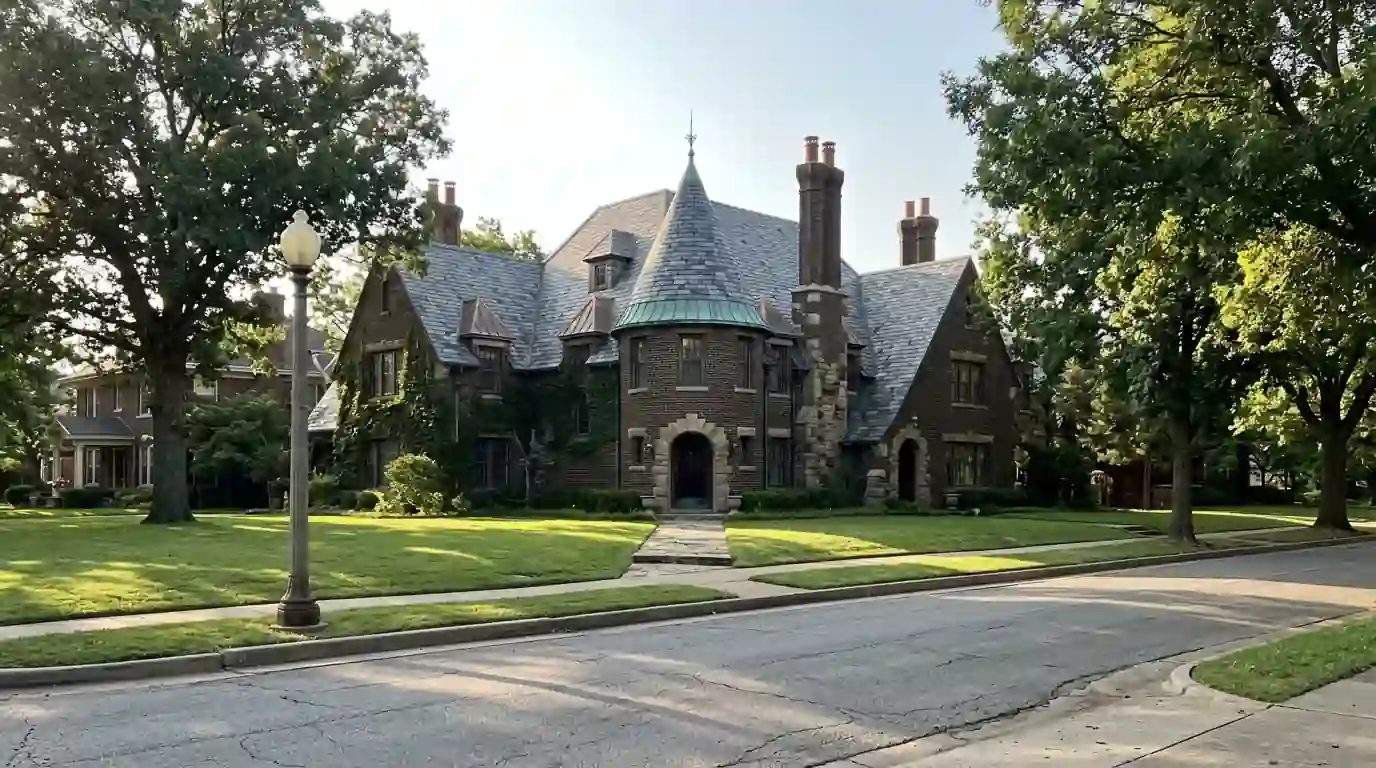
It was Oklahoma City's first historic preservation district, started when neighborhood leaders organized against a plan to widen NW 16th Street. Today its streets are lined with large houses, mature trees and historic streetlights, and the roofs are among the most varied in the city.
Heritage Hills homes include Chateauesque, Italian Renaissance Revival, Prairie School, Neoclassical, Craftsman, Colonial and Georgian Revival, Mission Revival, Tudor Revival, American Foursquare and Dutch Colonial Revival designs. The Chateauesque Overholser Mansion, the first mansion built in the area, is now a house museum, and the neighborhood also holds the largest house in Oklahoma City.
Each style has its own roof. Prairie houses have broad, low hipped roofs with deep overhangs. Foursquares have simple hips with dormers. Tudor and Chateauesque homes have steep pitches, turrets and elaborate chimneys, and Italian Renaissance and Mission homes may carry clay tile.
Some of the oldest and largest homes in Heritage Hills still have slate or clay tile. Both materials can outlast several asphalt roofs, but the copper or steel flashing, the fasteners, and the underlayment beneath them wear out first. A leaking slate roof often needs new flashing and a few replaced slates, not a whole new roof.
We remove damaged slates with a slate ripper and install replacements with copper nails and hidden hooks or tabs, and the city's standards note that salvaged slate can be reused. On tile roofs, we lift and reset original tiles after replacing failed underlayment and flashing.
Changes to buildings in Oklahoma City historic preservation zoning need a Certificate of Approval from Planning Department staff or the Historic Preservation Commission. Under the city's Design and Sustainability Standards and Guidelines, repairing less than half of a feature on one side of the building is maintenance, while larger replacements are reviewed.
The guidelines favor repairing original features first and replacing in kind when repair is not possible. Changing from slate or tile to another material, or replacing a full roof, should be expected to go through review. We provide product information, samples and photos for your application, and Historical Preservation, Inc., the neighborhood's preservation group, can also help owners understand the process.
Large Heritage Hills houses often have several chimneys, built-in or box gutters hidden in the cornice, and decorative metal at ridges and turrets. Built-in gutters are a common hidden leak: when their linings fail, water runs into the cornice and walls instead of the downspout.
We inspect chimney flashing and crowns, open up and reline built-in gutters, and repair metal details where we can rather than replace them. Each repair is photographed so you can see the condition before and after.
Mature trees line nearly every street, and their limbs can damage slate, tile and shingle roofs during wind and ice storms. Slate and tile also crack under a careless foot, so we set ladders and walk boards carefully and avoid stepping on the field of the roof wherever possible.
When a storm opens a roof, we tarp it right away to protect plaster ceilings and woodwork inside. Then we plan the permanent repair so it matches the existing roof and fits the historic standards.
Historic guidelines favor keeping original slate, tile and trim, so targeted repairs are the most common roof work in Heritage Hills.
Learn moreClay tile on Mission and Italian Renaissance homes needs underlayment and flashing replaced while the original tiles are reset.
Learn moreLarge homes here often have several chimneys whose flashing and crowns are frequent leak points.
Learn moreOld copper and steel flashing at valleys, turrets and walls often fails before the slate or tile around it.
Learn moreBuilt-in and box gutters hidden in historic cornices leak into walls when their linings wear out.
Learn moreCall Sapphire. Our own roofers inspect, photograph and fix the problem, and we explain it first.
Often, yes. Many slate roof leaks come from worn flashing or a few broken slates. We replace damaged slates, rebuild flashing, and keep the original roof wherever it is sound.
Heritage Hills is in Oklahoma City's historic preservation zoning. Work that replaces more than half of a feature on one side, such as a full re-roof or a material change, generally goes through review by city staff or the Historic Preservation Commission.
A common cause is a failed built-in gutter. When the lining wears out, water runs into the cornice and walls instead of the downspout. We open the gutter, reline it and repair any rotted wood behind it.
We tarp any opening as soon as possible to keep water off plaster ceilings and woodwork. After that, we document the damage and plan a permanent repair that matches the existing roof.