Roof Decking Replacement
Replacing soft, rotted or delaminated OSB and plank decking so new shingles have a solid, properly nailed base to hold onto.
Learn moreWhen repairs stop making sense, the roof needs to come off. Granules piling up in the gutters, shingles that crack when you bend them, and leaks that show up in a new spot after every storm are all signs the whole system has reached the end of its useful life.
Answered 24/7Call (405) 864-0080 and talk to Sapphire.
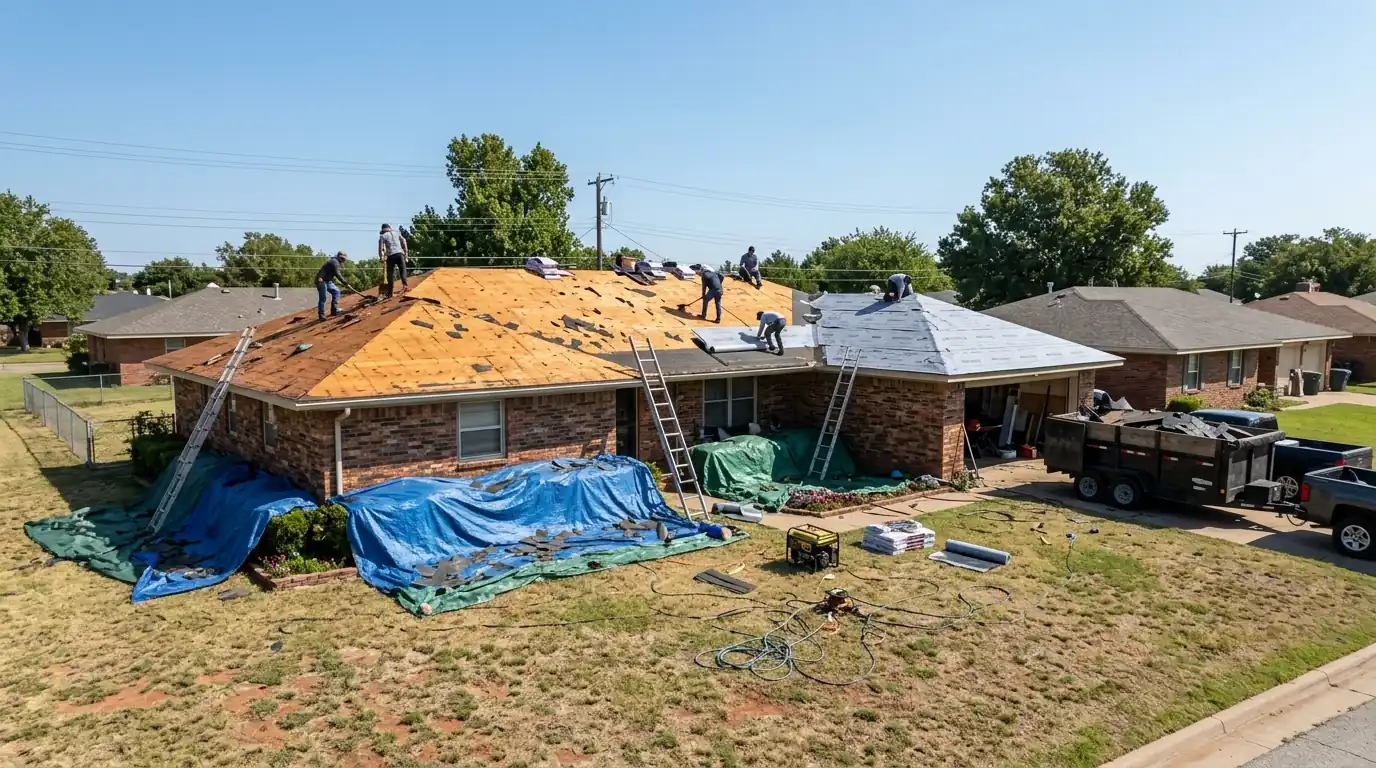
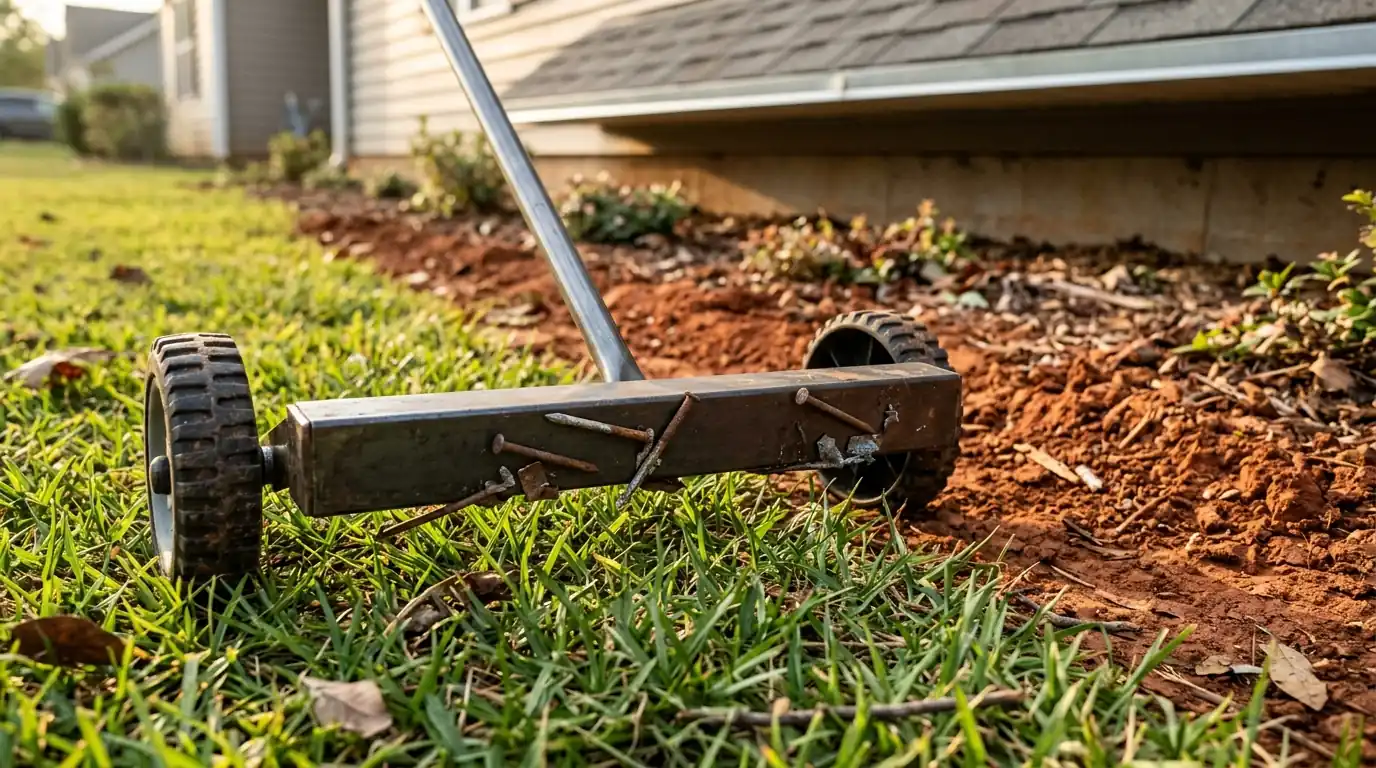
A roof replacement in Oklahoma City means tearing the old roof down to the decking, fixing any soft or rotted boards, then installing new underlayment, ice and water shield in the valleys, drip edge, flashing, ventilation and shingles. Sapphire's own crew does the work and finishes with a magnet sweep so no nails are left in your yard or driveway.
Sapphire replaces roofs across the Oklahoma City metro with our own crews, working out of our offices in south Oklahoma City and Guthrie. This page walks through what actually happens on a replacement day, so you know what you are paying for and what to ask any roofer before work starts.
Some roofers will nail a new layer of shingles over the old one. We tear off to the decking on every replacement because a second layer hides the wood underneath, adds weight to the framing, and traps heat that shortens the life of both layers.
Tear-off also lets us count and fix problems you would never see from the ground. Old nail holes, soft spots around a vent, and water stains on the decking all tell us where the last roof failed, and that tells us where to pay extra attention on the new one.
Once the old shingles and felt are off, our crew walks every section of the deck. We look for boards that flex underfoot, dark staining from long-term leaks, and delaminated plywood that has peeled apart in layers.
Many 1950s and 1960s ranch homes on the south side of Oklahoma City were built with plank decking, which has gaps between the boards. Modern shingles need a solid nailing surface, so on those houses we may lay new sheathing over the planks. We show you photos of any bad wood before it is replaced, so nothing on the final bill is a surprise.
The shingles are only the top layer. Underneath, we roll out a synthetic underlayment across the whole deck. It resists tearing in the wind and holds up better than old felt paper if the roof is open for a few hours while a crew finishes a section.
In every valley, we install a self-adhering ice and water shield. Valleys carry the most water on any roof, and when an Oklahoma ice storm leaves a frozen dam in the valley, that membrane seals around the nails so meltwater cannot push under the shingles.
Metal drip edge goes along the eaves and rakes. It directs water into the gutter instead of letting it wick back onto the fascia board, and it gives the first course of shingles a straight, solid edge to sit on.
A new roof is the best time to fix ventilation, because the deck is open and the ridge is accessible. We check how much intake you have at the soffits and how much exhaust leaves at the ridge or roof vents, and we balance the two.
Oklahoma City attics can run well past outdoor temperature in July. Without enough airflow, that heat bakes the shingles from below and pushes moisture into the decking during winter. We also avoid mixing exhaust types, like a ridge vent next to box vents, because they can short-circuit each other and pull air from the wrong place.
We protect landscaping with tarps, set a trailer or dumpster as close to the roof as the driveway allows, and start tearing off one slope at a time. Each section gets dried in with underlayment before the crew moves on, so an afternoon thunderstorm does not catch an open deck.
Most single-story homes in the metro are finished in a day or two, though steep pitches, multiple layers or a lot of decking replacement can stretch that out. We tell you up front which of those apply to your house.
A tear-off sends thousands of old nails off the roof. We run rolling magnets across the yard, flower beds and driveway, then do it again after the dumpster leaves. Red clay soil makes nails hard to spot once they get pressed in, so we sweep slowly and in overlapping passes.
We also clear granules and debris out of the gutters and downspouts. Before we leave, we walk the property with you, show you photos of the decking, flashing and ventilation work, and answer any questions about the new roof.
Shingles losing granules or curling at the edges can no longer shed water or block UV, and repairs will not reverse that wear.
When stains appear in different rooms after storms, the problem is usually the whole roof, not one bad shingle.
A roof that dips between rafters or feels spongy underfoot often has decking that has been wet for a long time.
Bruised or cracked shingles on all sides of the house usually mean a full replacement rather than spot repair.
If someone laid over the original roof, the next roof has to come all the way off anyway.
Light showing through the boards means gaps that let water, insects and heat through.
The same people who look at your roof are the ones who do the work, and they explain each step before it happens.
Call (405) 864-0080We go on the roof and into the attic, take photos of every slope, and explain what we found in plain language.
We walk you through shingle options, colors and ventilation changes, and write the scope so you can see every line item.
Our crew strips the roof to the wood, replaces soft or rotted decking, and shows you photos of anything we changed.
Underlayment, ice and water shield, drip edge, flashing, vents and shingles go on in that order, one slope at a time.
We magnet sweep the property twice, clear the gutters, and walk the finished job with you.
Every roof is priced after we have seen it. These are the things that move the number up or down.
Call any hour. Our own crew inspects, photographs and explains the fix before any work starts.
Most single-story homes are done in one or two working days. Large or steep roofs, multiple layers, or a lot of rotted decking can add time, and we schedule around storms so the deck is never left open overnight.
You do not have to be there all day, but we like to meet you at the start and walk the job with you at the end. Keep vehicles out of the garage or driveway where the dumpster will sit, and take fragile items off walls that share framing with the roof.
It can help when the real cause is poor attic ventilation, because we correct intake and exhaust while the roof is open. If the problem is thin insulation or duct leaks, ventilation alone will not solve it, and we will tell you that honestly.
We stop, photograph it, and show you before replacing it. Bad wood has to come out because new shingles cannot be nailed securely into it, and the scope explains how replacement decking is measured and charged.
Yes. Tear-off is loud and some dust can fall in the attic, so cover anything stored up there. Pets are usually happier away from the noise for the day.
Replacing soft, rotted or delaminated OSB and plank decking so new shingles have a solid, properly nailed base to hold onto.
Learn moreBalanced intake and exhaust for OKC attics: ridge vents, soffit vents and fans set up to cut summer heat and winter moisture.
Learn moreThree-tab, architectural and designer asphalt shingles installed in Oklahoma City with correct nailing and wind-rated starter.
Learn moreHelp with Oklahoma City roof insurance claims: damage photos, adjuster meetings and documented supplements. You own the claim.
Learn moreOklahoma City and the surrounding metro, including:
El RenoLogan CountyDeer Creek, Oklahoma CityMesta Park, Oklahoma CityCapitol Hill, Oklahoma CityEdmondMustangNewcastleAll service areas