Roof Repair
Targeted fixes for missing shingles, worn flashing, cracked pipe boots and small leaks, done by Sapphire's own crews across OKC.
Learn moreA few damaged shingles shouldn't mean a whole new roof. Shingle repair is the most common small job we do across the Oklahoma City area, and when it's done carefully, it closes the gap and is hard to spot from the street.
Answered 24/7Call (405) 864-0080 and talk to Sapphire.
Shingle repair means removing damaged shingles and weaving new ones into the existing courses so they seal and shed water like the originals. The two big challenges are matching a color that has weathered or been discontinued, and lifting old shingles that may be brittle. Sapphire identifies your shingle, tests its flexibility, and tells you honestly how well a repair will blend.
This page covers the shingle-level work: identifying what's on your roof, finding a match, getting old shingles to release without cracking, and installing new pieces the right way. Sapphire's own crews handle every step.
Matching starts with knowing exactly what you have. Three-tab shingles are flat with uniform cutouts. Architectural, or laminated, shingles have two laminated layers that create a dimensional, shadowed look. Within architectural lines, manufacturers vary the tab shape, size and exposure, and those details matter as much as color.
We measure the exposure, look at the tab cut and the back of a loose piece, and check the color under natural light. Sometimes a wrapper or leftover bundle in the garage or attic tells us the brand and line right away, so it's worth looking before we arrive.
Even when we find the exact product, new shingles look darker and crisper than ones that have spent years under Oklahoma sun. The granules on old shingles fade and some wash away, so the new pieces stand out at first. Most blend noticeably after a season or two of weathering, and repairs on rear slopes usually stop showing much sooner than people expect.
Discontinued lines are a bigger challenge. Manufacturers change colors and retire whole product lines, and a roof from fifteen years ago may have no exact match available. In those cases we find the closest profile and color still made and show you samples against your roof before installing anything.
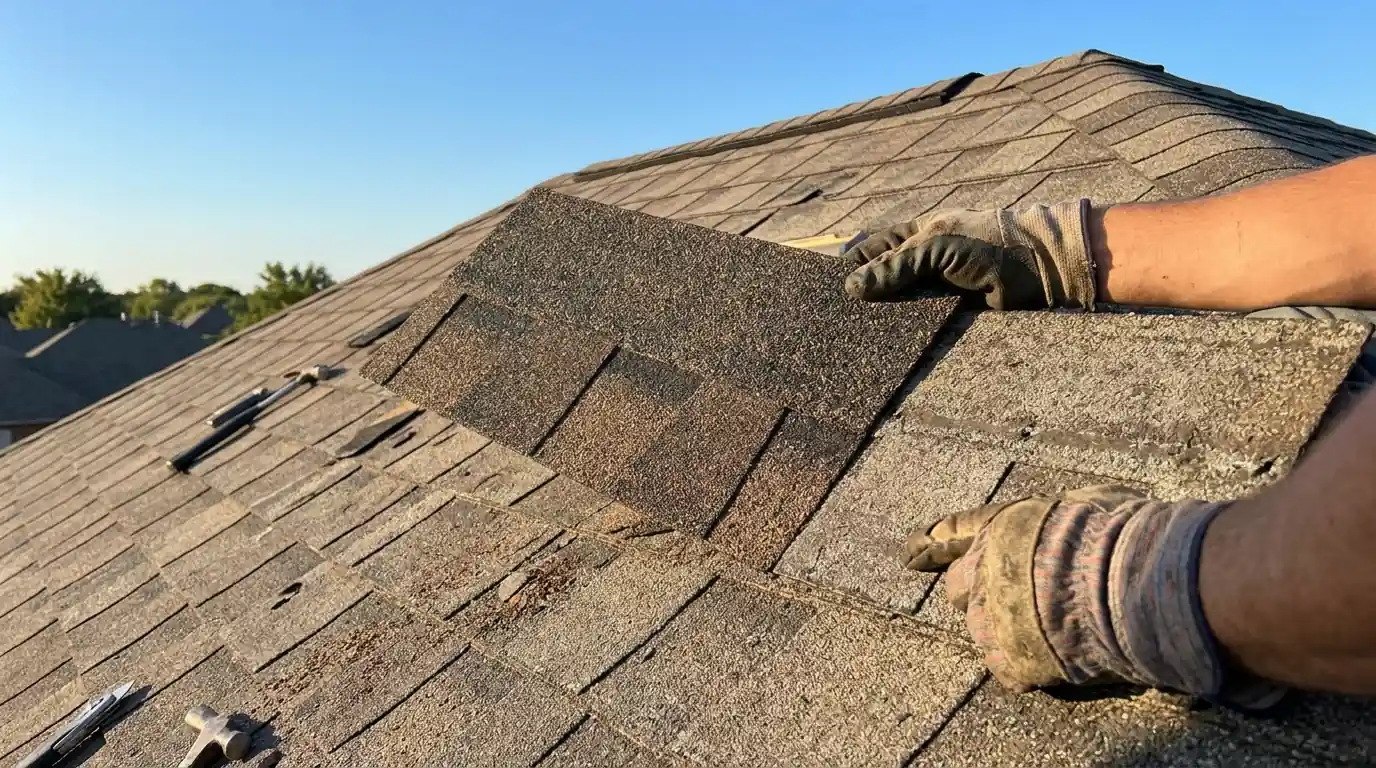
To put in a new shingle, we have to break the seal on the courses above and lift them to reach the nails. Young shingles bend easily. Older ones lose their oils over years of heat and can crack the moment they're lifted, which turns a repair into new damage.
We test before committing. On a cool morning, shingles are stiffer, so we often schedule repairs on older roofs for the warmer part of the day when the asphalt is more flexible. If test lifts crack, we'll tell you the roof is past the point where repairs make sense.
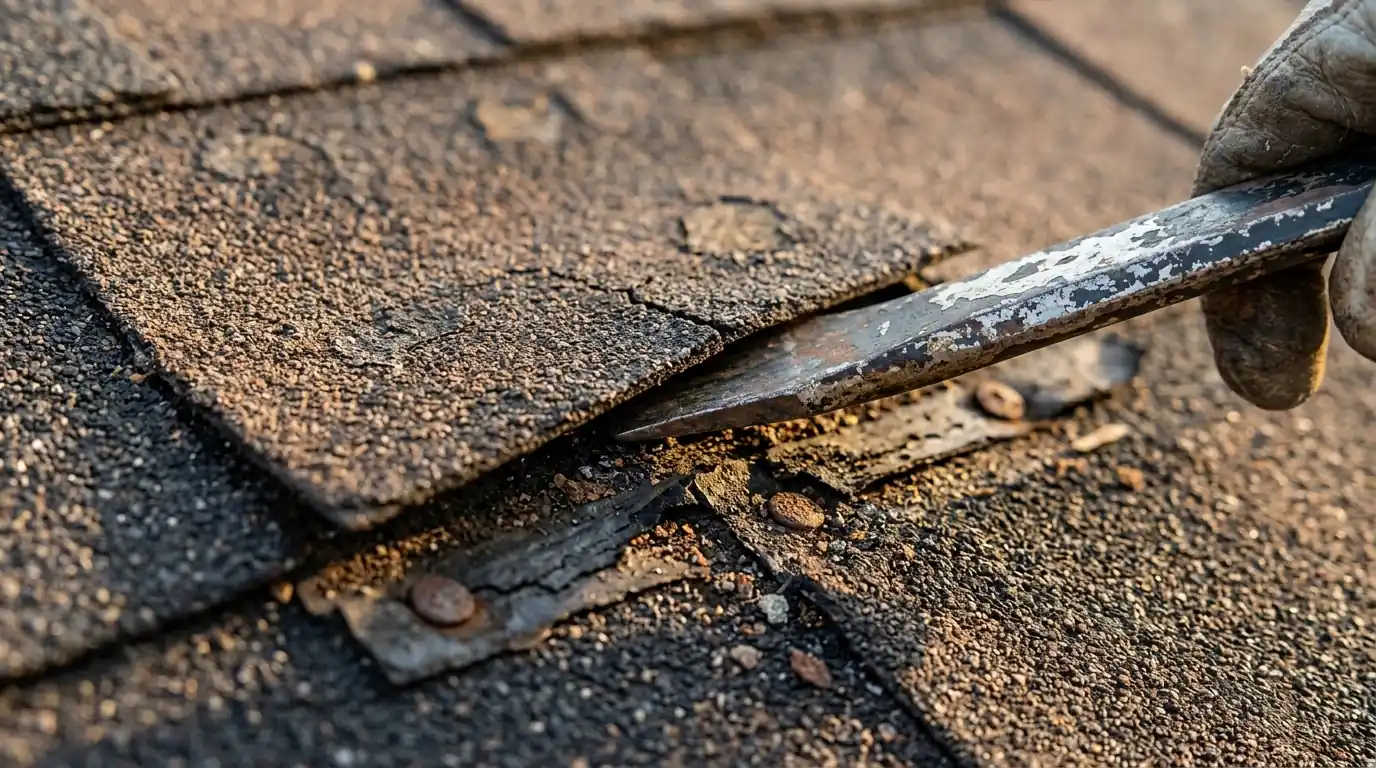
We break the seal strips on the damaged shingle and the course above it, pull the nails holding the damaged piece and the nails from the course above that pass through it, and slide the old shingle out. The new one slides into the same position, aligned with its neighbors.
It's nailed in the manufacturer's nail zone, the shingles above are renailed, and every tab we disturbed is resealed with an approved adhesive so wind can't get under it before the sun reactivates the seal strip. Face-nailing a shingle on top of the old one isn't a repair. Exposed nail heads rust and leak, and the patch tends to lift in the first strong wind.
Wind is the most frequent reason a shingle needs replacing here, followed by hail impacts and nails that work loose and push up through the shingle above. Thermal cycling plays a part too: hot afternoons and cold nights expand and contract the roof deck, and over time nails back out.
We also replace shingles damaged by foot traffic from satellite installs, HVAC work and holiday light hanging, plus pieces scorched by a grill or cut by a fallen branch. Each cause gets noted so you know whether anything needs to change to stop it happening again, like routing a satellite cable differently or trimming a branch that rubs the roof.
Shingles that curl at the edges or cup in the middle are usually a sign of age, heat or poor attic ventilation rather than storm damage. A few can be replaced, but if curling shows up across a whole slope, the cause is likely under the roof and needs to be looked at.
Blisters are small bubbles that pop and leave bare spots. A handful of blisters can be patched by replacing those shingles. Widespread blistering on one slope often points to trapped attic heat, and we'll check the vents and intake before recommending more shingle work.
Any gap that shows underlayment or older layers needs filling before the next rain.
Splits in the shingle let water reach the nails and the underlayment.
Bumps or holes where a nail pushed up through the shingle above are small leaks waiting to happen.
Edges lifting off the roof catch wind and let rain blow underneath.
Spots with no granules expose the asphalt to sun damage and early failure.
Damage from grills, fallen branches or tools weakens the shingle at that point.
The same people who look at your roof are the ones who do the work, and they explain each step before it happens.
Call (405) 864-0080We determine the type, brand, line, exposure and color on your roof.
We source the same product or the closest current option and show you samples.
Trial lifts confirm the old shingles can be worked without cracking.
Damaged pieces come out, new ones go in, and every disturbed tab is resealed.
You get before and after photos and an honest note on how the repair blends.
Every roof is priced after we have seen it. These are the things that move the number up or down.
Call any hour. Our own crew inspects, photographs and explains the fix before any work starts.
They'll be close but rarely identical at first, because old shingles fade in the sun. New pieces usually blend more after a season or two. We show you samples before installing so there are no surprises.
We find the closest profile and color still made and show it against your roof. For front-facing repairs, we sometimes salvage matching pieces from a hidden slope and put the new shingles there instead.
Asphalt is stiffer when it's cool and more flexible when it's warm. Lifting older shingles later in the day reduces the chance of cracking the pieces around the repair.
They don't interlock properly or look the same, so it isn't a good fit on a visible slope. If three-tab shingles are no longer available in your color, we'll talk through the best option for your roof.
There's no single number. If damage is limited and the shingles are flexible, repair is fine. If damage covers several slopes or the shingles crack when lifted, replacement makes more sense.
Targeted fixes for missing shingles, worn flashing, cracked pipe boots and small leaks, done by Sapphire's own crews across OKC.
Learn moreRepairs for creased tabs, broken seal strips, blown-off shingles and torn ridge cap after Oklahoma straight-line winds.
Learn moreThree-tab, architectural and designer asphalt shingles installed in Oklahoma City with correct nailing and wind-rated starter.
Learn moreYearly and after-storm roof tune-ups in the OKC metro: sealant at penetrations, clear valleys and gutters, fix small issues early.
Learn moreOklahoma City and the surrounding metro, including:
Midwest CityGuthrieNichols HillsCleveland CountyGaillardia, Oklahoma CityBelle Isle, Oklahoma CityPutnam Heights, Oklahoma CityEarlywine, Oklahoma CityAll service areas