Emergency Roof Tarping
Heavy-duty storm tarps anchored with battens, not bricks, to keep rain out until your permanent roof repair or claim is settled.
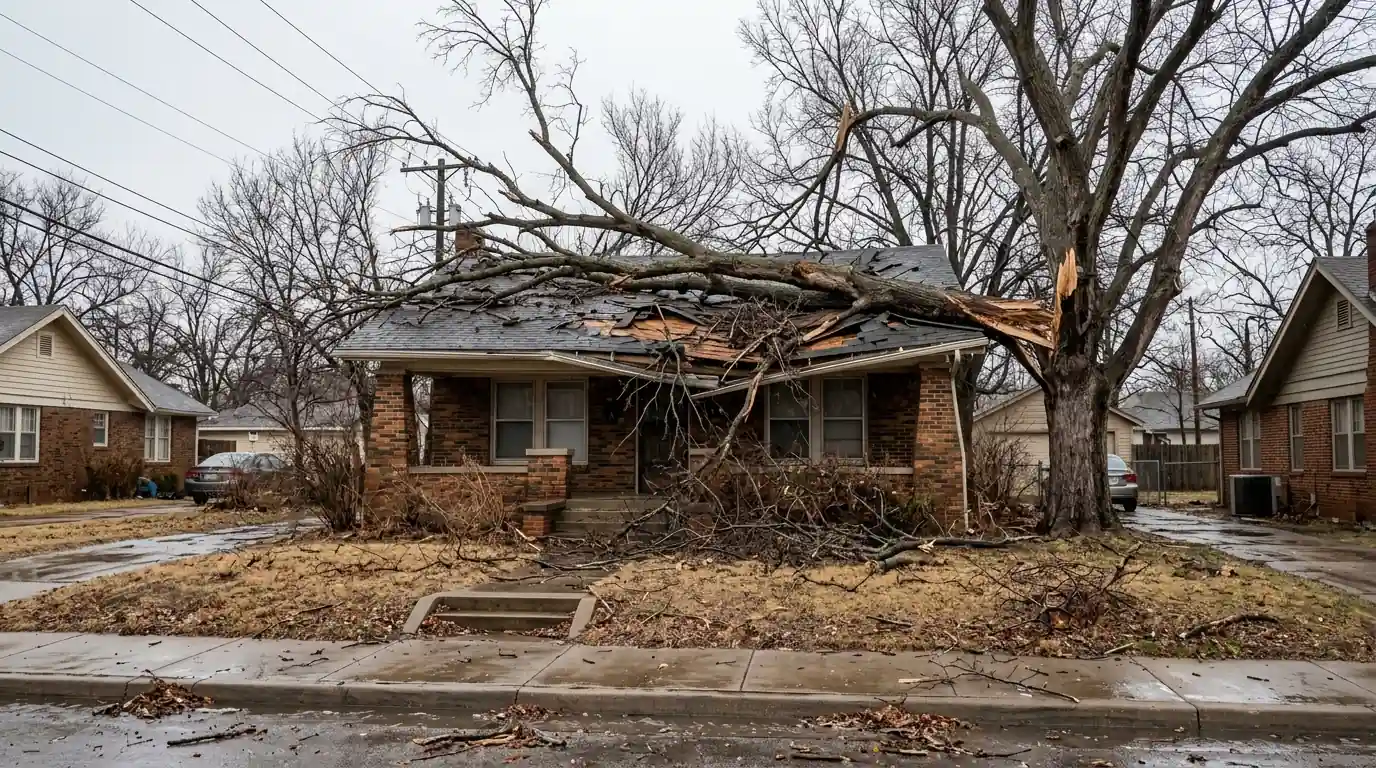
Learn moreOklahoma City has a lot of mature trees, from the big pecans and elms in the older central neighborhoods to the Bradford pears planted along newer subdivision streets. They shade the house in July and they're a real hazard in an ice storm or a strong gust. Anyone who lived through late October 2020 remembers what ice did to trees still holding their leaves.
Answered 24/7Call (405) 864-0080 and talk to Sapphire.
When a tree or large limb hits a roof, the shingles are the least of it. The weight can puncture decking, crack rafters or trusses and push down the ridge. Sapphire secures the opening, checks the framing from the attic, repairs or sisters damaged rafters, replaces decking, and rebuilds the roof surface so it's structurally sound again.
Tree damage is structural work, not a shingle swap. Our crews check what the impact did below the surface and repair it properly, so the roof is as strong as it was before the limb came down.
A large branch doesn't just scrape the shingles. Its weight lands on a small area and often punches straight through the decking. If it hits between rafters, it breaks the board. If it lands on a rafter or truss chord, it can crack that member or push it out of line.
Even when there's no hole, the impact can crush shingles, split the underlying decking along its grain and pop nails loose for several feet around. That hidden damage leaks later if it's not found and repaired along with the visible hole.
A limb resting on a roof is often holding a lot of stored tension, and cutting it the wrong way can make it roll, spring or fall through. Large trees, especially ones tangled in power lines, need a tree service or the utility first. Don't try to pull a heavy limb off the roof yourself.
Once the heavy wood is down, our crew clears the remaining debris, removes broken shingles and decking around the impact, and covers the opening so rain can't get in while we assess the framing.
The attic tells us how deep the damage goes. We look at every rafter or truss near the impact for cracks, splits, crushed edges and connections that pulled loose. We also check whether the ceiling joists below took any load and whether drywall nails popped in the rooms underneath.
Engineered trusses need special care. A cracked truss chord or a broken web member changes how the whole truss carries weight, and some repairs need a design from an engineer or the truss manufacturer. We'll tell you when that's the case before work starts.
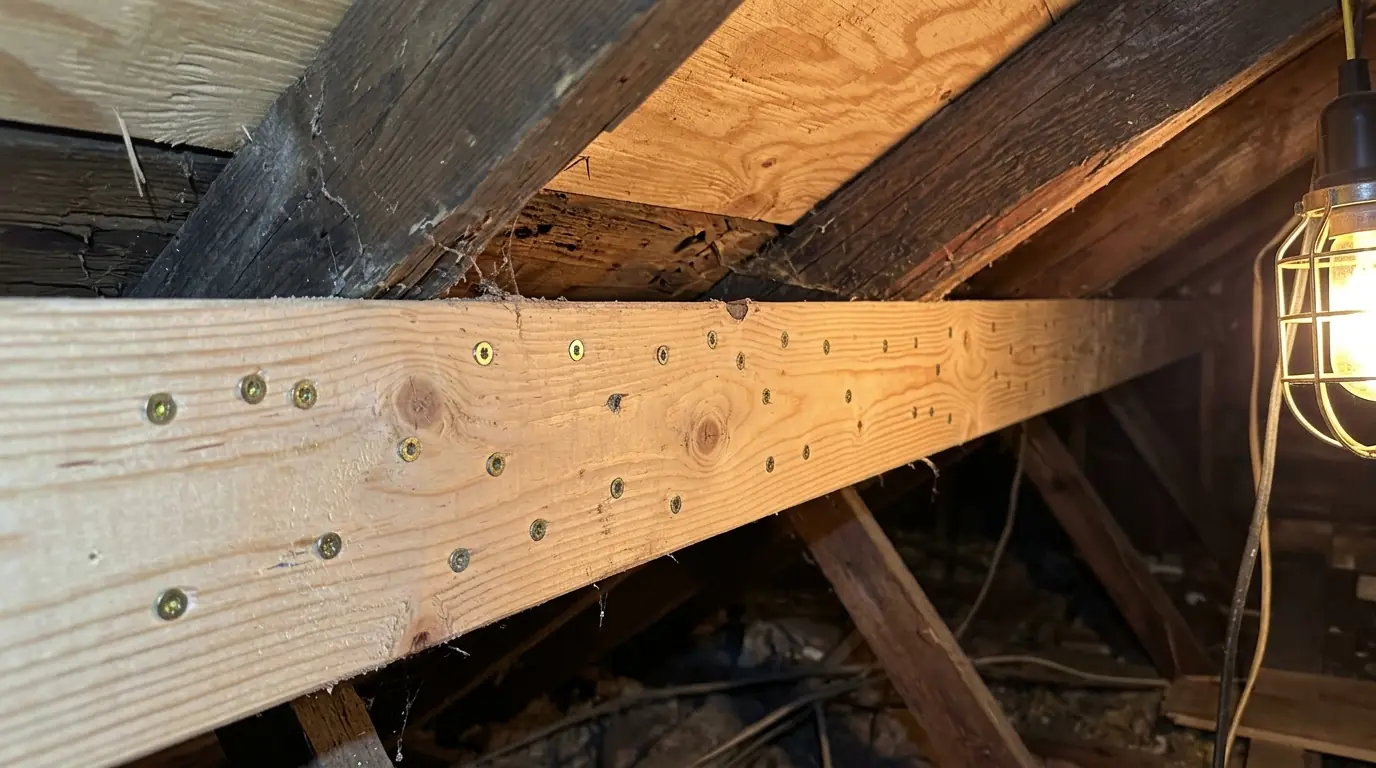
Cracked rafters are usually repaired by sistering: fastening a new full-length board alongside the damaged one so they carry the load together. Badly broken rafters may be replaced outright. Truss repairs follow the repair design for that truss.
With the framing sound, we replace every piece of decking that was punctured, cracked or delaminated, nailing it to the rafters on the proper spacing. Then we install new underlayment, rebuild the shingle surface and tie it into the undamaged roof around it. The finished patch should be invisible from the street and just as strong as the rest of the slope.
Ice loads are the worst-case scenario for trees. A thin coating of ice on every twig multiplies the weight a branch carries, and trees that still have leaves catch even more. That's what made the October 2020 storm so destructive across the metro.
After a storm like that, limbs that didn't fall can still be cracked and hanging. We point out overhanging limbs we see during the repair. Trimming branches back from the roofline also reduces leaf buildup in valleys and lets the shingles dry after rain. Shaded, damp shingles grow moss and algae and wear out sooner, so the trim pays off twice.
When a tree falls on a house during a storm, most homeowner policies treat the damage to the house as a covered loss, often including removal of the tree from the structure. Coverage for tree removal from the yard and for neighbors' trees varies a lot, so read your policy.
We photograph the tree on the roof if we get there before it's removed, and document every damaged rafter, board and shingle afterward. Those photos help your adjuster see damage that's hidden once the roof is closed up. You decide on the claim; we provide the record.
Any sizable branch on the roof can hide punctures and cracked decking underneath it.
A dip in the ridge or a slope after a tree strike points to cracked framing.
New nail pops or ceiling cracks under the impact area suggest the framing shifted.
Daylight in the attic near the strike means the roof is open to the weather.
Bent gutters and crushed fascia often mean the limb hit the eave hard enough to damage the rafter tails.
Hanging or split branches above the roof after a storm are the next impact waiting to happen.
The same people who look at your roof are the ones who do the work, and they explain each step before it happens.
Call (405) 864-0080Once the heavy wood is removed, we clear debris and cover the opening to stop rain.
We check rafters, trusses, joists and connections from the attic around the impact.
Every broken board and cracked member gets photographed for your records and any claim.
We sister or replace damaged framing and install new decking across the impact zone.
New underlayment, shingles, flashing and gutters are tied into the existing roof.
Every roof is priced after we have seen it. These are the things that move the number up or down.
Call any hour. Our own crew inspects, photographs and explains the fix before any work starts.
No. Heavy limbs can roll, spring or break through the decking, and many are near power lines after a storm. Have a tree service or the utility handle large wood, then call us to secure the roof.
Usually, yes. Most cracked rafters can be sistered with a new full-length board, and the damaged section of decking and shingles rebuilt. Full replacement is only needed when damage is widespread.
Damage to the house from a tree falling in a storm is commonly covered, but details vary, especially for tree removal and trees from a neighbor's yard. Check your policy and report the loss promptly.
Look for sags in the roofline, new ceiling cracks or nail pops below the impact. The only sure way is an attic inspection of every truss near the strike, which we do on every tree damage job.
Yes. Ice can leave limbs cracked and hanging without falling right away. Trimming branches back from the roof reduces impact risk and keeps leaves out of the valleys.
Heavy-duty storm tarps anchored with battens, not bricks, to keep rain out until your permanent roof repair or claim is settled.
Learn moreReplacing soft, rotted or delaminated OSB and plank decking so new shingles have a solid, properly nailed base to hold onto.
Learn moreRound-the-clock response when water is coming through your ceiling, a storm opened the roof, or debris crashed onto your house.
Learn moreSoffit and fascia repair for rot, squirrel and bird entry, and blocked attic intake vents, finished in aluminum wrap.
Learn moreOklahoma City and the surrounding metro, including:
Southern Oaks, Oklahoma CityMooreBethanyWarr AcresOklahoma CountyQuail Creek, Oklahoma CityWindsor Hills, Oklahoma CityEdgemere Park, Oklahoma CityAll service areas