Metal Roofing
Metal roofing for Oklahoma City homes and outbuildings, from exposed-fastener panels to concealed-fastener systems.
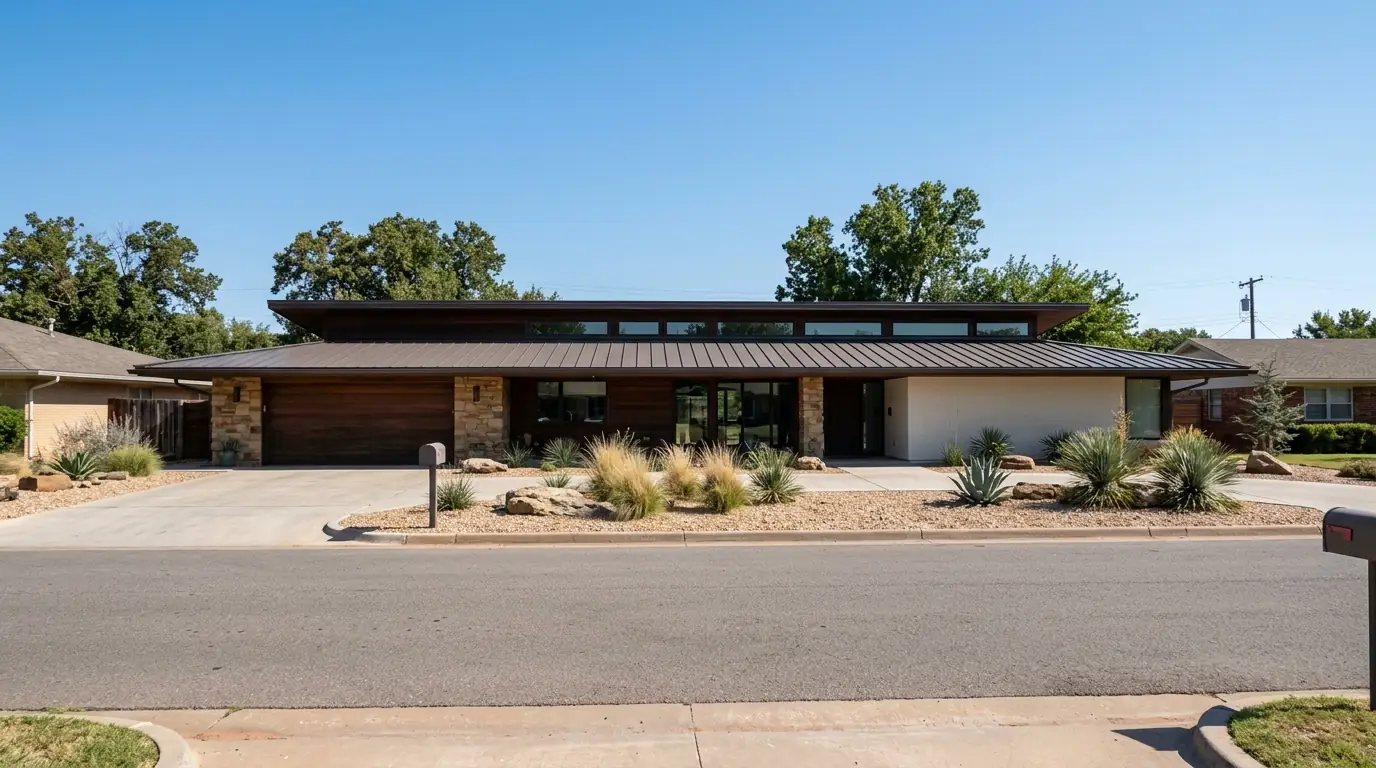
Learn moreStanding seam is the metal roof most people picture on a modern home: clean vertical lines, no visible screws, and crisp edges. In Oklahoma City it shows up on new custom builds, mid-century homes with low-pitch roofs, and porch roofs on older houses where shingles never worked well.
Answered 24/7Call (405) 864-0080 and talk to Sapphire.
A standing seam roof uses long metal panels joined by raised vertical seams, held to the deck with hidden clips instead of screws through the face. The clips let panels expand and contract through Oklahoma City's hot summers and cold snaps. Mechanically seamed versions can also work on lower slopes where shingles are not allowed.
Sapphire installs standing seam metal roofs with our own crew. Here we explain the parts of the system, why the hidden clips matter in Oklahoma's temperature swings, the different seam types, and how standing seam handles shallow roof slopes.
Standing seam panels are long, flat pans of steel or aluminum with a raised leg on each side. Panels are often formed to run in one piece from the eave to the ridge, so there are no horizontal joints where water could sit.
Panel widths commonly run from around twelve to eighteen inches. Narrower panels show less oil canning (a slight waviness in the flat part of the panel) and look more traditional, while wider panels give a bolder, more modern line. Some panels have shallow stiffening ribs pressed into the flat to reduce waviness.
Instead of screwing through the panel face, standing seam is held down by clips fastened to the deck. One side of each clip hooks into the seam, and the next panel locks over it, hiding the clip completely.
Fixed clips hold the panel firmly in place. Floating or sliding clips allow the panel to slide lengthwise as it expands and contracts. On longer panel runs, floating clips are what keep the roof from buckling or tearing at its fasteners over years of heating and cooling.
Metal grows when it heats up and shrinks when it cools. A dark metal panel in direct July sun gets far hotter than the air temperature, and the same panel can drop below freezing on a January night. Over a long run that adds up to noticeable movement.
Oklahoma City has wide swings, sometimes within a single day when a cold front pushes through. If panels are pinned too tightly, that repeated movement can wallow out fastener holes, crack sealant at the ridge, or make the roof pop and tick loudly. Proper clip layout and slotted trim connections let the panels move without damage.
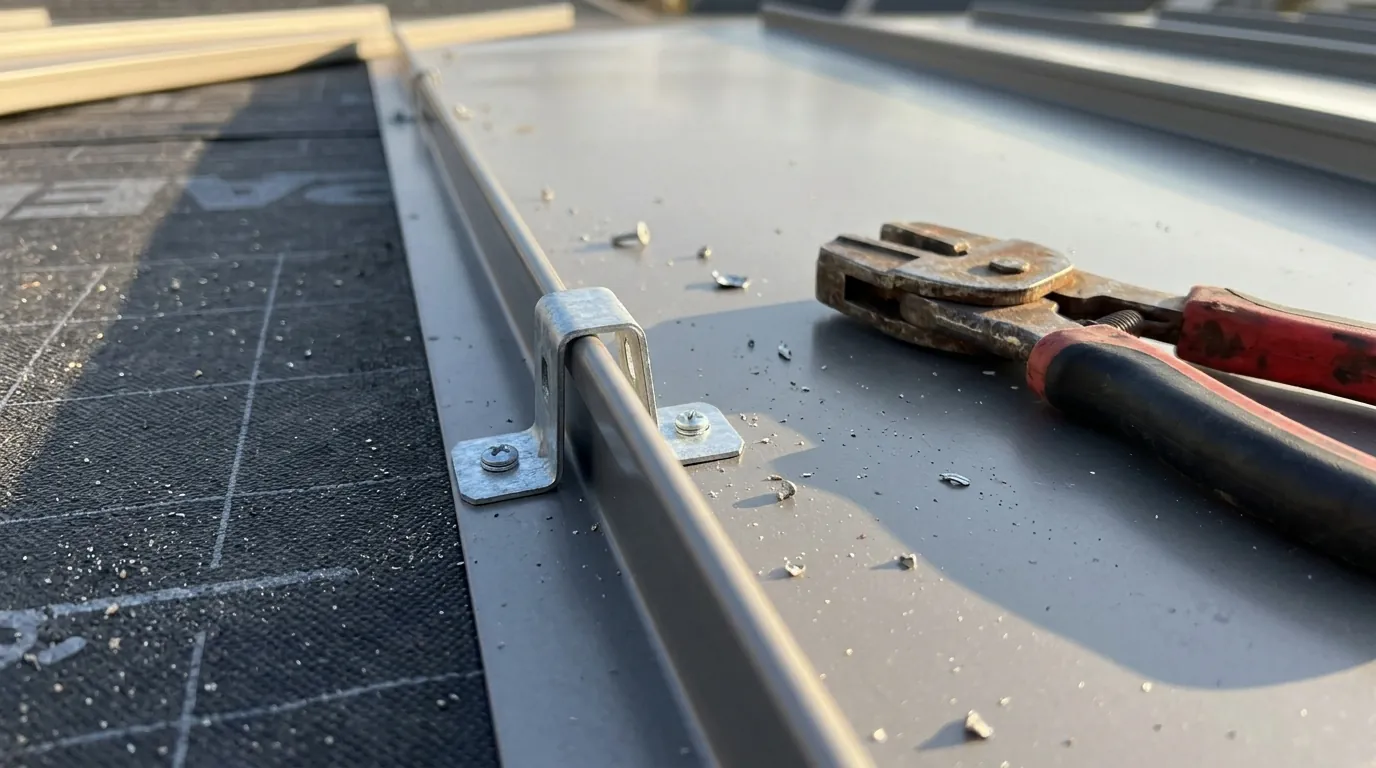
Snap-lock seams click together by hand as the panels are installed. They go on quickly and work well on most residential pitches, and they are the common choice for homes with moderate to steep roofs.
Mechanically seamed panels are folded together with a seaming tool that crimps the legs into a single or double lock. The tighter fold makes the seam more weathertight and better at handling standing water and wind uplift. Double-lock seams are the usual choice for lower slopes and exposed locations.
Many mid-century ranches and contemporary homes around Oklahoma City have long, shallow roof planes, and porches on older homes in neighborhoods like Mesta Park are often nearly flat. Shingles need a minimum pitch to shed water, and below that they leak.
Mechanically seamed standing seam can be used on much lower slopes than shingles, as long as the manufacturer's minimum pitch for that panel and seam is met. Water runs down unbroken panels without crossing laps or fasteners. On these roofs we pay extra attention to the underlayment and the transitions where the low slope meets a wall or a steeper roof.
Standing seam panels are painted with factory finishes, and premium coatings are made to resist fading and chalking under strong sun. Since you will look at this roof for decades, we bring color samples to see against your brick, stone or siding in daylight.
Light finishes reflect more sunlight and help limit attic heat. Darker colors such as charcoal and black are popular on modern farmhouse designs but run hotter. We talk about both before you pick.
Every vent pipe, skylight or exhaust that passes through a standing seam roof interrupts a panel, so placement matters. Where we can, we group plumbing vents in the attic and bring them out through one boot, and we place penetrations in the middle of a pan rather than against a seam.
Standing seam is also well suited to solar. Panel racks can attach with clamps that grip the raised seams, so no holes go through the roof surface. If you are thinking about solar in the next few years, tell us before installation so we can plan seam spacing and keep the best roof planes clear.
Shingles on a shallow roof plane often leak in heavy rain, and standing seam can be a better fit.
Nearly flat porch roofs that hold water may do better with a mechanically seamed panel.
If your exposed-fastener metal roof needs regular screw checks, a concealed system removes that chore.
Standing seam's clean lines suit contemporary and farmhouse designs.
Homeowners staying for decades often weigh standing seam's long service life against its higher upfront cost.
An existing metal roof that pops loudly or ripples may lack room for thermal movement.
The same people who look at your roof are the ones who do the work, and they explain each step before it happens.
Call (405) 864-0080We measure every plane and confirm slopes so we can pick the right seam type and panel length.
We go over panel width, seam profile, metal type and color samples with you.
We tear off old roofing, repair the decking, and install a high-temperature underlayment.
Panels go on with fixed and floating clips placed for movement, then seams are snapped or machine seamed.
We install ridge, eave and wall trim, flash penetrations, clean up shavings, and walk the roof with you.
Every roof is priced after we have seen it. These are the things that move the number up or down.
Call any hour. Our own crew inspects, photographs and explains the fix before any work starts.
Clips hold the panels down while letting them slide as they expand and contract. Screws through the panel face would pin the metal in place, which can lead to stress, wallowed holes and leaks.
Often, yes. Mechanically seamed panels can be used on lower slopes than shingles as long as the manufacturer's minimum pitch is met. We measure your roof to confirm before recommending it.
Oil canning is a slight waviness in the flat part of a panel. It is cosmetic and does not affect performance. Narrower panels, striations and careful installation help reduce it.
Snap-lock works well on most moderate and steep residential roofs. Mechanically seamed panels are tighter and better for low slopes and high exposure, but they take more labor.
Large hail can dent the flat part of the panel, especially with thinner metal. Dents are usually cosmetic, and the raised seams and hidden clips are rarely what fails. We check seams and flashing after any big storm.
Metal roofing for Oklahoma City homes and outbuildings, from exposed-fastener panels to concealed-fastener systems.
Learn moreRoofs for new homes, additions and garages in Oklahoma City, scheduled around your builder and framing inspections.
Learn moreFull tear-off roof replacement in Oklahoma City, from decking checks and underlayment to a magnet sweep of your yard.
Learn moreRepairs for flat and low-slope roofs on OKC homes, porches, additions and small shops: ponding, blisters, seams, scuppers and drains.
Learn moreOklahoma City and the surrounding metro, including:
Mesta Park, Oklahoma CityCapitol Hill, Oklahoma CityEdmondMustangNewcastleEl RenoLogan CountyDeer Creek, Oklahoma CityAll service areas