Gutter Repair
Gutter repair for sagging runs, leaking seams and end caps, bad pitch and the rotted fascia hiding behind them.
Learn moreThe roof edge is where three systems meet: the roof sheds water there, the gutter hangs there, and the attic breathes in through the soffit there. When any of those fails, the wood trim takes the hit. Rot, chewed holes and peeling paint along the eaves are often the first visible sign of a problem that started somewhere else.
Answered 24/7Call (405) 864-0080 and talk to Sapphire.
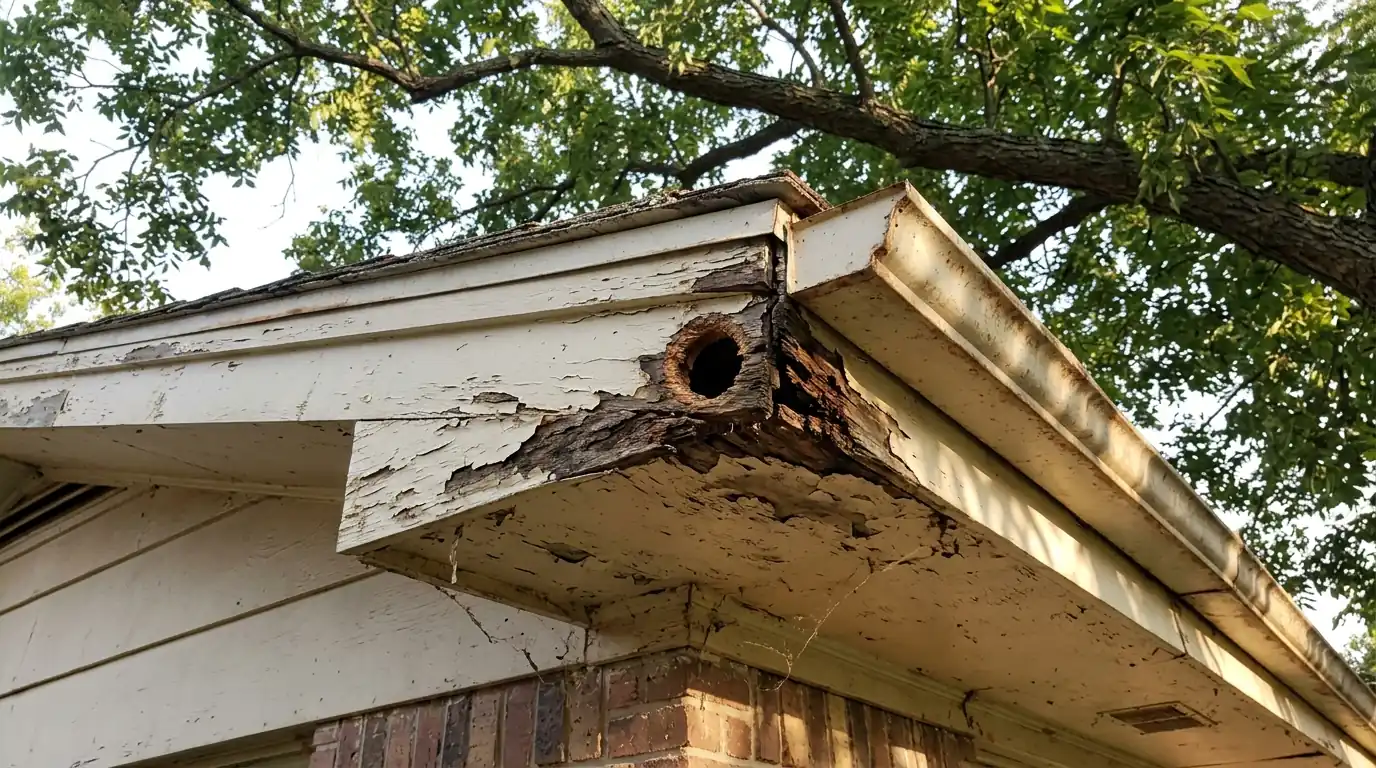
Soffit and fascia repair fixes the trim along your roof edge. The fascia is the board facing outward that holds your gutters, and the soffit is the underside of the overhang that lets air into the attic. In Oklahoma City, the common problems are water rot, squirrels and birds chewing in, and solid soffits that starve the attic of intake air.
Sapphire repairs soffit and fascia across the Oklahoma City metro, often on homes with deep overhangs from the 1950s through the 1980s in areas like The Village, Warr Acres, Midwest City and south OKC. We find the cause, replace the damaged wood, close off animal entry, and finish the edge so it lasts.
The fascia board runs along the ends of the rafters. It gives the gutter something solid to hang on, supports the drip edge at the roof edge, and closes off the rafter ends from weather. The soffit runs underneath the overhang, from the fascia back to the wall.
On most homes, the soffit is also the intake for attic ventilation. Cooler outside air enters through vents in the soffit, rises through the attic, and leaves through ridge or roof vents. Without that intake, Oklahoma attics can reach well above outside summer temperatures, which shortens shingle life and loads your AC.
Fascia rot almost always starts with water. Gutters that overflow or leak at the back, missing drip edge, or shingles cut short so water runs down the board soak the wood every storm. Soffit rot usually comes from a fascia leak spreading back, or from roof leaks at the eaves running down rafter tails.
We probe trim with an awl along the full eave line, not just where it looks bad, because paint can hide soft wood. Rotted sections are cut back to solid wood, new boards are fitted and fastened, all sides are primed, and the water source is fixed so the new wood doesn't follow the old.
Fox squirrels are everywhere in Oklahoma City's tree-lined neighborhoods, and they love the gap where soffit meets fascia or where a roof section meets a wall. A small gap or a soft corner is all it takes. Once inside, they nest in attic insulation and chew on wiring and wood.
Starlings and house sparrows nest in open soffit vents, gaps behind gutters and broken trim. Bats and the occasional raccoon also find their way into soft eaves. We locate entry points, confirm whether animals are still active, and close them with solid repairs and metal-backed vents. If animals are living inside, removal by a wildlife professional should come first so nothing is sealed in.
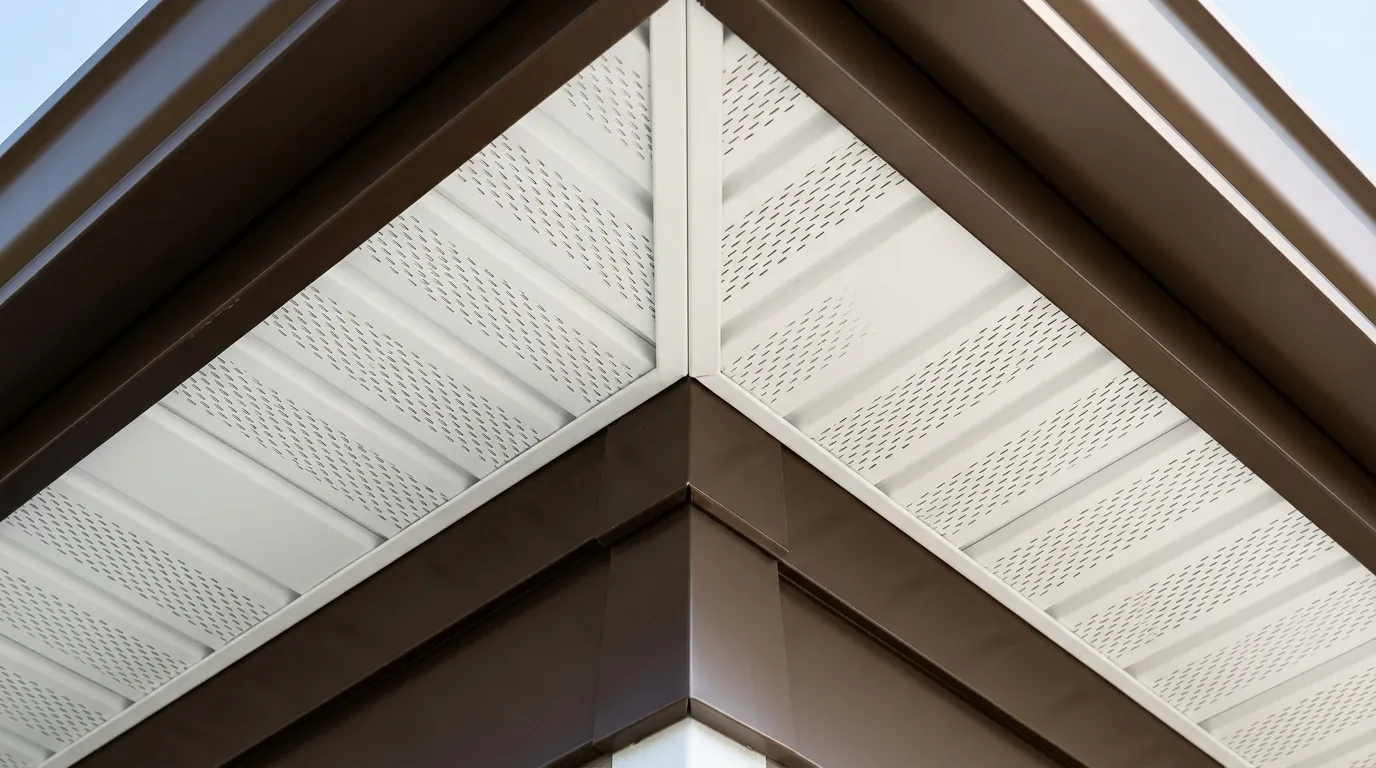
Many older homes have solid plywood soffits with a few small round or rectangular vents, or none at all. Others had vents covered by later layers of trim or blocked from inside by blown insulation. The result is an attic with exhaust vents at the ridge but no air coming in to feed them.
When we replace soffit, we usually recommend continuous vented panels or enough individual vents to balance the exhaust. Inside the attic, baffles at each rafter bay keep insulation from blocking the airflow. Balanced intake is one of the simplest ways to bring down summer attic heat.
After wood repairs, we often wrap fascia in aluminum trim coil bent on a brake to fit the board exactly. The wrap protects the wood from sun and water and never needs paint. It's color-matched to gutters or trim, and it tucks under the drip edge so water can't get behind it.
For soffits, aluminum or vinyl panels are installed in channels along the wall and fascia. Vented panels let air in while keeping out insects and birds. The key detail with any wrap is the wood underneath: wrapping over rot just hides it, so we only wrap solid boards.
A roof replacement is the best time to fix fascia. The gutters are coming off anyway, the drip edge is being replaced, and the crew can see the top edge of every board. We check fascia and the first few feet of decking at the eaves during every tear-off.
Doing both at once means the new drip edge sits on solid wood and the new gutters hang on sound boards. It also avoids patching trim around a brand-new roof later, which risks damaging fresh shingles at the edge.
Paint flaking off fascia or soffit in strips is often the first sign of moisture in the wood.
Fascia that gives under thumb pressure or a screwdriver is rotting and won't hold gutters.
Round, chewed openings at soffit corners usually mean squirrels or other animals are getting in.
Birds coming and going from the eaves are nesting in vents, gaps or broken trim.
Soffit that droops or pulls away from the wall may be wet, rotted or missing fasteners.
An attic that feels like an oven in summer may have blocked or missing soffit intake vents.
The same people who look at your roof are the ones who do the work, and they explain each step before it happens.
Call (405) 864-0080We check every run of fascia and soffit, probe for rot, look for animal entry and check attic intake.
We identify whether gutters, drip edge, roof leaks or animals caused the damage, so it doesn't return.
Rotted or chewed sections are cut out and replaced with new board primed on all sides.
We install vented soffit and baffles where needed to balance intake with roof exhaust.
Fascia is wrapped in aluminum coil, soffit panels are installed, and gaps are sealed against critters.
Every roof is priced after we have seen it. These are the things that move the number up or down.
Call any hour. Our own crew inspects, photographs and explains the fix before any work starts.
They usually chew through soft or rotted wood at soffit corners, roof-to-wall junctions, or gaps behind gutters. A small opening is enough. Replacing soft wood and closing gaps with solid material stops most entry.
Aluminum wrap protects fascia from sun and water and removes the need to paint it. It's only a good idea over solid wood, though. Wrapping over rot hides the problem while it keeps spreading.
Most homes with ridge or roof vents need soffit intake to make the system work. Without it, attic heat builds up in summer, which shortens shingle life and makes your air conditioning work harder.
Yes. Most repairs are done on their own from a ladder. If the roof is due for replacement soon, though, combining the work saves effort because gutters and drip edge come off anyway.
Gutters that overflow, leak at the back, or were hung without the gutter tucked behind the drip edge send water down the fascia every storm. Over time, that soaks and rots the board.
Gutter repair for sagging runs, leaking seams and end caps, bad pitch and the rotted fascia hiding behind them.
Learn moreBalanced intake and exhaust for OKC attics: ridge vents, soffit vents and fans set up to cut summer heat and winter moisture.
Learn moreAir sealing first, then blown-in or batt attic insulation with baffles, so OKC homes stay cooler in summer and warmer in winter.
Learn moreSeamless gutters rolled on site, sized for Oklahoma downpours, with downspouts placed to keep water off your foundation.
Learn moreOklahoma City and the surrounding metro, including:
ShawneeMcClain CountyLake Hefner, Oklahoma CityHeritage Hills, Oklahoma CitySouthern Hills, Oklahoma CityNormanDel CityPiedmontAll service areas