Class 4 Impact-Resistant Shingles
UL 2218 Class 4 impact-resistant shingles for Oklahoma City hail country, explained honestly and installed by our own crew.
Learn moreOklahoma City sits squarely in hail country. From roughly March through June, supercell storms build over western Oklahoma and roll across the metro, and a few minutes of hail can age a roof by years. A smaller fall season adds another round of risk.
Answered 24/7Call (405) 864-0080 and talk to Sapphire.
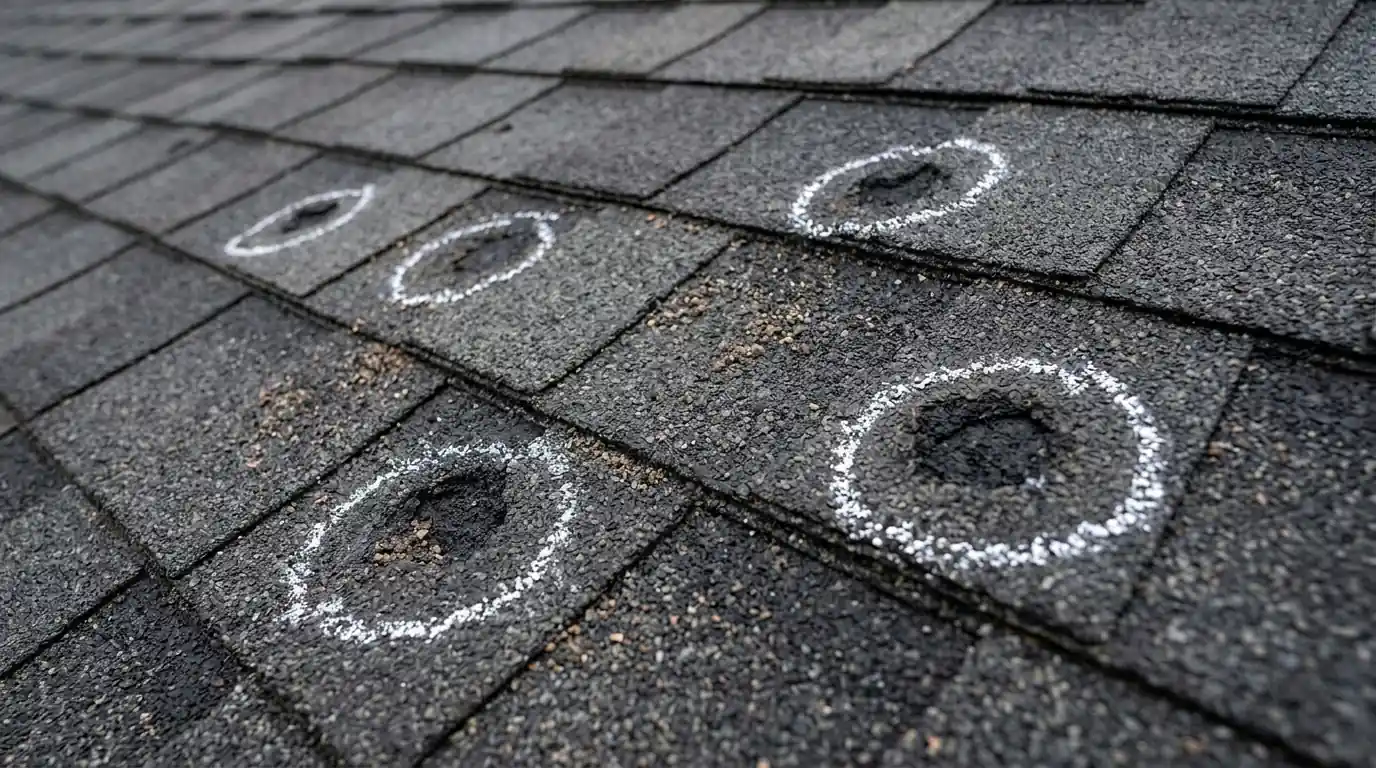
Hail damage on an asphalt roof shows up as soft bruises, round spots of missing granules and cracks in the fiberglass mat, not always as obvious holes. Sapphire checks every slope, marks and photographs hits, uses dents on vents and gutters as supporting evidence, and then repairs or replaces the roof depending on how widespread the damage is.
The tricky part is that hail damage often looks like nothing from the ground. Sapphire's crews get on the roof, check each slope by hand and eye, and photograph what we find so you know exactly what the storm did before you decide anything.
A shingle is a fiberglass mat coated in asphalt and surfaced with mineral granules. When a hailstone hits hard enough, it crushes the asphalt layer, knocks granules loose and can crack the mat underneath. That impact point is called a bruise, and it feels soft or spongy when pressed, like the bruise on an apple.
The damage doesn't always leak right away. Once the granules are gone, sunlight starts breaking down the exposed asphalt, and the cracked mat can split further through freeze-thaw cycles. A roof that looks fine in May can start leaking the next spring.
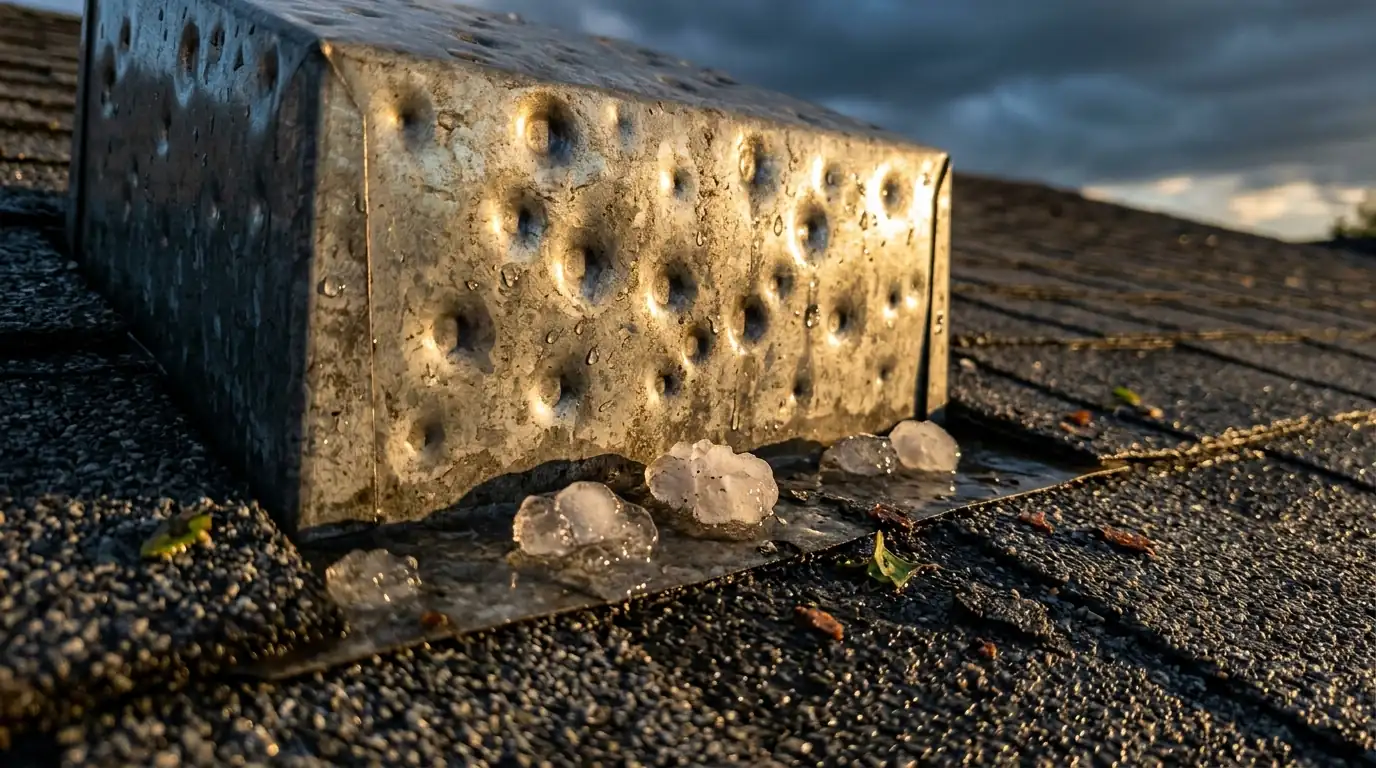
Before we even look at the shingles, we check the soft metals: box vents, ridge vents, turbine vents, pipe jacks, gutters, downspouts and window wraps. Aluminum and thin steel dent easily, and the size and spacing of those dents show how big the hail was and which direction it came from.
Soft-metal dents don't prove shingle damage on their own, but they support it. Adjusters look at the same evidence. A roof with dented vents on the north and west slopes and clean vents on the south tells us where to focus the shingle inspection.
Not every bare spot is hail. Blistering from attic heat, scuffs from foot traffic, manufacturing flaws and old age can all look like hail to an untrained eye. Hail hits are random in pattern, round or irregular, and usually show a fractured mat or soft bruise beneath the granule loss.
Blisters, by contrast, pop outward and leave small craters with clean edges, and they cluster on hot slopes. Mechanical scuffs follow a walking path. We explain these differences on the photos we send you so you can see why we called something hail or not.
More homes around Oklahoma City now carry Class 4 impact-resistant shingles, which are built to take harder hits before the mat cracks. They hold up well, but very large hail can still damage them, and they deserve the same inspection after a big storm.
Some Oklahoma insurers have offered premium credits for impact-resistant roofs. If you're facing a replacement after a hail claim, it's worth asking your agent whether upgrading would change your premium. That's a conversation to have with your carrier, and we'll explain the material side.
If hail damage is limited to a few shingles on one slope, a repair can be the right answer. But hail rarely hits just one spot. When we find consistent hits across several slopes, a patchwork of repairs won't restore the roof, and replacement is the honest recommendation.
Age matters too. Older shingles often can't be lifted for a repair without cracking, so even moderate hail damage on a fifteen-year-old roof usually points to replacement. We'll show you the brittleness test and the hit count per slope so the decision is clear.
Many Oklahoma policies carry a separate wind and hail deductible, sometimes set as a percentage of your dwelling coverage, and some pay older roofs at actual cash value rather than replacement cost. Read your declarations page before you file so the numbers don't surprise you.
Most policies also set a deadline for reporting storm damage, so don't let months go by. We inspect, photograph and give you a written summary of what we found. We work alongside your claim by meeting the adjuster if you want us there, but you make every decision and we don't negotiate on your behalf.
Fresh dings in aluminum vents, gutters or downspouts after a storm mean hail big enough to hurt shingles.
A sudden pile of granules after hail means shingles lost their protective surface.
Random dark circles on an otherwise even roof are often fresh hail hits.
Chipped siding, torn window screens or dented car hoods point to hail that also hit the roof.
When roofs on your street are being replaced after a storm, yours likely took the same hail.
Plastic skylight domes crack under hail and leak fast once they do.
The same people who look at your roof are the ones who do the work, and they explain each step before it happens.
Call (405) 864-0080We start with vents, gutters and flashing to gauge hail size and direction.
Each slope gets checked for bruises, granule loss and mat fractures, with hits marked and counted.
You get dated photos and a plain summary showing what hail did to each slope.
We explain repair versus replacement and what the claim process generally looks like.
Our crew repairs or replaces the roof and any damaged vents, flashing and gutters.
Every roof is priced after we have seen it. These are the things that move the number up or down.
Call any hour. Our own crew inspects, photographs and explains the fix before any work starts.
Look at the soft metals: dented gutters, downspouts, vents and AC fins are strong clues. Granules piling up at downspouts after a storm are another. The only way to be sure is an inspection on the roof itself.
It depends on your policy, which sets its own reporting deadline. Check your policy or ask your agent soon after the storm. Waiting too long can make it harder to tie the damage to a specific storm date.
Yes, when damage is limited to a small area and the shingles are flexible enough to lift without cracking. When hits are spread across several slopes or the shingles are brittle, replacement is the better answer.
No shingle is hail-proof. Class 4 shingles resist mat cracking better than standard shingles, but very large hail can still damage them, so inspect after any big storm.
If you'd like, we can be on site when the adjuster inspects so the damage we documented is easy to find. We aren't public adjusters and don't negotiate for you, but we can point out what we saw.
UL 2218 Class 4 impact-resistant shingles for Oklahoma City hail country, explained honestly and installed by our own crew.
Learn moreHelp with Oklahoma City roof insurance claims: damage photos, adjuster meetings and documented supplements. You own the claim.
Learn moreFull tear-off roof replacement in Oklahoma City, from decking checks and underlayment to a magnet sweep of your yard.
Learn moreGutter repair for sagging runs, leaking seams and end caps, bad pitch and the rotted fascia hiding behind them.
Learn moreOklahoma City and the surrounding metro, including:
Heritage Hills, Oklahoma CitySouthern Hills, Oklahoma CityNormanDel CityPiedmontShawneeMcClain CountyLake Hefner, Oklahoma CityAll service areas