Wind Damage Roof Repair
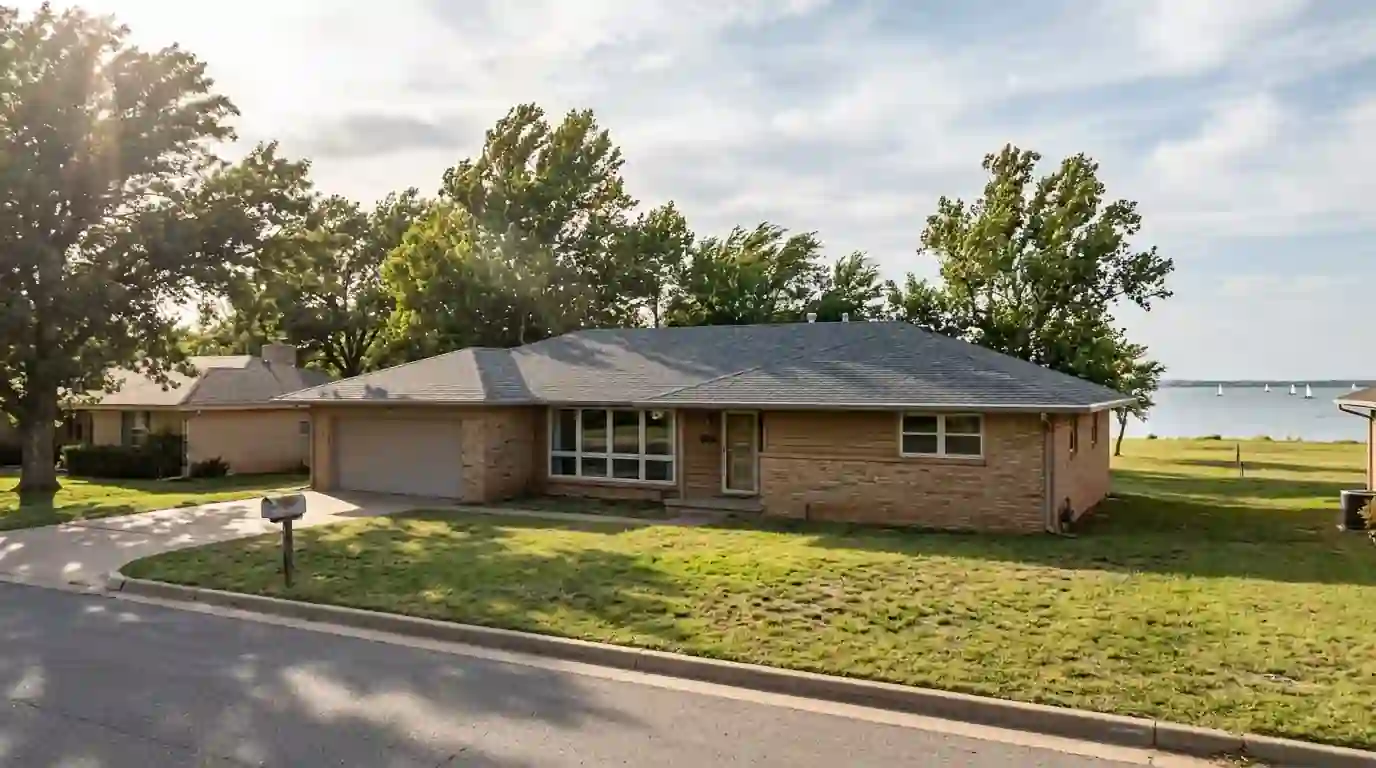
Steady wind off the lake flexes shingle tabs and lifts ridge caps, especially on the side of the house facing the water.
Learn moreSapphire Roofing repairs wind and hail damage and replaces roofs on homes around Lake Hefner in northwest Oklahoma City. Steady lake wind works on shingle edges and ridge caps year round, and spring hail adds to it. We inspect every slope, photograph the damage, explain your options, and answer calls 24/7.
Answered 24/7Our own crews work in Lake Hefner.
Lake Hefner is a reservoir of about 2,500 acres in northwest Oklahoma City. The city began building it in 1940 as part of its 1939 water plan, construction slowed during World War II, and the project was completed in 1947. It is named for Mayor Robert Hefner and remains one of the city's water sources.
Residential neighborhoods border the lake on the north, west and east, many with lake in their names, such as Lakehurst, Lakeside and Lakeview. Aerial photos from construction show no homes near the shore, so most of the housing around the lake came after it was finished.
Lake Hefner gets steady wind through the summer, which is why sailors race there weekly at the Oklahoma City Boat Club and kiteboarders come out on breezy days. That same wind crosses open water and hits homes on the near side of the lake with little to slow it down.
Steady wind wears on a roof in ways a single storm does not. Shingle tabs flex over and over, sealant strips weaken, and ridge caps and rake edges start to lift. We often find a line of loose or creased shingles on the side of the house that faces the water.
East of the lake, neighborhoods such as Lakehurst, between Britton Road and Wilshire Boulevard, were built mainly in the 1960s and 1970s. Most homes there are one-story ranch houses, some with original mid-century details and some heavily remodeled.
Ranch homes of that era tend to have long, low roof planes with wide overhangs. Low pitches shed water more slowly, and wind-driven rain off the lake can push under shingle edges. The underlayment and edge details on these roofs matter as much as the shingle itself.
Lake Hefner Parkway runs along the east side of the lake, and the neighborhoods on either side of it see the same spring hail as the rest of northwest Oklahoma City. Hail bruises asphalt shingles, strips granules and dents vents, gutters and metal flashing.
We mark and photograph hail hits on each slope and on the soft metals, then explain whether repair or replacement makes sense. If you file a claim, we can meet your adjuster at the house. We do not act as a public adjuster or negotiate the claim for you.
The lake is ringed by about 9.5 miles of trail, parks such as Stars and Stripes Park on the south shore, and the Lake Hefner golf course on the southwest corner. Neighborhoods near those open spaces have mature trees on many lots, and those trees fill gutters and valleys with leaves and twigs.
Clogged gutters overflow against fascia boards and the edge of the roof deck, and that slow soaking leads to rot. When we inspect a roof near the lake, we check gutters, fascia and the first few feet of decking at the eaves along with the shingles.
For homes that take a lot of wind, the installation details count. We use the nailing pattern the shingle maker calls for in high-wind areas, starter strips with sealant at every rake and eave, and properly fastened drip edge and ridge caps.
Some owners near the lake choose Class 4 impact-resistant shingles for hail protection, checking the wind rating on the product they pick, or metal roofing, which holds up well to steady wind when the panels and trim are fastened correctly. We explain the options and what drives the cost of each.
Steady wind off the lake flexes shingle tabs and lifts ridge caps, especially on the side of the house facing the water.
Learn moreSpring hail crosses northwest Oklahoma City regularly, bruising shingles and denting soft metals on homes around the lake.
Learn moreLoose or creased shingles along rakes and ridges are a common fix here when the rest of the roof is still sound.
Learn moreMany 1960s and 1970s homes near the lake are due for a full replacement with better edge details and underlayment.
Learn moreMature trees near the trails and parks fill gutters quickly, and overflowing gutters damage fascia and decking.
Learn moreCall Sapphire. Our own roofers inspect, photograph and fix the problem, and we explain it first.
Wind crosses the open water with nothing to slow it and hits the near side of homes harder. Over time that flexes shingle tabs and weakens the seal, so shingles along rakes and ridges lift and crease. We repair those spots and correct the nailing and edge details.
Often, yes. If wind damage is limited to one slope and the shingles still match closely, a slope repair is reasonable. When hail has damaged several slopes or the shingles are near the end of their life, replacement may make more sense.
Correct installation matters most: high-wind nailing, sealed starter strips and fastened edge metal. Class 4 shingles and properly installed metal roofing are both strong choices, and we explain the cost drivers of each.
Yes. Trees around the lake fill gutters quickly, and overflow rots fascia and the edge of the deck. We check and photograph the gutters, fascia and eaves on every inspection.