Commercial Roofing
Low-slope roof repair, replacement and surveys for OKC retail centers, offices, churches and warehouses, worked around your tenants.
Learn moreA single-family reroof has one decision maker. A 12-building apartment community or a 40-unit townhome HOA has an owner, a property manager, a board, an insurance carrier and dozens of residents who all need to know what happens next. The roofing is the same craft, but the planning is a different job.
Answered 24/7Call (405) 864-0080 and talk to Sapphire.
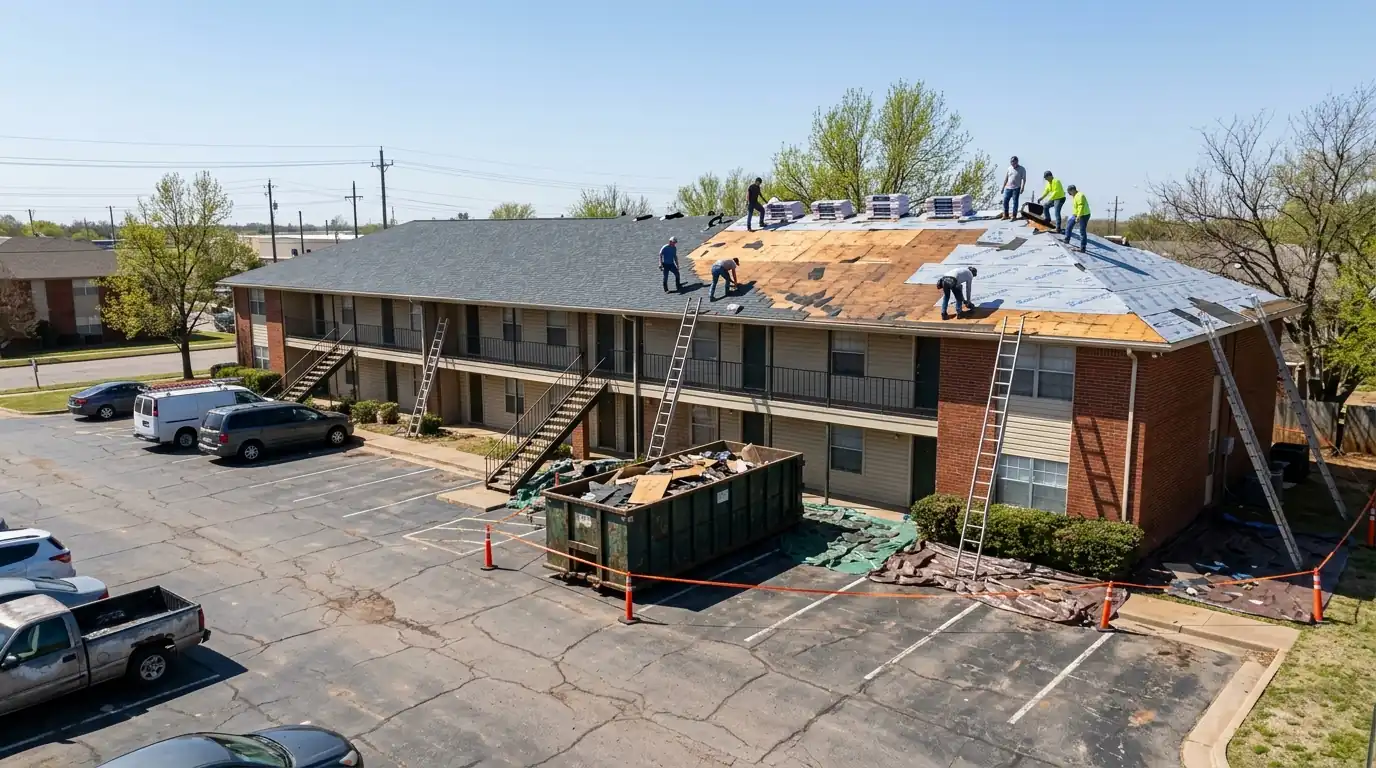
Apartment and HOA roofing means repairing or replacing roofs on shared residential buildings like apartment complexes, duplexes and townhome rows. Sapphire inspects every building, documents storm damage roof by roof, writes a scope your board or owner can vote on, and phases the work building by building so residents keep parking, access and a dry ceiling the whole time.
Sapphire works on multifamily roofs across the Oklahoma City metro from our south OKC office on Santa Fe Avenue and our north office in Guthrie. Our own crews do the tear-off and installation, and we build the schedule, the resident notices and the photo records that boards and managers need to keep a project moving.
We handle duplexes and fourplexes, garden-style apartment buildings with pitched shingle roofs, townhome rows where one roof spans several units, and condo buildings with a mix of steep slopes and low-slope sections over breezeways or stairwells. Many older OKC complexes from the 1970s and 1980s have mansard fronts and flat centers on the same building.
Each of those layouts changes the work. A townhome row with shared ridgelines has to be roofed as one system even when owners are billed separately, and a breezeway flat section needs a membrane detail where it meets the shingled slope so water does not run under the field.
We never tear off more roof than a crew can dry in the same day. On a complex, that usually means one building or one section at a time, with dumpsters and material drops staged so they block the fewest parking spaces and never close a fire lane or the only stair access.
Before work starts we map the order of buildings with the manager, check the 10-day forecast against the spring storm pattern, and leave slack in the schedule for wind days. If a line of storms builds over western Oklahoma, open sections get tarped and battened before the crew leaves.
Residents handle noise far better when they know it is coming. We draft plain notices for the manager or HOA to post: which buildings, which days, start times, where to park, and a reminder to take down wall hangings on top-floor units, since nail guns and tear-off can shake loose pictures and shelves.
For HOAs, we write the scope so the board can vote on it in one meeting. That means a building-by-building condition report, a clear list of what is included (underlayment, drip edge, flashing, ventilation, gutters if needed), shingle color options that satisfy the architectural guidelines, and the order of work.
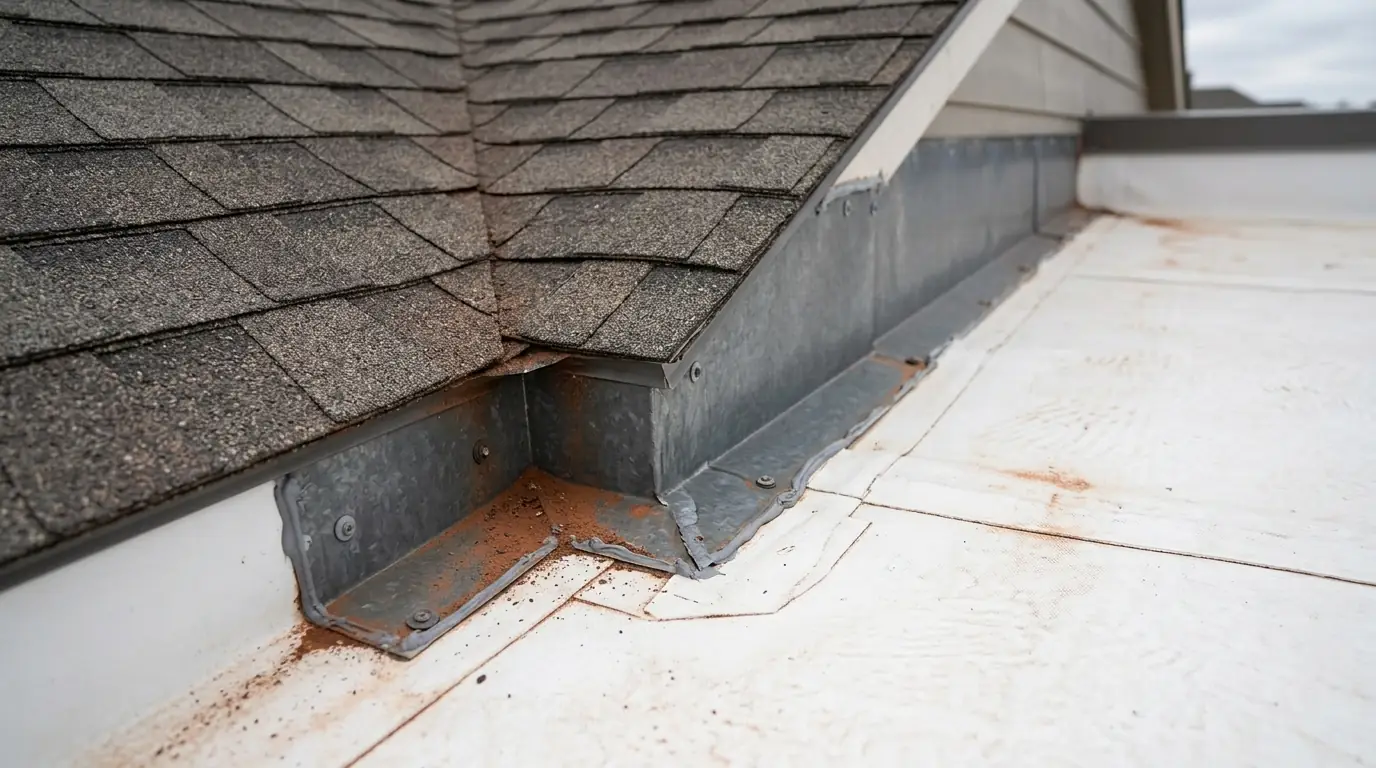
When a spring hailstorm crosses an apartment community, damage is rarely even. West-facing slopes and buildings on the open edge of a site often take far more hits than buildings sheltered by trees or taller neighbors. We inspect and photograph every building and every slope separately, so the carrier sees what each one actually took.
Ownership matters for the claim. An apartment owner files on the master policy. A townhome HOA may own the roofs outright or may share responsibility with unit owners, depending on the declarations. We document the damage and meet the adjuster on site to walk the roofs, but we are not public adjusters and we do not negotiate the claim; the board or owner decides how to proceed.
Most OKC multifamily buildings carry architectural asphalt shingles, and many boards now ask about Class 4 impact-resistant shingles because some carriers adjust premiums for them. On a large community, even a small per-roof difference in hail performance adds up across every claim cycle.
Low-slope breezeways and flat center sections usually get TPO or modified bitumen, tied into the shingle slopes with proper crickets and metal transitions. We also look at attic ventilation building by building, since the long, chopped-up attics in older complexes often trap heat and cook shingles from below in July and August.
Not every leak on a complex means a full reroof. Wind-lifted tabs along the rakes, cracked pipe boots on the plumbing stacks above every unit, and failed flashing at dormer walls are the most common service calls we see on apartments. Fixing them quickly keeps ceiling drywall and insulation from soaking.
We log repairs by building and unit so the manager can see patterns. When the same building keeps leaking at the same kind of detail, that record becomes the backbone of the capital plan and helps the owner budget the next replacement instead of reacting to it.
Brown rings in top-floor units, especially near bathrooms and kitchens, often trace back to cracked pipe boots or failed vent flashing above.
Piles of shingle granules at downspout outlets after a storm usually mean hail bruising or a roof near the end of its life.
Shingles torn off rakes and ridges after straight-line winds leave nail holes open to the next rain.
A building covered in patches of different shingle colors usually means years of spot repairs and a roof that needs a plan.
Standing water on flat breezeway or stair roofs two days after rain points to sagging deck, clogged drains or worn membrane.
Several work orders on the same building in one season are a signal to inspect the whole roof, not just chase each leak.
The same people who look at your roof are the ones who do the work, and they explain each step before it happens.
Call (405) 864-0080We inspect and photograph each roof and slope, then deliver a building-by-building condition report the owner or board can read.
We list what is included per building, the material and color options, and the proposed phasing order.
We agree on dumpster spots, parking closures, resident notice dates and daily start times with the manager.
Our crews tear off only what they can dry in that day, replace bad decking, and clean the grounds before moving on.
The manager gets final photos, a list of decking and flashing replaced per building, and notes for the property file.
Every roof is priced after we have seen it. These are the things that move the number up or down.
Call any hour. Our own crew inspects, photographs and explains the fix before any work starts.
A typical garden-style apartment building is often torn off and dried in within a day or two, weather allowing. A whole community is scheduled building by building, so the total length depends on the number of buildings and how many spring storm days interrupt the work. We give the manager a phased calendar before we start.
Yes. Many HOAs replace the worst buildings first and plan the rest over later budget years. The main caution is shared ridgelines: a roof that spans several units should be done as one piece so the new and old sections are not stitched together mid-slope.
It depends on who owns the roof under the HOA declarations. Some associations insure all roofs on a master policy; others leave roofs to each unit owner's policy. We document damage for whoever files, but the board and its insurance agent should confirm responsibility first.
No. Residents stay in their units. We ask that top-floor residents take down wall hangings and fragile shelf items, and we post notices about parking and start times so cars are not parked under the eaves during tear-off.
We bring current color samples to the board so it can pick a color that fits its architectural guidelines. Exact matches to shingles from 15 or 20 years ago are rarely possible, which is one reason HOAs often move a whole row or section to the new color at once.
Low-slope roof repair, replacement and surveys for OKC retail centers, offices, churches and warehouses, worked around your tenants.
Learn moreHelp with Oklahoma City roof insurance claims: damage photos, adjuster meetings and documented supplements. You own the claim.
Learn moreUL 2218 Class 4 impact-resistant shingles for Oklahoma City hail country, explained honestly and installed by our own crew.
Learn moreRepairs for flat and low-slope roofs on OKC homes, porches, additions and small shops: ponding, blisters, seams, scuppers and drains.
Learn moreOklahoma City and the surrounding metro, including:
Earlywine, Oklahoma CityMidwest CityGuthrieNichols HillsCleveland CountyGaillardia, Oklahoma CityBelle Isle, Oklahoma CityPutnam Heights, Oklahoma CityAll service areas