Flat Roof Repair
Repairs for flat and low-slope roofs on OKC homes, porches, additions and small shops: ponding, blisters, seams, scuppers and drains.
Learn moreIf your house has a low-slope porch roof, a flat-roofed den addition or a carport tied into the main roof, there is a good chance it is covered with modified bitumen. It is the natural successor to old built-up tar-and-gravel roofs and is still one of the most practical choices for smaller low-slope areas.
Answered 24/7Call (405) 864-0080 and talk to Sapphire.
Modified bitumen is a multi-layer asphalt roofing system for low-slope roofs, built from a base sheet and a granulated cap sheet. It can be torch-applied, set in cold adhesive or self-adhered. In Oklahoma City it is common on back porches, carports, mid-century homes and small shops. Sapphire picks the installation method that suits the building, the deck and the fire risk nearby.
Sapphire installs and repairs modified bitumen on homes and light commercial buildings across the metro, from 1950s and 1960s ranches in northwest OKC to small shops and offices in Guthrie and Logan County. Our own crews choose the application method, lay the plies and flash the edges, then photograph the finished roof.
Modified bitumen is asphalt blended with rubber-like or plastic-like modifiers, then formed into sheets around a reinforcing mat. The modifiers give the asphalt more stretch and better behavior in heat and cold than the plain asphalt used in old built-up roofs.
A typical system has at least two layers: a smooth base sheet fastened or adhered to the deck, and a cap sheet on top. The cap sheet is surfaced with ceramic granules, much like a shingle, which protect the asphalt from sunlight and give the roof its color.
The three main installation methods produce similar finished roofs, but they differ in how the layers are joined and where each one makes sense. We pick based on the building, the deck and what is nearby.
Torch application heats the back of each sheet with a propane torch until the asphalt flows, then rolls it into place. It creates strong laps but brings open flame to the roof, so we avoid it next to wood siding, under eaves and on homes where hidden combustible material sits close to the work. Cold-applied and self-adhered sheets remove the flame entirely.
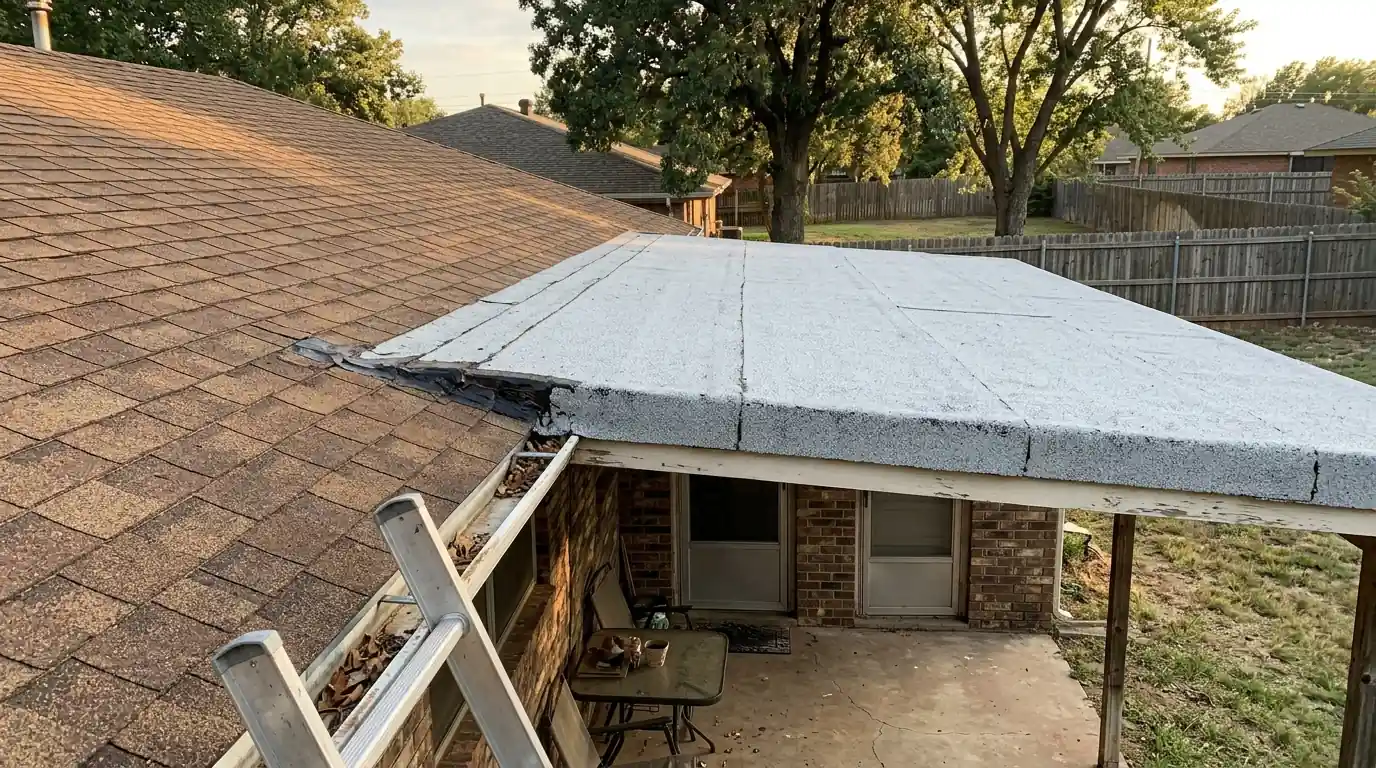
Many mid-century homes in neighborhoods such as Lake Hefner, Windsor and Belle Isle were built with low-pitch roof sections over dens, entries and carports. Those areas are too flat for shingles, which need enough pitch to shed water, but they are small enough that a full commercial single-ply system can feel like overkill.
Modified bitumen fits that gap. It handles foot traffic, holds up well to sun with its granule surface and ties neatly into the shingle roof beside it. The granulated cap sheet also comes in colors that sit comfortably next to gray or brown shingles.
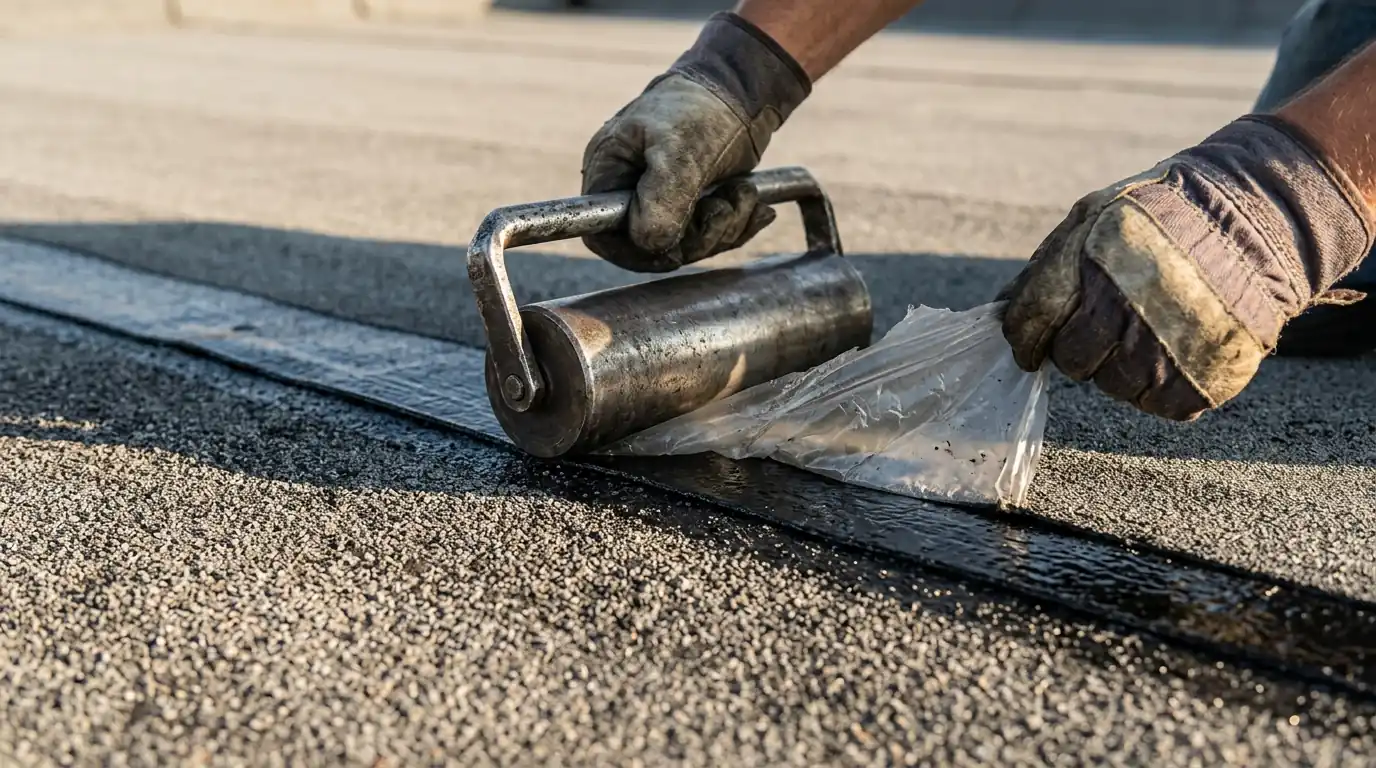
The granule surface is the cap sheet's sun shield. Without it, ultraviolet light dries the asphalt and it begins to crack. Over many summers granules wash off, and bare spots appear first where water flows or where people walk most.
White or light-colored cap sheets reflect more sunlight and run cooler than dark ones. On a porch roof facing west, that can make a real difference in how hot the room or patio below feels on a summer afternoon. When granule loss gets heavy, a compatible coating can extend the cap sheet's life.
The trickiest part of a residential modified bitumen roof is where it meets something else. At the junction with a pitched shingle roof, the membrane has to run up under the shingles far enough that water from the upper roof lands on top of it, not under it.
Where a porch roof meets a brick or siding wall, the membrane turns up the wall and is covered by counter-flashing tucked into a mortar joint or under siding. At the outer edge, the sheets wrap over a metal drip edge so water drops clear of the fascia instead of running behind the gutter.
Open laps are the most frequent issue we see. If a lap was not fully heated, pressed or adhered during installation, it can open with heat cycles. Blisters, where trapped moisture or air lifts the cap sheet, appear in summer and often grow year by year.
Other problems include cracking where the deck moves, granule loss at drip lines, and failed flashings at walls and pipes. Ponding near the low edge of a porch roof can also soften the asphalt over time. Most of these are repairable with new cap sheet sections if caught before water reaches the deck.
Some older homes still carry a tar-and-gravel built-up roof or a single layer of mineral-surfaced roll roofing on a porch. Both tend to fail at laps and edges. Replacing them with a proper two-ply modified bitumen system is a common upgrade.
We tear off to the deck, replace soft or rotted boards, add tapered material where water ponds, install the base and cap sheets and rebuild the flashings. On historic homes in districts such as Heritage Hills, we keep visible edges and trim consistent with the house.
Areas where granules are gone leave the asphalt exposed to sun and cracking.
Seams that curl or can be lifted by hand let water slip between the layers.
Raised bubbles that get bigger each summer show trapped moisture under the cap.
Water inside where the porch meets the house often traces to failed wall flashing.
Single-layer roll roofing often fails at laps and nails and is a good candidate for an upgrade.
Straight-line cracks that follow board joints mean the deck is moving beneath the membrane.
The same people who look at your roof are the ones who do the work, and they explain each step before it happens.
Call (405) 864-0080We check the existing layers, deck condition, slope and every tie-in to walls and shingles.
We select torch, cold-applied or self-adhered based on fire risk, deck and layout.
Old material comes off, damaged boards are replaced and tapered build-up is added where water sits.
Our crew lays the base sheet, then the granulated cap with staggered, fully sealed laps.
Wall, shingle and edge transitions are flashed and the finished roof is photographed.
Every roof is priced after we have seen it. These are the things that move the number up or down.
Call any hour. Our own crew inspects, photographs and explains the fix before any work starts.
It can be, on open roofs away from combustible materials. Next to wood siding, eaves or hidden framing, we use cold-applied or self-adhered sheets instead to remove the flame.
Porch roofs are often too low in pitch for shingles. Modified bitumen is built for low slopes, handles foot traffic and ties neatly into the shingle roof beside it.
Open laps, blisters and flashing failures can usually be repaired with new cap sheet sections. Widespread cracking, wet deck or heavy granule loss across the roof point to replacement.
Roll roofing is a single thin layer, usually nailed. Modified bitumen is a multi-ply system with modified asphalt that stretches and bonds at the laps, so it lasts longer on low slopes.
A light cap sheet reflects more sunlight than a dark one, so the roof surface runs cooler. That can make the space underneath noticeably more comfortable on west-facing porches.
Repairs for flat and low-slope roofs on OKC homes, porches, additions and small shops: ponding, blisters, seams, scuppers and drains.
Learn moreSilicone coatings that restore sound low-slope roofs in the OKC metro, after a moisture survey, careful cleaning and proper prep.
Learn moreBlack EPDM rubber roofs installed and repaired across OKC: taped seams, adhered or ballasted systems, and careful flashing details.
Learn moreRepair and replacement of step, counter, chimney, wall, valley and pipe boot flashing, the joints where most roof leaks begin.
Learn moreOklahoma City and the surrounding metro, including:
Edgemere Park, Oklahoma CitySouthern Oaks, Oklahoma CityMooreBethanyWarr AcresOklahoma CountyQuail Creek, Oklahoma CityWindsor Hills, Oklahoma CityAll service areas