Standing Seam Metal Roofs
Concealed-clip standing seam metal roofs in Oklahoma City, designed for thermal movement and suited to low-slope roofs.
Learn moreMetal roofs are no longer just for barns along I-35. More homeowners around Oklahoma City are choosing metal for houses, garages and porches, drawn by its long life and the way it sheds wind and rain.
Answered 24/7Call (405) 864-0080 and talk to Sapphire.
Metal roofing comes in two main families: exposed-fastener panels screwed through the face, and concealed-fastener systems such as standing seam where the attachments are hidden. In Oklahoma City, metal handles wind well and can reflect summer heat. Hail can dent it, but a dent is usually a cosmetic issue rather than a leak.
Sapphire installs metal roofing with our own crew. This page is an overview of the systems available, the common questions people ask about noise and heat, and an honest look at what hail does to metal. For specific systems, see our standing seam and stone-coated steel pages.
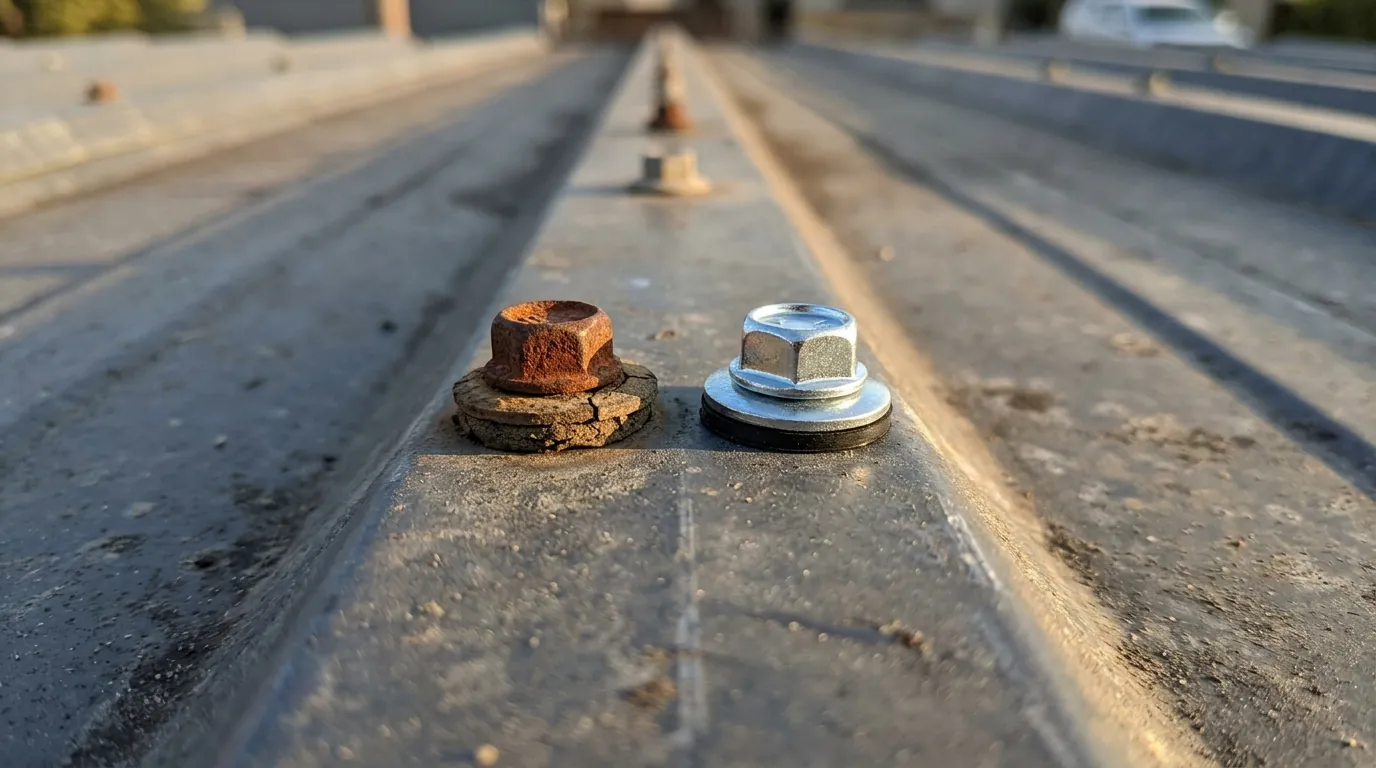
Exposed-fastener panels, sometimes called ag panels or R-panels, are fastened with screws driven straight through the face of the metal into wood purlins or decking. Each screw has a rubber washer that seals the hole.
These panels go up quickly and cost less than concealed systems, which makes them popular for shops, carports and rural homes on the edges of Logan and Canadian counties. The trade-off is maintenance. Metal expands and contracts every day, the washers wear out over time, and the screws eventually need checking or replacing to keep the roof tight.
Concealed-fastener systems hide the attachment points under the panel seams. Standing seam is the best-known example, with raised ribs that lock together over clips. Some snap-lock and mechanically seamed panels fall in this group too.
With no holes through the weather surface, there are far fewer places for water to get in, and the panels can move with temperature changes without loosening screws. These systems cost more and require more skilled installation, but they need much less fastener maintenance over the life of the roof.
The idea that metal roofs are noisy comes mostly from open barns and carports, where rain hits panels with nothing under them. On a house, metal goes over solid decking and underlayment, and there is an insulated attic between the roof and your living space.
In that setup, rain on a metal roof sounds much like rain on shingles. Hail is louder, as it is on any roof. If you are concerned, we can talk about underlayment choices and attic insulation that further dampen sound.
Metal panels with light-colored or specially formulated paint finishes reflect a good share of the sun's energy rather than absorbing it. Many metal finishes are rated for solar reflectance, and lighter colors generally reflect more.
Metal also cools off quickly once the sun goes down, unlike asphalt that holds heat into the evening. In an Oklahoma City summer, a reflective metal roof combined with proper attic ventilation can help keep upstairs rooms more comfortable. How much depends on your insulation, ductwork and home design.
Large hail can dent metal, especially softer aluminum or thinner steel panels. A dent is usually cosmetic: the paint finish and the metal stay intact, and the roof keeps shedding water.
Leaks are a different issue. They usually come from cracked paint on a crushed seam, a backed-out or damaged fastener, or flashing that was bent out of place. After a storm we check those points specifically, not just the dents. Some insurance policies treat cosmetic dents on metal differently from functional damage, so read your policy for any cosmetic damage exclusion.
Steel panels come in different thicknesses, called gauges, where a lower number means thicker metal. Thicker panels resist dents better and cost more. Paint finishes also vary, with some systems using higher-performance coatings that hold color longer under strong sun.
Trim and flashing details make or break a metal roof. Ridge caps, eave closures, wall flashing and pipe boots designed for metal keep wind-driven rain and insects out. We use matched trim pieces for the system rather than improvising with parts meant for shingles.
Properly attached metal panels hold up well to the straight-line winds that cross central Oklahoma, because there are no individual tabs for wind to catch. The weak points are the edges: eave trim, rake trim and ridge caps need the right fastener spacing so a gust cannot get under them and peel a panel back.
Ice behaves differently on metal than on shingles. After a storm like the October 2020 ice event that broke limbs across the metro, ice and snow can release from a smooth metal roof all at once. Over a door, walkway or lower roof, we talk about snow guards or gutter placement so that sliding sheet of ice does not land somewhere it can do harm.
Exposed-fastener roofs with backed-out screws or rusted heads are at risk of leaks around every hole.
Cracked or flattened washers no longer seal the fastener holes on panel roofs.
If you are tired of repeated shingle repairs, metal may be worth comparing at replacement time.
Outbuildings are often a good fit for metal panels with simple trim.
Dents should be checked to confirm whether seams, fasteners and flashing are still sealed.
Cut edges and scratched areas can start to rust and need attention before they spread.
The same people who look at your roof are the ones who do the work, and they explain each step before it happens.
Call (405) 864-0080We look at the pitch, decking, and how the house or building is framed to recommend the right metal system.
We compare exposed-fastener, concealed-fastener and stone-coated options against your budget and goals.
Old roofing is removed, decking is repaired, and a high-temperature underlayment goes down.
Our crew installs panels, closures, flashing and ridge caps made for that system.
We check fasteners, seams and flashing, clear metal shavings from the roof and gutters, and walk the job with you.
Every roof is priced after we have seen it. These are the things that move the number up or down.
Call any hour. Our own crew inspects, photographs and explains the fix before any work starts.
Not usually. Over solid decking, underlayment and an insulated attic, rain on metal sounds much like rain on shingles. The loud metal roofs people remember are typically on open barns or carports.
Most dents are cosmetic and do not cause leaks. Leaks come from damaged seams, fasteners or flashing, so after a storm those are the areas we check.
Yes. The screw washers age with sun and temperature swings, so screws should be checked and tightened or replaced periodically. Concealed-fastener systems need much less of this.
Reflective finishes can reduce how much heat the roof absorbs, and metal cools quickly at night. The size of the effect depends on your attic ventilation, insulation and duct layout.
Some systems allow it where codes permit, but we generally recommend tearing off to check and repair the decking first. A hidden soft spot under metal is much harder to deal with later.
Concealed-clip standing seam metal roofs in Oklahoma City, designed for thermal movement and suited to low-slope roofs.
Learn moreStone-coated steel roofing in Oklahoma City: steel panels with a granular finish shaped like shingles, shake or tile.
Learn moreFull tear-off roof replacement in Oklahoma City, from decking checks and underlayment to a magnet sweep of your yard.
Learn moreHail inspections that look for bruised shingles, granule loss and fractured mats, plus repair or replacement after an OKC hailstorm.
Learn moreOklahoma City and the surrounding metro, including:
Windsor Hills, Oklahoma CityEdgemere Park, Oklahoma CitySouthern Oaks, Oklahoma CityMooreBethanyWarr AcresOklahoma CountyQuail Creek, Oklahoma CityAll service areas