Emergency Roof Repair
Round-the-clock response when water is coming through your ceiling, a storm opened the roof, or debris crashed onto your house.
Learn moreA tarp seems simple until the first gusty night pulls it loose and dumps a pool of water straight into the attic. In Oklahoma, where storms often come in clusters a day or two apart, a tarp has to be installed to hold through the next round, not just the rest of tonight.
Answered 24/7Call (405) 864-0080 and talk to Sapphire.
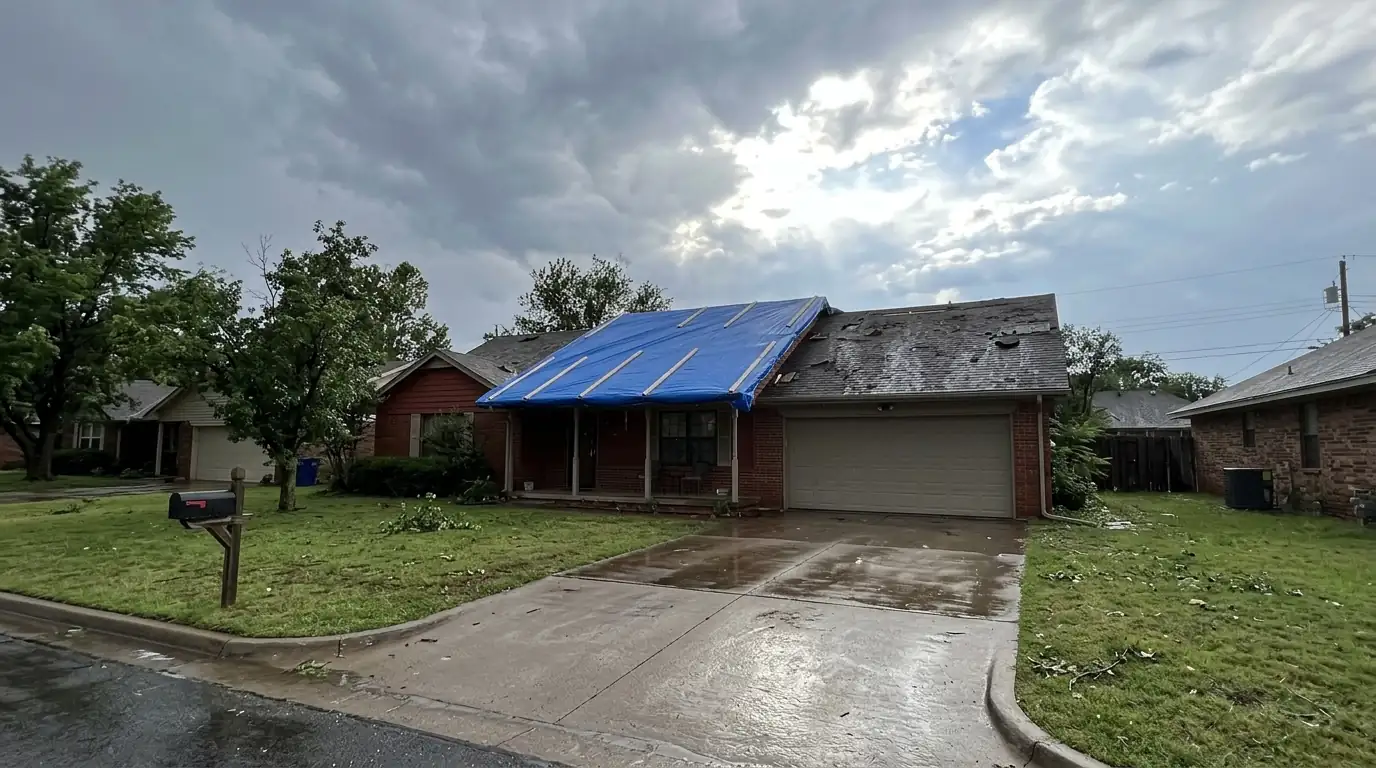
An emergency roof tarp is a temporary cover that keeps rain out of a damaged roof until permanent repairs can be made. Sapphire installs heavy-duty tarps that run over the ridge and are fastened with wood battens, not weighted with bricks, so they survive Oklahoma wind. We photograph the damage first so your insurance record stays intact.
Sapphire's crews tarp roofs across the Oklahoma City metro and up through Logan County. This page is about the tarp itself: how we put it on, how it's anchored, how long it lasts and how it fits into an insurance claim.
A tarp is the right call when the roof is open and the permanent repair can't happen right away. That might be because the damage is large, because an adjuster needs to see it first, because matching materials have to be ordered, or because a storm surge has every crew in town booked for weeks.
Common tarp jobs include sections of shingles blown off, holes from fallen limbs after the tree is removed, a damaged chimney or skylight, and fire or debris damage. If only a few shingles are missing and we can replace them on the spot, we skip the tarp and just make the repair.
We size the tarp to extend well beyond the damage on every side and, whenever possible, carry it up and over the ridge so water sheds down the other slope instead of running under the top edge. A tarp that stops partway up a slope invites rain to run right underneath it.
The edges are rolled around wood battens and fastened through the battens into the roof, so the load is spread along a board instead of concentrated at a single grommet. Grommets tear, sandbags slide, and bricks become projectiles in a strong gust.
Once a tarp is installed, an adjuster can't see the damage under it without the tarp being removed and reinstalled. So before we cover anything, we photograph the opening, the debris, the broken shingles and decking, and the surrounding roof from several angles.
Then we photograph the tarp after it's installed and note the date. You get the full set. That record shows your carrier both the damage and the reasonable step you took to prevent more of it, which most policies expect.
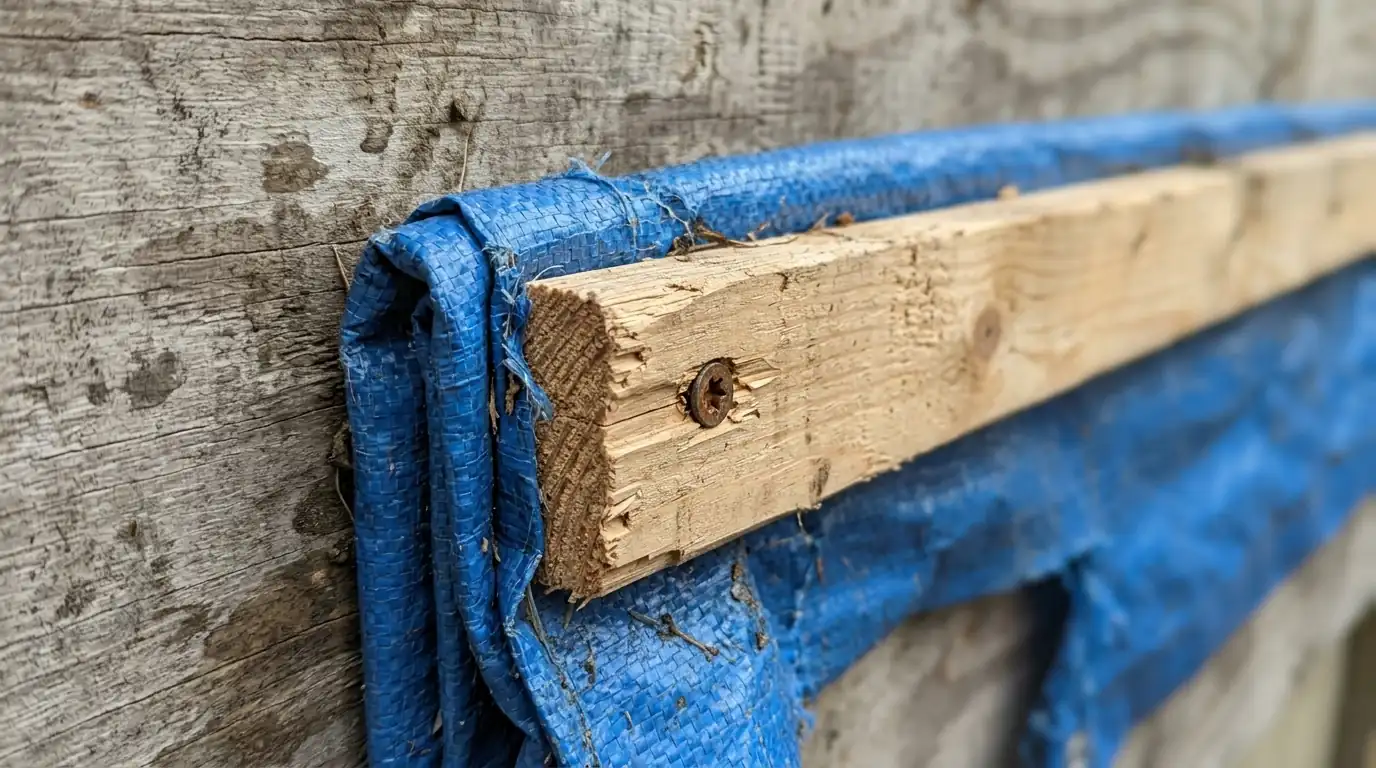
A properly anchored tarp is meant to get you through weeks, sometimes a couple of months, not seasons. Oklahoma summer sun breaks down poly tarps faster than people expect, and repeated gusts loosen even well-placed fasteners over time.
We recommend checking the tarp from the ground after every storm and calling us if a corner has lifted or water is pooling on it. If your permanent repair is delayed by a claim or material order, we can refasten or replace the tarp so it keeps working.
Not every tarp goes on a calm afternoon. Steep pitches, two-story eaves, wet shingles and broken decking all add risk. Our crews use roof anchors and harnesses, and they won't walk on decking that's been compromised. They'll work from ladders or framing instead.
Some situations are too dangerous for anyone until conditions change, such as lightning in the area or winds strong enough to rip a tarp out of a crew's hands. In those cases we focus on what can be done from inside, like catching water and moving belongings, and tarp as soon as it's safe.
The tarp buys time, and we use it well. While it's on, we scope the full repair, check the decking and framing from the attic, order matching materials and, if you're filing a claim, wait for the adjuster's inspection.
When the permanent work starts, the tarp and battens come off, the fastener holes they left are sealed or included in the repaired area, and the roof is rebuilt. Tarp removal and cleanup are part of the job, and we sweep the yard for stray fasteners and batten scraps before we leave.
Bare wood or underlayment showing means the next rain will go straight into the attic.
If the repair can't start soon, a tarp keeps the damage from growing in the meantime.
A tarp protects the home while you wait, with photos taken first so nothing is hidden.
Once the wood is gone, the hole it left needs covering right away.
A second round of weather on a damaged roof is when interior damage really adds up.
If a DIY tarp is flapping, torn or holding water, it needs to be reinstalled properly.
The same people who look at your roof are the ones who do the work, and they explain each step before it happens.
Call (405) 864-0080We get the details, check the forecast and set a crew time based on how urgent the opening is.
Before anything is covered, we document the opening and surrounding roof from several angles.
Loose debris, broken shingles and sharp edges are removed so they don't tear the tarp.
The tarp goes over the ridge where possible and is fastened with battens along every edge.
You get after photos, and we check the tarp again if more storms come before the repair.
Every roof is priced after we have seen it. These are the things that move the number up or down.
Call any hour. Our own crew inspects, photographs and explains the fix before any work starts.
A well-anchored tarp typically holds for weeks and sometimes a couple of months, but sun and wind wear it down. Check it after every storm and have it refastened or replaced if the permanent repair is delayed.
Many policies treat a tarp as a reasonable step to prevent further damage after a covered loss, but every policy differs. Keep the invoice and the before and after photos, and confirm details with your carrier.
Weights slide on a sloped roof and let wind get under the tarp, and bricks can become dangerous in a gust. Battens fastened along the edges spread the load and hold the tarp tight.
Fasteners do leave small holes, so we place them where they'll be covered by the permanent repair or sealed afterward. Carrying the tarp over the ridge reduces the number of fasteners needed.
We'll tarp in light rain, but not with lightning nearby or wind strong enough to tear the tarp away. In those conditions we help you protect the inside and tarp as soon as it's safe.
Round-the-clock response when water is coming through your ceiling, a storm opened the roof, or debris crashed onto your house.
Learn moreStructural roof repair after a limb or trunk lands on your house, from punctured decking to cracked rafters and crushed ridges.
Learn moreHelp with Oklahoma City roof insurance claims: damage photos, adjuster meetings and documented supplements. You own the claim.
Learn moreRepairs for creased tabs, broken seal strips, blown-off shingles and torn ridge cap after Oklahoma straight-line winds.
Learn moreOklahoma City and the surrounding metro, including:
EdmondMustangNewcastleEl RenoLogan CountyDeer Creek, Oklahoma CityMesta Park, Oklahoma CityCapitol Hill, Oklahoma CityAll service areas