Roof Leak Repair
We trace a leak back to its true entry point, often feet away from the ceiling stain, and seal the real opening for good.
Learn moreA roof rarely fails all at once. It starts with one thing: a shingle tab that blew off in a March storm, a pipe boot that cracked after a few summers of attic heat, a nail that backed out and pushed up through the shingle above it. Catch it early and the fix is small.
Answered 24/7Call (405) 864-0080 and talk to Sapphire.
Most roof problems in Oklahoma City can be repaired without replacing the whole roof, as long as the decking is sound and the damage is limited to one area. Sapphire inspects the roof, photographs what we find, explains whether a repair will hold, and then our own crew fixes the cause, not just the symptom you can see.
Sapphire Roofing handles roof repair across the Oklahoma City metro from our offices in south Oklahoma City and Guthrie. Our own crews do the work, and we answer the phone 24/7, so a problem you notice on a Sunday night doesn't have to sit until the middle of the week.
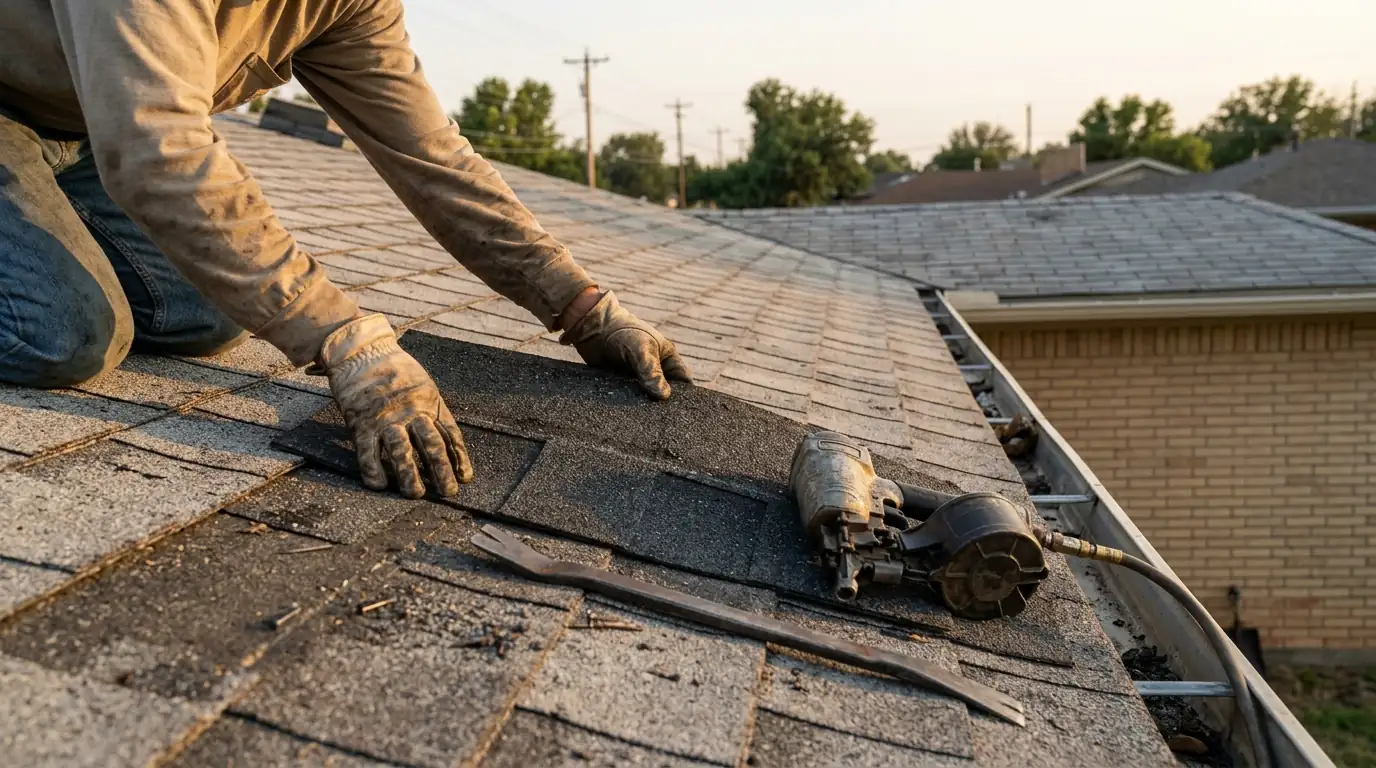
Roof repair is any fix that restores one section of a roof without tearing off the whole system. On a typical Oklahoma City home that means replacing damaged shingles, resetting or replacing flashing, swapping a failed pipe boot, re-securing ridge cap, or replacing a few sheets of soft decking under a problem spot.
The goal is to put that area back to the same watertight condition as the rest of the roof. A good repair ties new material into old material correctly: shingles interlaced with the course above, flashing lapped so water runs over it rather than behind it.
Central Oklahoma puts a roof through more than most places. Spring storms bring hail and gusty winds, summer drives attic temperatures far past what the porch thermometer reads, and winter swings from mild afternoons to hard overnight freezes. Every one of those cycles works on sealants, rubber and fasteners.
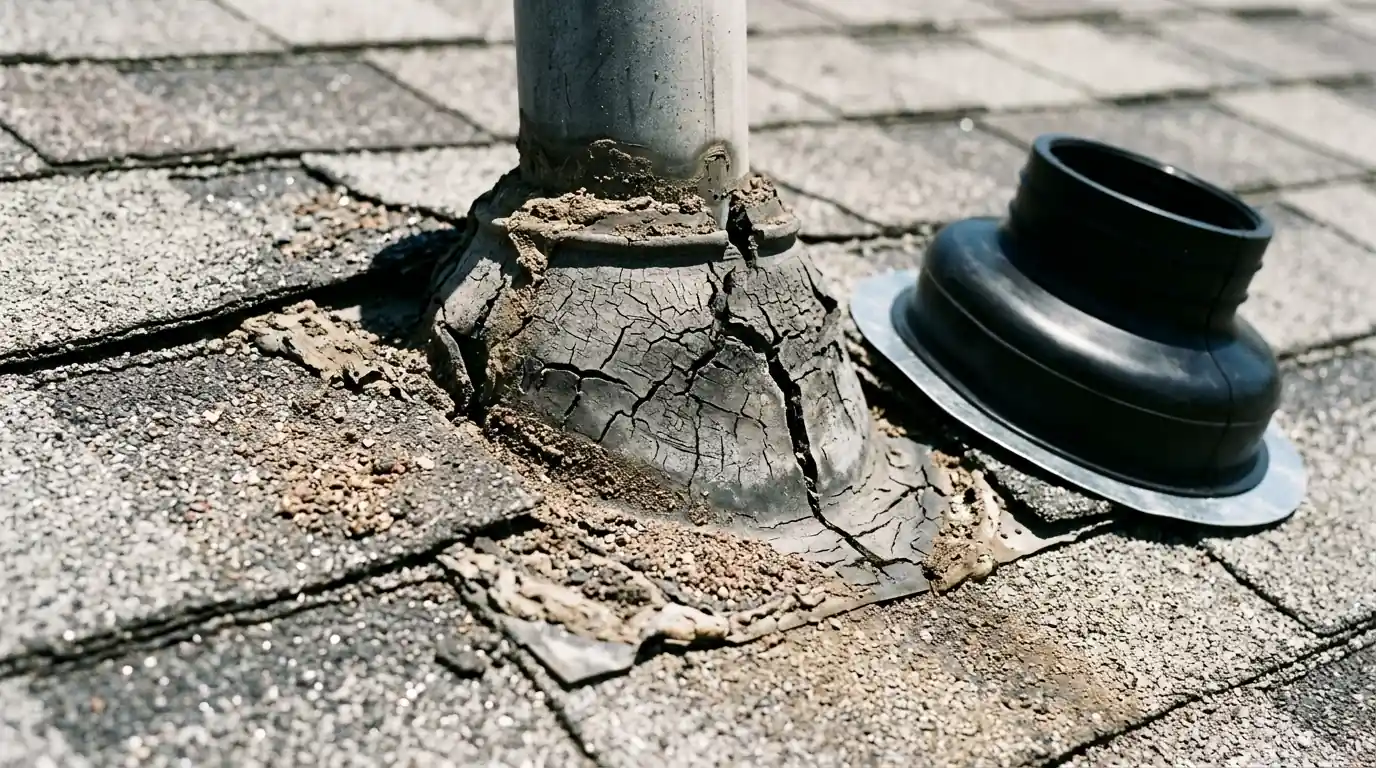
Rubber pipe boots are a good example. The sun bakes them on the south and west slopes until the collar cracks, and then rain runs straight down the vent pipe into the attic. It's one of the most common repair calls we get, and one of the simplest to fix if it's caught before the drywall stains.
Repair is the right call when the damage is localized, the surrounding shingles still lie flat and hold their granules, and the decking underneath is solid. A roof that's ten years into a shingle rated for twenty-five or thirty, with one bad area, is usually a strong repair candidate.
It stops making sense when the shingles are brittle enough to crack as we lift them, when damage is spread across several slopes, or when you're patching the same roof for the third time in two years. In those cases we'll tell you plainly that the money is better spent on a replacement, and show you the photos that back that up.
The spot where water shows up on your ceiling is rarely the spot where it gets in. Water hits the decking, runs downhill along the underside or along a rafter, and drops wherever it finds a low point. A repair aimed at the stain often misses the real opening.
So we start in the attic when we can get in, looking for wet decking, water trails on rafters, rusted nail tips and daylight. Then we go up top and match what we found inside to what we see on the shingles, vents and flashing.
We match the existing roof as closely as we can: same shingle type, same exposure, and the closest color still being made. On architectural shingles we cut in full pieces and interlace them with the courses above rather than face-nailing patches on top.
Flashing gets replaced with new galvanized or aluminum metal, not smeared over with roof cement. Pipe boots get swapped for new boots, and where a boot keeps failing from sun exposure we can use a longer-lasting style with a metal base. Sealant is a backup, never the primary seal.
Before and after photos of every area we touched, a plain explanation of what failed and why, and notes on anything else we saw that you should keep an eye on. If we spotted early wear on another slope, you'll hear about it, along with an honest read on whether it needs attention now or can wait.
If the damage looks storm related, we'll tell you that too and explain how the insurance process generally works. You make the call on whether to file. We don't act as a public adjuster or negotiate with your carrier, but we'll document what we see so you have it.
Bits of shingle or ridge cap on the lawn after a windy night mean there's now a gap somewhere above you.
A brown ring on drywall, even a dry one, means water has gotten through at some point and may still be getting in.
A heavy pile of granules at the downspout points to shingles that are wearing out or took a hit.
Split rubber around a plumbing vent is an easy leak path, and you can often spot it from the ground with binoculars.
Shingle edges that stick up catch wind and water, and they tend to tear off in the next storm.
If you can see light through the roof boards from the attic, rain can get through the same opening.
The same people who look at your roof are the ones who do the work, and they explain each step before it happens.
Call (405) 864-0080Call us any hour and we'll get the details, ask about active leaks and set a time for the inspection.
We check the attic first when we can, then walk the roof and photograph every problem area.
You get the photos and a straight answer on repair versus replacement, with the reasons behind it.
Our own crew replaces damaged materials, ties them into the existing roof and cleans up the site, nails included.
We send after photos and note anything else on the roof worth watching.
Every roof is priced after we have seen it. These are the things that move the number up or down.
Call any hour. Our own crew inspects, photographs and explains the fix before any work starts.
Most single-area repairs, like a few shingles or a pipe boot, take a few hours once we're on site. Larger repairs with flashing or decking work can take a full day. Weather is the main thing that moves the schedule, since we won't open a roof with storms rolling in.
We get as close as we can by identifying the brand, line and color. Weathered shingles fade, so even an exact color can look slightly different for a season until the new pieces tone down. If your line is discontinued, we'll show you the closest options before we start.
A properly done repair doesn't hurt a future claim, and keeping the roof watertight is part of a homeowner's duty to prevent further damage. Keep the photos and paperwork we give you, since they show the roof's condition and what was fixed.
Sometimes. If the shingles are still flexible and the damage is limited, a repair can buy several more years. If they're brittle and cracking, repairs tend to cause more damage than they fix, and we'll tell you so.
Yes. Our north office is in downtown Guthrie, so we cover Logan County as well as the Oklahoma City metro from our south office on Santa Fe Avenue.
We trace a leak back to its true entry point, often feet away from the ceiling stain, and seal the real opening for good.
Learn moreReplacing cracked, curled or missing shingles with the closest match available, worked into the old roof without breaking it.
Learn moreRepair and replacement of step, counter, chimney, wall, valley and pipe boot flashing, the joints where most roof leaks begin.
Learn moreRoof inspections in Oklahoma City covering shingles, flashing, attic and decking, with photos and a plain-language report.
Learn moreOklahoma City and the surrounding metro, including:
Quail Creek, Oklahoma CityWindsor Hills, Oklahoma CityEdgemere Park, Oklahoma CitySouthern Oaks, Oklahoma CityMooreBethanyWarr AcresOklahoma CountyAll service areas