Stone-Coated Steel Roofing
Stone-coated steel roofing in Oklahoma City: steel panels with a granular finish shaped like shingles, shake or tile.
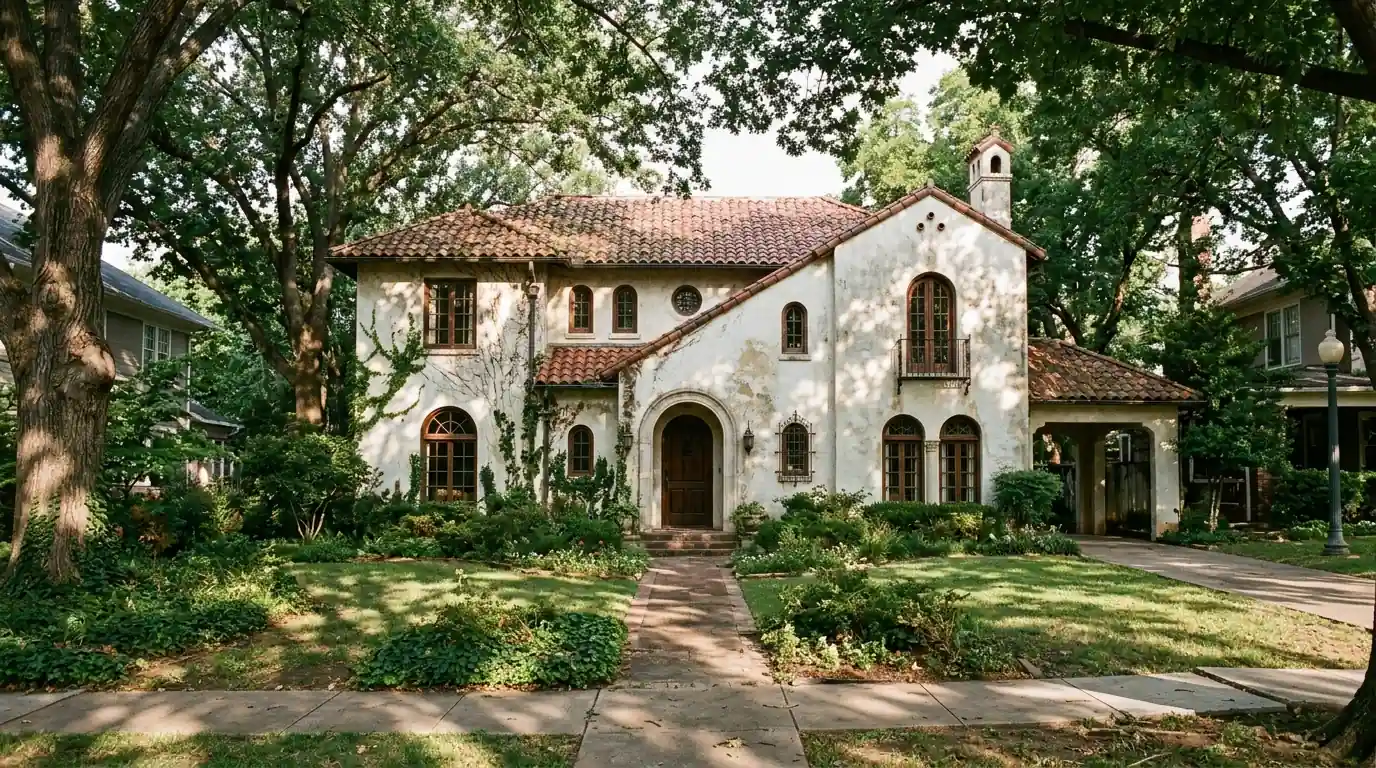
Learn moreTile is not the most common roof in Oklahoma City, but it shows up on some of the city's best-known houses. You will see clay tile on 1920s homes in Heritage Hills and Mesta Park, Spanish and Mediterranean styles along certain streets in Crown Heights, and concrete tile on larger custom homes in Nichols Hills and far north Oklahoma City.
Answered 24/7Call (405) 864-0080 and talk to Sapphire.
Tile roofs in Oklahoma City are usually clay or concrete, found on historic and upscale homes. The tiles themselves last a very long time, but the underlayment beneath them is the real waterproofing and wears out first. Sapphire replaces cracked tiles, relays tile over new underlayment, and installs new tile roofs where the framing can carry the weight.
Tile roofs need a crew that knows how to walk them, remove tiles without breaking neighbors, and rebuild what lies underneath. Sapphire handles tile repair, tile relay and new tile installation with our own crew, and we tell you plainly when a repair will hold and when the underlayment has reached the end.
Clay tile is fired from natural clay, which gives it rich color that runs all the way through the tile and resists fading for generations. It is lighter than concrete in many profiles, but it is also more brittle and can crack when walked on carelessly or hit by large hail.
Concrete tile is made from sand, cement and pigment, pressed into shapes that imitate clay barrel tile, flat slate or wood shake. It costs less than clay and is somewhat tougher against impacts, but it is heavier and its surface color can wear over time in strong sun.
Most homeowners assume the tiles keep the water out. In reality, tile sheds most water and shields the layer below from sun, but wind-driven rain and melting ice get between and under tiles. The underlayment beneath is what keeps that water out of the house.
On older Oklahoma City tile roofs, that underlayment is often felt that has dried out, cracked, and lost its ability to shed water. The tiles may look perfect from the street while the felt underneath is crumbling. Leaks on these roofs often show up first as stains near valleys, chimneys and the bottom edge of the roof.
A single cracked tile can often be replaced without disturbing much of the roof. Our crew lifts the tiles above, removes the broken pieces and any nails or clips, and slides in a replacement secured the way the original system was fastened.
Finding a match is the hard part on older homes. Some clay profiles are no longer made, and color varies by batch. We look for matching salvaged tiles when needed, or we take tiles from a hidden slope, like the back of the house, to patch a visible one and put new tiles where they will not stand out.
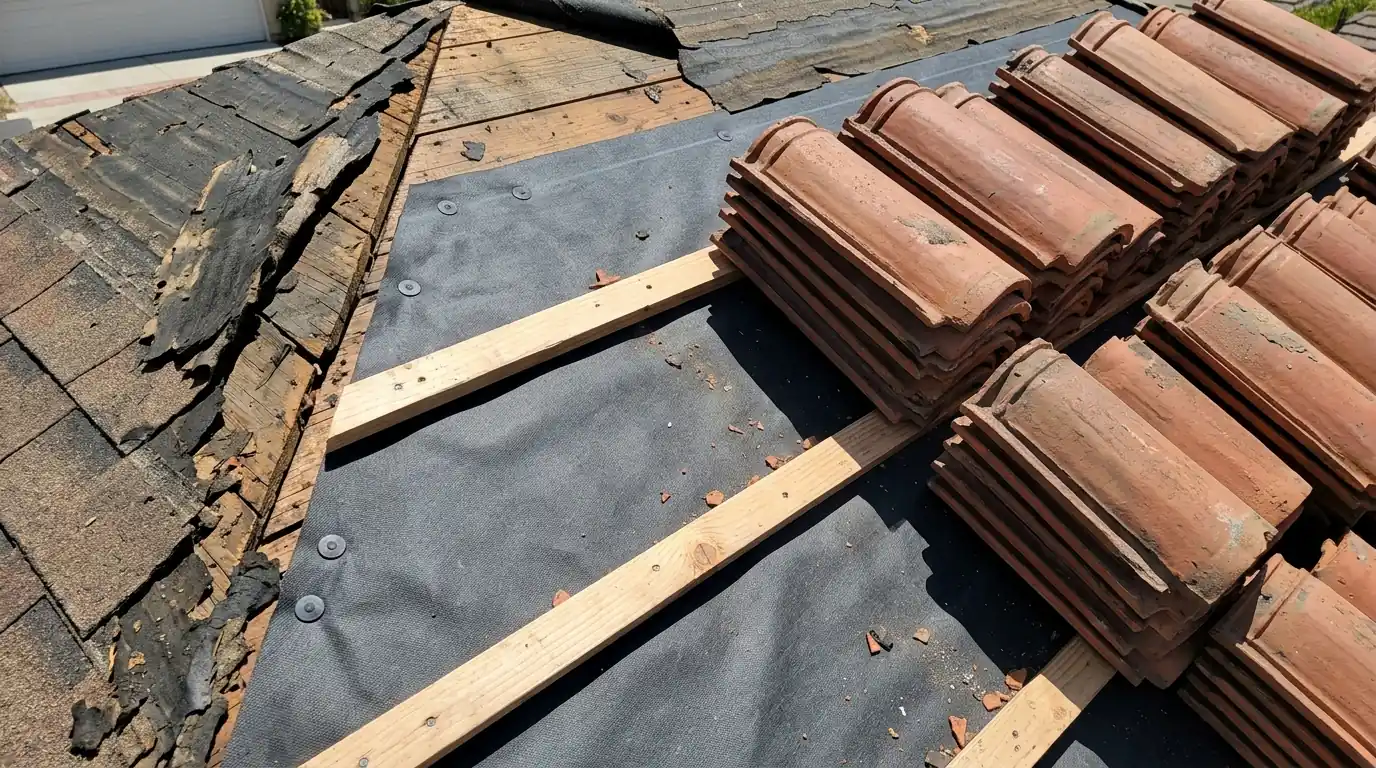
When the underlayment has failed but most tiles are in good shape, a relay is often the best option. We carefully remove and stack the tiles, tear off the old underlayment, repair the decking, and install new high-performance underlayment and flashing.
Then we reinstall the original tiles, replacing any that crack during removal. Expect some breakage, especially with older clay. A relay keeps the character of a historic roof while giving it a new waterproofing layer, and it uses the long life left in the tile itself.
Tile is heavy. Clay and concrete tile weigh several times more per square than asphalt shingles, and concrete is typically heavier than clay. Homes originally built for tile have framing sized for it, but a house built for shingles may not.
If you want to switch from shingles to tile, the structure should be reviewed first, and in some cases an engineer or added framing may be needed. When the weight is a deal-breaker, stone-coated steel in a tile profile can give a similar look at a fraction of the load.
Large hail can crack clay and concrete tile, and wind can lift tiles at the edges. After a major storm we check ridges, hips and rakes, where tiles are most exposed, and we look for small cracks that will let more water reach the underlayment.
Homes in historic preservation districts such as Heritage Hills and Mesta Park may need approval from the city's historic preservation office before exterior changes, including roof material changes. We keep tile repairs and relays in the original style and help you understand what questions to ask the city before anything changes.
Broken or displaced tiles leave the underlayment exposed to sun and rain.
Interior stains on a tile roof that looks fine often mean failed underlayment underneath.
Crumbling black felt showing at eaves or rakes is a strong sign the underlayment is worn out.
Ridge and hip tiles protect the top seams and need prompt repair after wind.
Satellite, solar or chimney work often leaves cracked tiles where workers walked.
Restoring an older tile roof is often best done alongside other exterior work.
The same people who look at your roof are the ones who do the work, and they explain each step before it happens.
Call (405) 864-0080We inspect from the roof and attic, walking only where tiles can support weight, and photograph cracked tiles and worn underlayment.
We explain whether spot repairs will hold or the underlayment needs renewing, and show you why.
Tiles are lifted, sorted and stacked safely on the roof or ground for reuse.
We repair the decking and install new underlayment, battens where needed, and flashing at walls, valleys and chimneys.
Original and matched replacement tiles go back on with proper fastening, then we check every edge and clean up.
Every roof is priced after we have seen it. These are the things that move the number up or down.
Call any hour. Our own crew inspects, photographs and explains the fix before any work starts.
The clay tiles themselves can last many decades or longer. The underlayment beneath wears out much sooner, which is why many older tile roofs need a relay with new underlayment while keeping the original tiles.
Sometimes exactly, sometimes only closely. Some historic profiles are no longer made, so we may use salvaged tiles or move tiles from a hidden slope to a visible one and use new tile out of sight.
Tile sheds most water, but some always gets underneath. If the underlayment has dried out and cracked, that water reaches the decking. Leaks with no broken tiles almost always point to the underlayment or flashing.
Homes designed for tile usually can. A house built for shingles may need a structural review first. If the framing cannot carry the load, stone-coated steel in a tile profile is a lighter option.
It is risky for homeowners. Tiles crack easily under a misplaced step, and the surface can be slick. Look from the ground with binoculars and call us so a crew that knows where to step can check it.
Stone-coated steel roofing in Oklahoma City: steel panels with a granular finish shaped like shingles, shake or tile.
Learn moreWe trace a leak back to its true entry point, often feet away from the ceiling stain, and seal the real opening for good.
Learn moreChimney masonry and roof tie-in repair: crowns, spalling brick, mortar joints, caps, crickets and flashing.
Learn moreRoof inspections in Oklahoma City covering shingles, flashing, attic and decking, with photos and a plain-language report.
Learn moreOklahoma City and the surrounding metro, including:
Southern Hills, Oklahoma CityNormanDel CityPiedmontShawneeMcClain CountyLake Hefner, Oklahoma CityHeritage Hills, Oklahoma CityAll service areas