Siding Repair
Siding repair for hail-cracked vinyl, split or swollen boards and the moisture damage that hides behind them.
Learn moreSiding takes the same storms your roof does, just sideways. A hailstorm riding a strong west or northwest wind can punch holes through vinyl on one side of the house and leave the other three untouched. Pair that with summer heat that can warp cheap panels and winter cold that makes vinyl brittle, and material choice matters more here than in milder climates.
Answered 24/7Call (405) 864-0080 and talk to Sapphire.
Siding installation replaces the outer wall cladding of your home, usually after hail damage or age. In Oklahoma City, fiber cement resists hail and fire best, engineered wood offers a wood look with good dent resistance, and vinyl is the lowest-cost option but cracks more easily in cold-weather hail. Every install should include new house wrap and flashing.
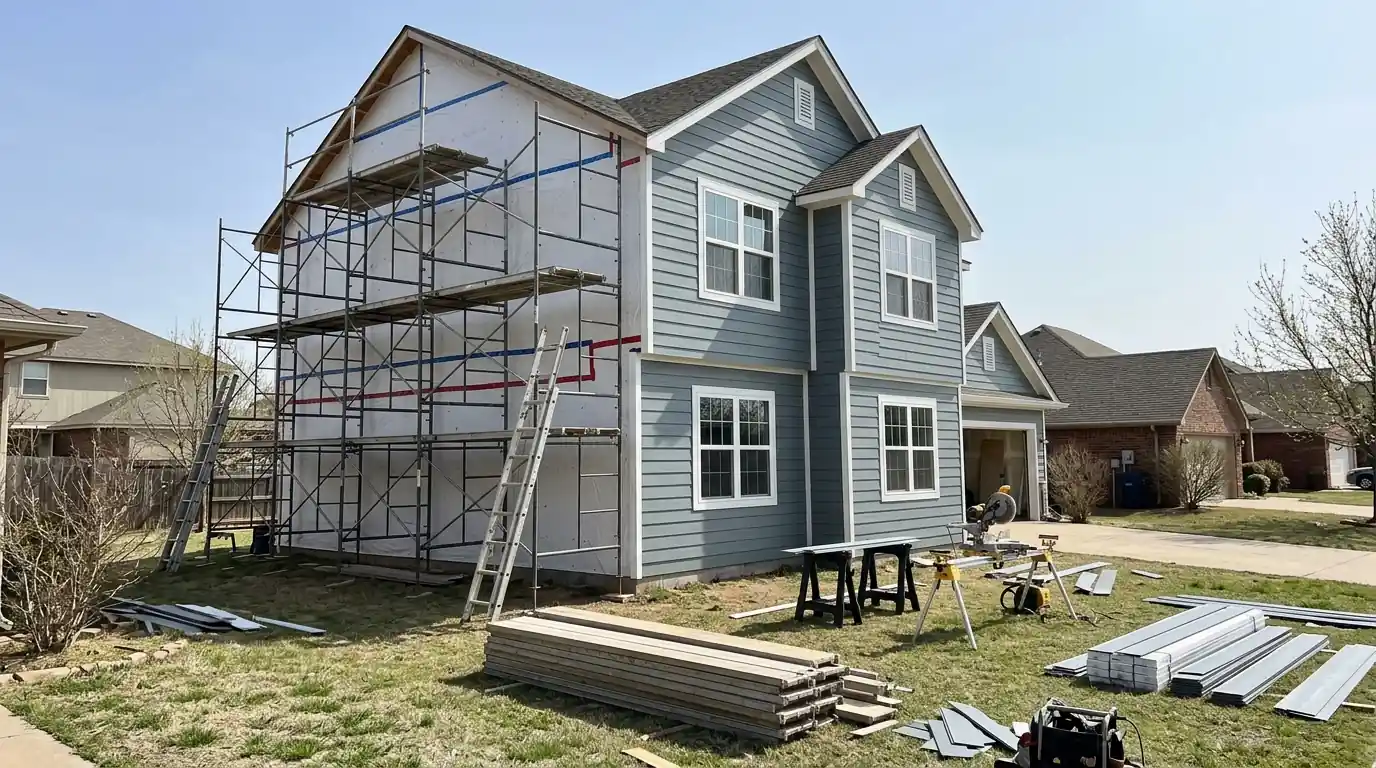
Sapphire installs siding across the Oklahoma City metro, often alongside a roof replacement after a storm. Our crew strips the old cladding, fixes what's underneath, wraps the walls, and installs new siding with trim and flashing done right around every window, door and roofline.
Fiber cement is made from cement, sand and wood fibers pressed into planks, panels and shingles. It's heavy, rigid and noncombustible, and it takes hail far better than vinyl. A hailstone that would crack a vinyl panel usually leaves fiber cement with a scuff in the paint or nothing at all.
It comes factory-primed or factory-painted and holds paint well for many years. The trade-offs are weight, cutting dust that requires proper tools and silica controls, and the need for careful joint and trim detailing. It's a strong choice for homes in open, exposed areas on the west side of the metro where storms hit first.
Vinyl is the most common siding on post-1980s homes around OKC because it's affordable, never needs paint and comes in many colors and profiles. Thicker premium panels hold up better than builder-grade panels, and insulated vinyl with a foam backer resists dents and adds a little wall insulation.
Vinyl's weakness in Oklahoma is temperature. It softens in July heat, and it gets brittle when hail arrives during a cold early-spring front. It also expands and shrinks a lot, so it has to be nailed loosely in the slot centers with room at each end, or panels buckle by August.
Engineered wood is made from wood strands held together with resins and waxes, then given a textured face that looks like real lumber. It's lighter than fiber cement, easier to cut and handle, and comes in longer lengths, which means fewer butt joints across a wall.
It resists dents better than vinyl and handles hail well for a wood product. It does need to stay sealed: cut ends must be painted, clearances from the roof and ground must be kept, and any trim detail that lets water sit will cause trouble. Installed right, it's a good fit for homeowners who want a wood look without cedar upkeep.
No siding is hail-proof, and impact results depend on stone size, wind and temperature. In general, fiber cement shows the least damage, engineered wood comes next, and vinyl shows the most, especially thinner panels in cold weather. That ranking matters more on the walls that face the prevailing storm direction.
Some homeowners mix materials, using fiber cement or engineered wood on the exposed west and north walls and keeping vinyl elsewhere. That can work, but trim and color have to be planned so the house doesn't look patched together.
Siding is the rain screen. The house wrap behind it is the real weather barrier. When we strip old siding we often find torn felt, wrap that was never taped, or no barrier at all on older homes. All of it gets replaced with a new wrap lapped shingle-style from the bottom up, with seams taped.
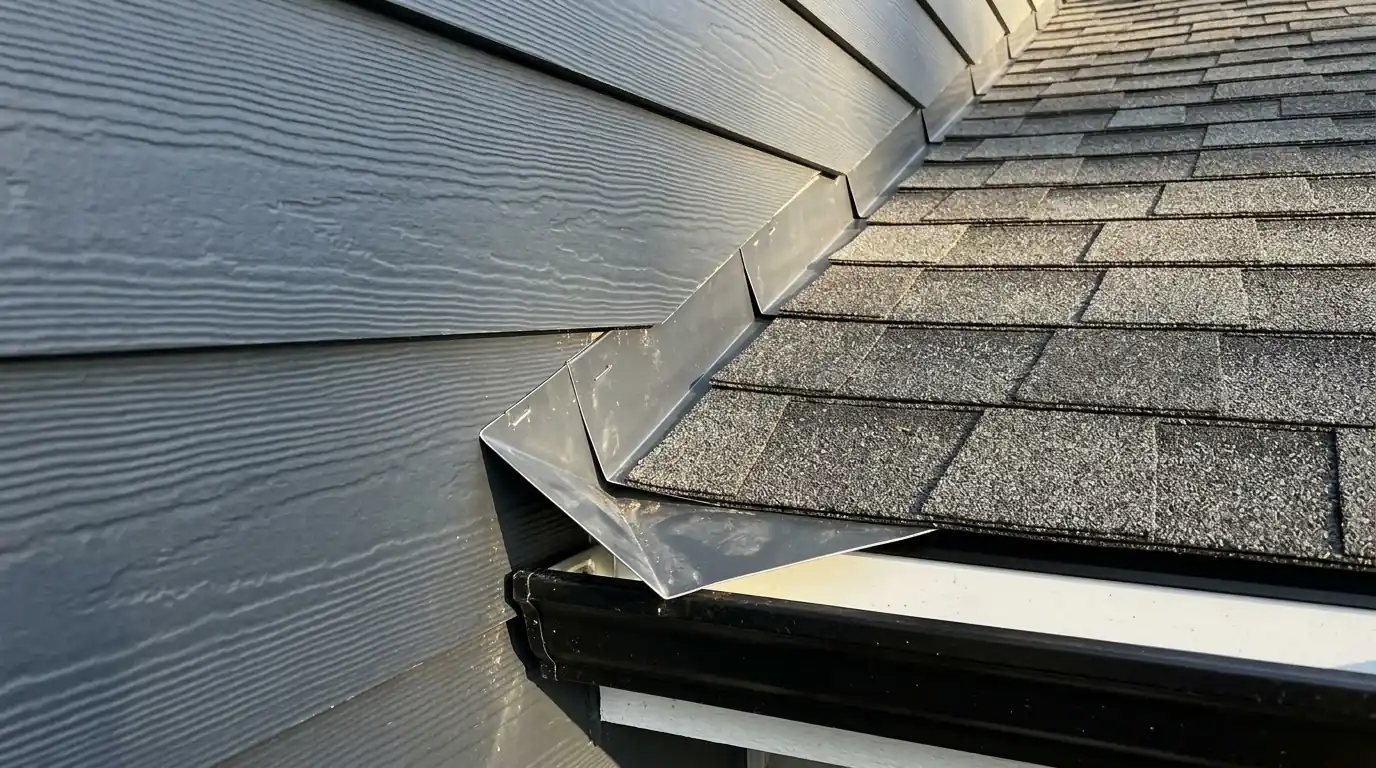
Windows and doors get flashing tape and head flashing so water running down the wall is turned out over the trim. Where a roof meets a wall, we install kickout flashing at the bottom of the step flashing, a small piece that keeps roof water from pouring straight into the wall. Missing kickouts are one of the most common causes of hidden rot we find.
When siding and roofing are both on the same storm claim, doing them together saves trouble. The step flashing where roof meets wall can be replaced once, with new siding laid over it correctly, instead of a roofer bending old siding and a siding crew later disturbing new shingles.
We document siding damage wall by wall with photos and measurements during the storm inspection. We meet the adjuster on site and walk the walls, but the claim decisions belong to you and your carrier, and we do not negotiate on your behalf.
Punctured or cracked panels on the storm-facing side let water reach the wall and should be documented quickly.
Buckled vinyl usually means it was nailed too tight or has been heat-damaged, and it often loosens in wind.
Heavy fade and chalky residue on vinyl or old paint show the surface is breaking down in the sun.
Swollen bottoms on older hardboard siding mean moisture has gotten in and the boards are failing.
Drafty walls and loose siding can point to a missing or torn weather barrier behind the cladding.
Bubbling paint or stains inside on outside walls can mean water is getting behind the siding.
The same people who look at your roof are the ones who do the work, and they explain each step before it happens.
Call (405) 864-0080We measure every wall, note storm damage by elevation, and check for rot around windows, doors and rooflines.
We walk you through fiber cement, engineered wood and vinyl options, profiles, trim and colors for your home.
Old siding comes off, damaged sheathing is replaced, and we show you anything hidden behind the walls.
New house wrap goes on with taped seams, plus flashing at windows, doors and roof-to-wall joints.
Siding and trim are installed to the maker's spacing rules, then we magnet-sweep the yard and haul debris.
Every roof is priced after we have seen it. These are the things that move the number up or down.
Call any hour. Our own crew inspects, photographs and explains the fix before any work starts.
Fiber cement generally shows the least hail damage, followed by engineered wood. Vinyl, especially thinner standard panels, cracks most easily, and it's worst when hail comes with a cold front. Results always depend on hailstone size and wind.
On every full siding job we install new house wrap with taped seams and new flashing around windows and doors. The barrier behind the siding does most of the work keeping water out of the wall, so we don't reuse old torn felt.
It's sometimes done, but we prefer to strip the old cladding. Removing it lets us find and fix rot, replace the weather barrier and flash windows properly. Layering over hides problems and can trap moisture.
It can if it's nailed too tight or if reflected sunlight from a nearby window concentrates heat on it. Proper nailing that lets the panels move, and choosing thicker panels, prevents most warping.
If both were damaged, doing them together usually makes sense. The roof-to-wall flashing can be done once and covered correctly by the new siding, and you deal with one crew and one cleanup.
Siding repair for hail-cracked vinyl, split or swollen boards and the moisture damage that hides behind them.
Learn moreWindow replacement for storm-broken and drafty windows, with vinyl or fiberglass units installed full-frame or as inserts.
Learn moreSoffit and fascia repair for rot, squirrel and bird entry, and blocked attic intake vents, finished in aluminum wrap.
Learn moreFull tear-off roof replacement in Oklahoma City, from decking checks and underlayment to a magnet sweep of your yard.
Learn moreOklahoma City and the surrounding metro, including:
NewcastleEl RenoLogan CountyDeer Creek, Oklahoma CityMesta Park, Oklahoma CityCapitol Hill, Oklahoma CityEdmondMustangAll service areas