Commercial Roofing
Low-slope roof repair, replacement and surveys for OKC retail centers, offices, churches and warehouses, worked around your tenants.
Learn moreBuilding owners hear a lot of promises about coatings. Some of them are true: a silicone coating over the right roof can stop minor leaks, cut surface temperatures and push off a full tear-off for years. Over the wrong roof, it hides wet insulation and rot until the problem is far bigger.
Answered 24/7Call (405) 864-0080 and talk to Sapphire.
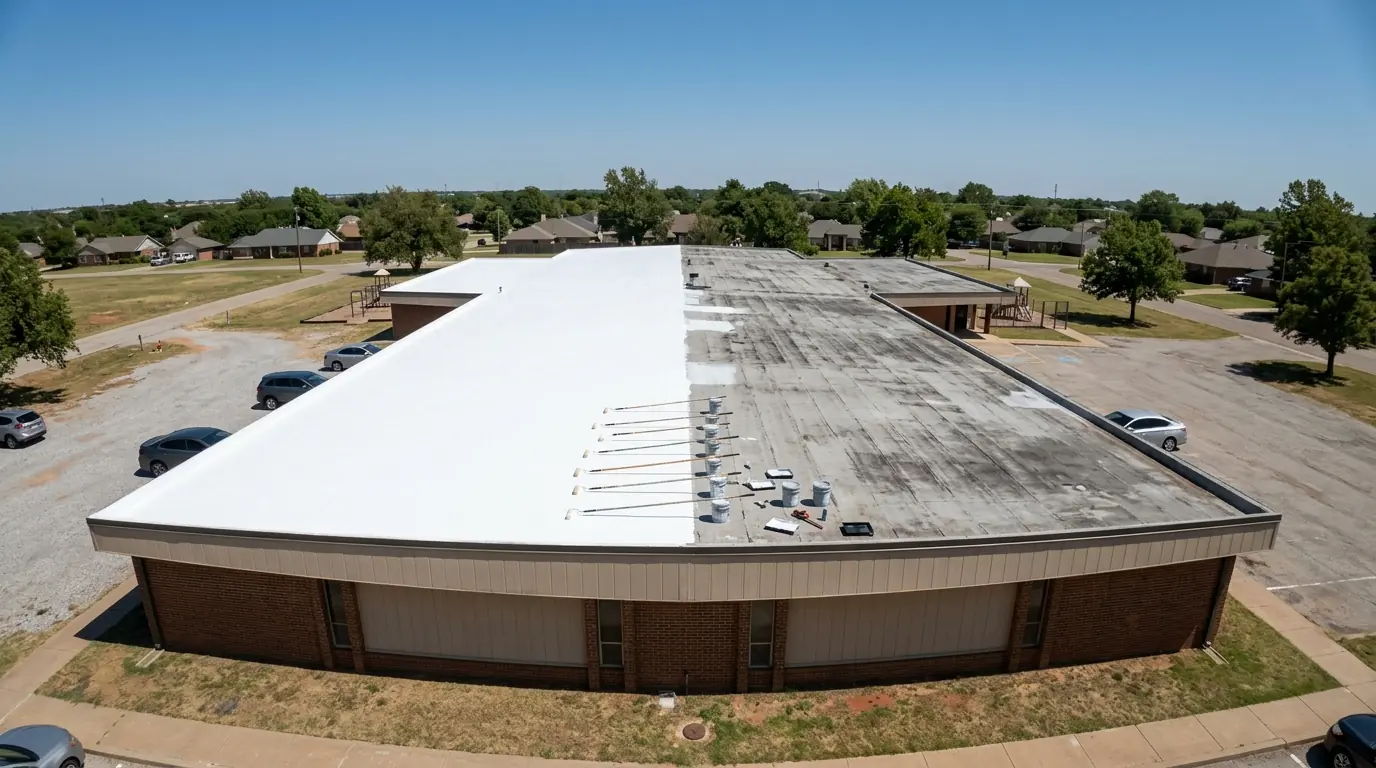
A silicone roof coating is a liquid-applied layer rolled or sprayed over an existing low-slope roof to seal it and reflect sunlight. In Oklahoma City it can extend the life of a sound TPO, EPDM, modified bitumen, built-up or metal roof. It only works when the insulation underneath is dry, so Sapphire starts every coating job with a moisture survey.
Sapphire coats low-slope roofs on commercial buildings, churches, shops and residential flat sections around the metro. Our own crews survey the roof first, tell you plainly whether it qualifies, and then handle the cleaning, repairs, primer where needed and the coating itself.
Silicone is applied as a thick liquid and cures into a continuous rubbery skin over the roof. It covers small cracks, worn spots and aged seams, and because it is usually white, it reflects a large share of the sun's heat.
Silicone also resists standing water better than many other coating types, which matters on Oklahoma roofs where drains clog and slight sags hold puddles after storms. It stays flexible through summer heat and winter cold without turning brittle.
A coating seals the top of the roof. If the insulation underneath is already wet, that water is trapped. It keeps the deck damp, rusts steel decks, rots wood and destroys the insulation's value. Coating over wet layers is the most expensive mistake an owner can make with this product.
So we survey before we quote a coating. We walk the roof, look for soft spots and failed areas, and take core cuts to see the layers and check for moisture. On larger roofs, a moisture meter scan or infrared survey can map wet areas so only the damaged sections need to be cut out and replaced before coating.
The ideal roof for a coating is aging but sound: it still keeps most of the water out, the insulation is dry, and the problems are worn surfaces, open seams or minor leaks. Many roofs reach that point well before they need replacement.
Poor candidates include roofs with widespread wet insulation, multiple failed layers, badly deteriorated deck, or a membrane that is coming apart in sheets. Steep roofs and shingle roofs are also outside what a silicone restoration is meant for.
Silicone sticks to clean surfaces and peels off dirty ones. Before any coating goes down, the roof is power washed to remove dirt, loose granules, chalking and the red dust that blows in from Oklahoma fields and settles on every flat roof. Oily residue near kitchen exhaust fans gets extra cleaning.
Next come repairs. Wet areas are cut out and replaced. Open seams are reinforced with fabric or seam tape. Blisters are cut and patched. Penetrations, curbs and flashings get extra attention, because the coating is only as good as the details beneath it. Some surfaces need a primer, and we test adhesion on small patches before coating the whole roof.
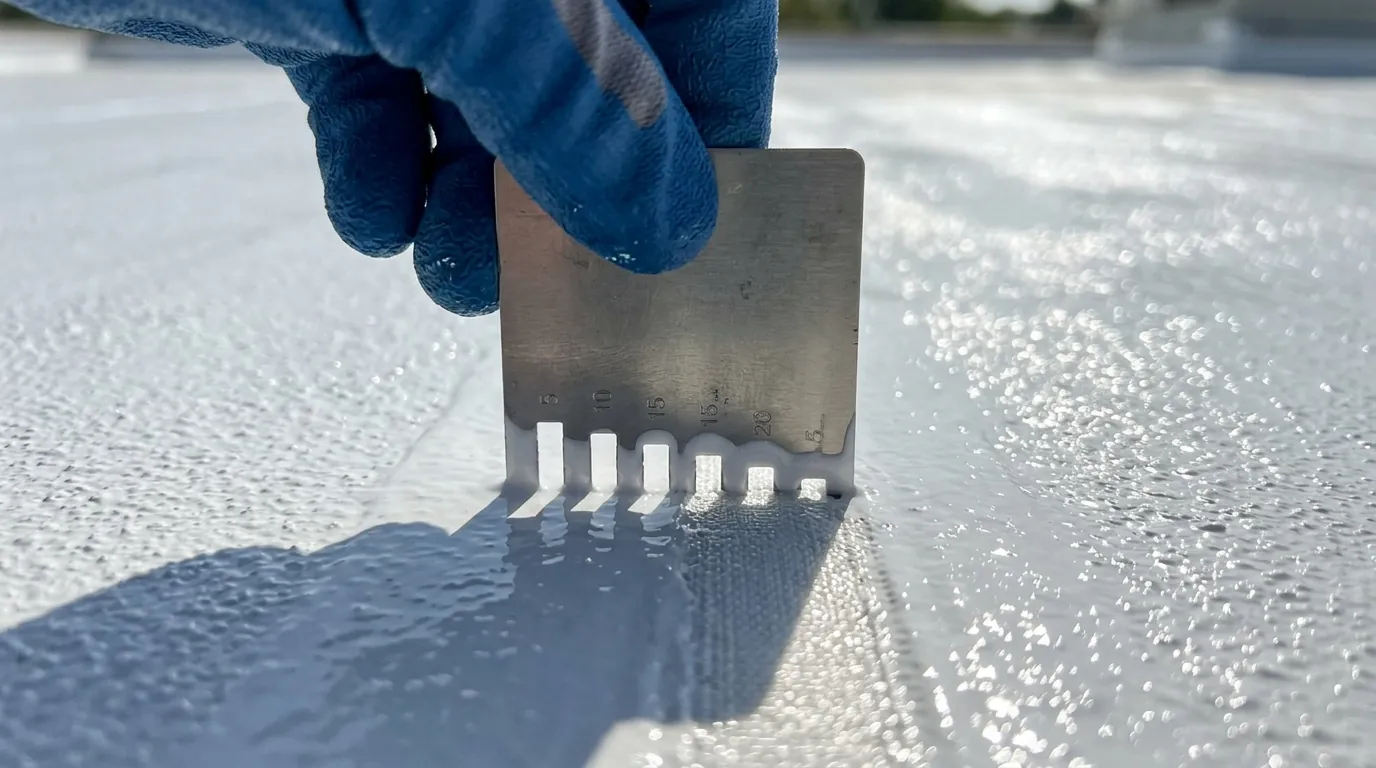
Coating thickness is measured in mils, which are thousandths of an inch. The manufacturer of each product specifies how thick the cured layer must be for the roof to perform as intended, and that drives how much material goes on per square of roof.
Applying too little is a common shortcut, and it leaves thin spots that wear through early. We follow the product's specification, apply extra at seams and penetrations, and check wet film thickness with a gauge as we go so the finished layer meets the target across the whole roof.
Coatings need dry surfaces and the right temperatures to cure. Spring in the metro brings frequent storms, so coating work often gets scheduled in stretches between fronts or in the drier weeks of late summer and early fall.
We watch the forecast closely. A sudden afternoon storm before the coating has skinned over can wash material off the roof. Work days are planned around clear windows, and areas are coated in sections so each one can set before the next weather moves in.
A coated roof still needs care. Drains and scuppers must stay clear, technicians should use walk paths near equipment, and the surface should be checked after hail. Silicone can be recoated later when it wears, often with a cleaning and a fresh layer rather than full prep again.
Silicone is slippery when wet and attracts dust, which can dull its reflectivity over time. A periodic rinse helps keep the surface bright. We point out walk paths and any areas to watch when we finish each job.
An older low-slope roof with minor leaks but dry insulation is the classic coating candidate.
Surface wear on TPO, modified bitumen or built-up roofs shows the top layer is breaking down.
Corroded screws and leaking laps on a metal roof can often be sealed with a coating system.
Rooms or offices under a dark roof that bake in summer may benefit from a reflective surface.
Scattered minor leaks across an otherwise sound roof are a sign to look at restoration.
Owners who need to delay a tear-off can sometimes buy years with a properly applied coating.
The same people who look at your roof are the ones who do the work, and they explain each step before it happens.
Call (405) 864-0080We walk the roof, take core cuts and scan for moisture to confirm whether it qualifies.
Any saturated insulation or damaged deck is cut out and replaced before coating.
Our crew power washes the roof, reinforces seams, patches blisters and preps every detail.
Primer goes on where the surface needs it, and adhesion test patches confirm the bond.
Silicone is applied to the manufacturer's specified mil thickness, checked with a gauge as we go.
Every roof is priced after we have seen it. These are the things that move the number up or down.
Call any hour. Our own crew inspects, photographs and explains the fix before any work starts.
No. The roof must be sound, with dry insulation and a solid deck. A moisture survey and core cuts tell us whether a coating makes sense or whether replacement is the better path.
It can seal minor leaks when the prep is done right: wet areas replaced, seams reinforced and details repaired first. It will not fix structural or drainage problems on its own.
A reflective coating keeps the roof surface cooler than a dark roof, which reduces heat moving into the building. Dust buildup over time can dull that effect, so periodic rinsing helps.
Each product has a specified mil thickness for the system to perform. We follow that specification, add extra at seams and check thickness with a gauge during application.
Yes. Silicone bonds well to existing silicone, so a worn coated roof can usually be cleaned and recoated without tearing it off.
Low-slope roof repair, replacement and surveys for OKC retail centers, offices, churches and warehouses, worked around your tenants.
Learn moreWhite TPO single-ply roofs for OKC commercial buildings and low-slope homes, heat-welded seams, attached or adhered to suit the deck.
Learn moreRepairs for flat and low-slope roofs on OKC homes, porches, additions and small shops: ponding, blisters, seams, scuppers and drains.
Learn moreMetal roofing for Oklahoma City homes and outbuildings, from exposed-fastener panels to concealed-fastener systems.
Learn moreOklahoma City and the surrounding metro, including:
Capitol Hill, Oklahoma CityEdmondMustangNewcastleEl RenoLogan CountyDeer Creek, Oklahoma CityMesta Park, Oklahoma CityAll service areas