Emergency Roof Tarping
Heavy-duty storm tarps anchored with battens, not bricks, to keep rain out until your permanent roof repair or claim is settled.
Learn moreOklahoma storms don't keep business hours. Plenty of the worst spring storms roll through central Oklahoma in the evening and overnight, which means the first sign of roof damage is often water dripping onto the bedroom carpet at two in the morning.
Answered 24/7Call (405) 864-0080 and talk to Sapphire.
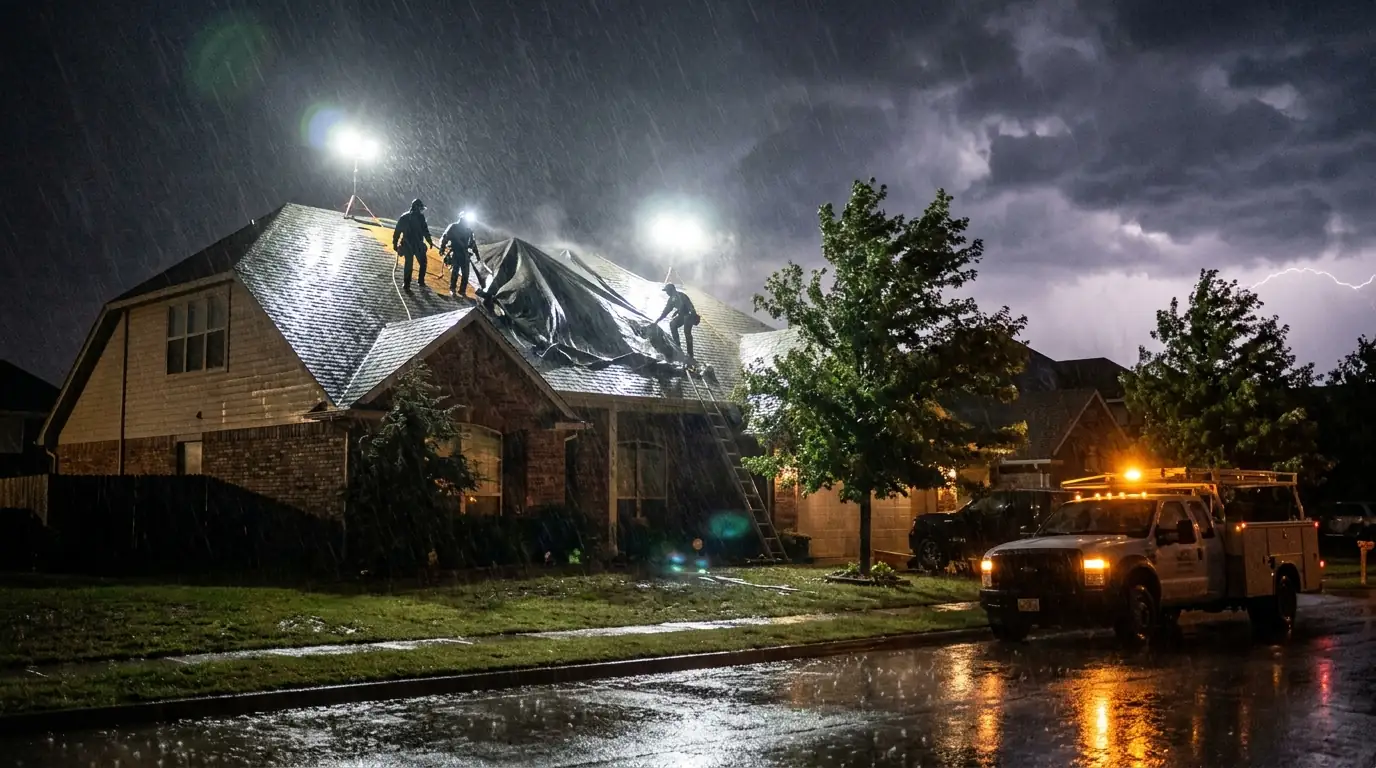
Emergency roof repair is about stopping water and making the house safe, fast. When you call Sapphire after a storm, we answer 24/7, talk you through protecting the inside of the home, then send our crew to secure the opening, dry in the damaged area and document it for your insurance claim before the permanent repair.
That's why Sapphire answers the phone around the clock. An emergency repair isn't the final fix. It's the work that keeps a roof problem from turning into a ceiling, insulation and flooring problem while the permanent repair gets planned.
Safety first. If water is near light fixtures, ceiling fans or outlets, switch off that circuit at the panel. If a ceiling is sagging with water, it can come down all at once, so keep people and pets out of that room.
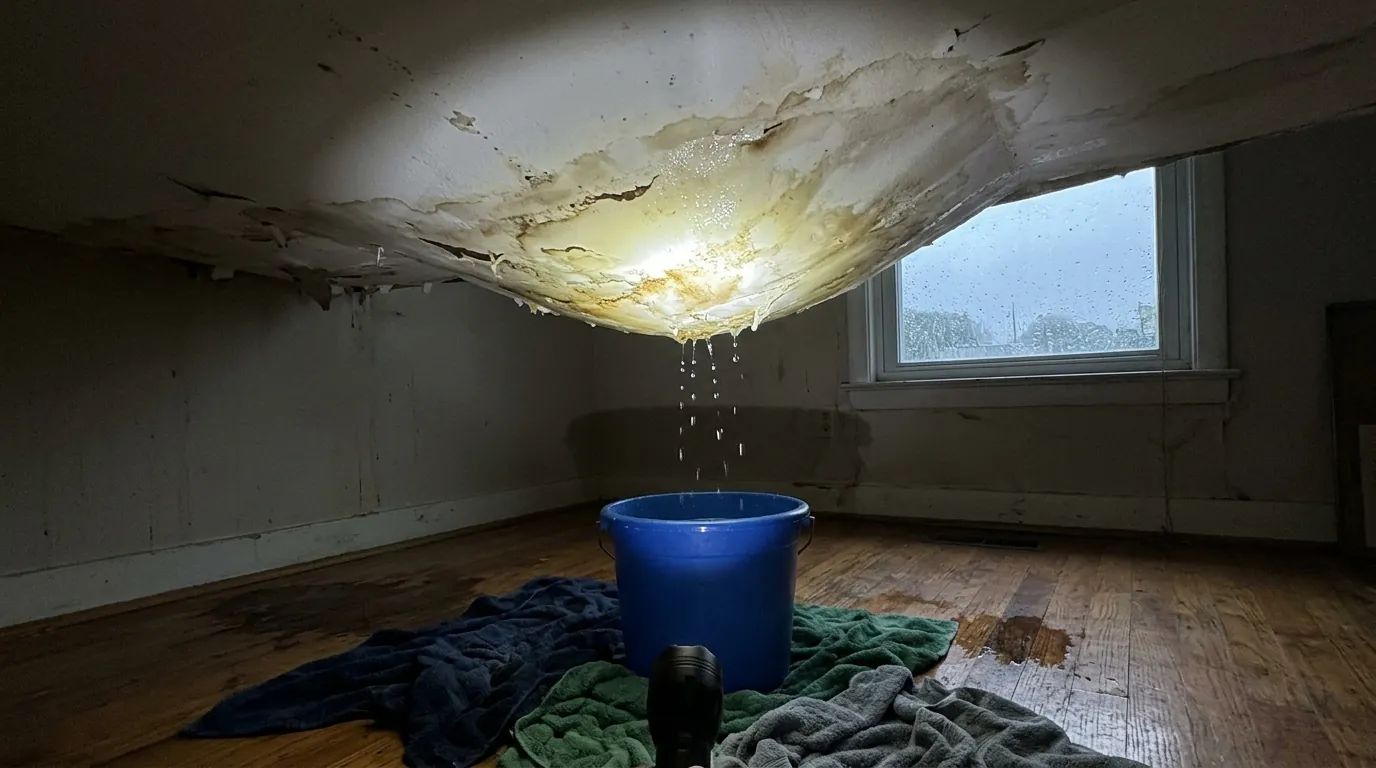
Then limit the damage inside. Move furniture and electronics, put buckets or bins under drips, and if a ceiling is bulging, a small hole at the lowest point lets water drain into a bucket instead of spreading across the drywall. Take photos and video before you clean anything up.
Wet asphalt shingles are slick, storm debris hides soft spots, and gusts that seem manageable on the ground are much stronger at the eave. Falls during storm cleanup are a real and serious risk, and no amount of saved ceiling is worth that.
Our crews go up with harnesses, roof anchors and lighting. If conditions are too dangerous even for a crew, such as lightning in the area or sustained high winds, we work the problem from inside the attic first and get on the roof the moment it's safe.
The first job is finding where the water is entering, and in an emergency that usually means an obvious opening: a blown-off section, a hole from flying debris, a failed valley or a ripped-away piece of flashing. We clear loose debris, then cover the opening so the decking stops taking on water.
Inside, we check how far the water has spread. Soaked insulation holds moisture against the ceiling drywall, so we may pull back wet batts or point out where drywall should be opened to dry. Stopping the water today keeps mold from getting a head start.
Some emergency repairs can be made permanent on the spot. If a handful of shingles blew off and we have matching material on the truck, we replace them right then and the job is done.
Bigger damage needs two steps: secure it now, then repair it properly in daylight with the right materials and, if there's a claim, after the adjuster has seen it. Covering a large opening with a tarp or a temporary underlayment dry-in is often the right move until then.
Most homeowner policies expect you to take reasonable steps to prevent further damage after a loss. Emergency work is part of that, and the photos taken before and during it are some of the most useful evidence you'll have.
We photograph the opening, the debris, the interior water and each step we took, all dated. You get copies to send to your carrier. We don't negotiate your claim or act as an adjuster, but a clear record makes the adjuster's visit simpler.
Spring is the peak, but it isn't the only season. Fall brings a second round of severe weather, and winter ice can pull down gutters and snap limbs onto roofs. After a big event, calls stack up across the metro within hours.
We triage by severity. Active water inside the living space, structural damage and openings over bedrooms come first. If your situation can safely wait a few hours, we'll tell you that honestly and give you an honest arrival window.
Any active drip during a storm means the roof is open somewhere, and the damage grows every hour.
A bulge in the drywall is holding water and can give way, so it needs attention right now.
If you can see bare decking or a gap from the yard, the next rain goes straight into the attic.
Large branches, siding or a neighbor's patio cover on your roof may have punctured or loosened it.
Moisture around fixtures or the panel is a safety issue first and a roofing issue second.
A strip of metal flapping at a wall or chimney leaves an open seam that wind drives rain into.
The same people who look at your roof are the ones who do the work, and they explain each step before it happens.
Call (405) 864-0080Someone picks up 24/7, asks where the water is and walks you through protecting the room.
Our crew checks the attic and roof, confirms where water is entering and whether it's safe to work up top.
We clear debris and cover or repair the opening so no more water reaches the decking.
Photos of the damage and our work go to you for your records and any claim.
We return in daylight to scope the full repair and explain your options.
Every roof is priced after we have seen it. These are the things that move the number up or down.
Call any hour. Our own crew inspects, photographs and explains the fix before any work starts.
It depends on how many homes were hit and where you are. On a normal night we can usually have someone out within hours. After a big metro-wide storm, we prioritize active water and structural damage and give you a believable arrival window.
Many policies treat reasonable emergency work to prevent further damage as part of a covered loss, but every policy is different. Keep receipts and photos, and check your declarations page or call your carrier. We'll provide documentation either way.
Stop the damage first, which usually means getting a roofer to secure the home. Then report the claim. Most carriers expect you to protect the property, and they'll want to see the photos taken before the emergency work.
We can cover openings and stop water during rain if there's no lightning and the wind is manageable. Permanent shingle work needs dry conditions to seal properly, so that part waits for a clear day.
Call us right away. We'll check the temporary work, re-secure anything that moved and update the photos so the record shows both events.
Heavy-duty storm tarps anchored with battens, not bricks, to keep rain out until your permanent roof repair or claim is settled.
Learn moreStructural roof repair after a limb or trunk lands on your house, from punctured decking to cracked rafters and crushed ridges.
Learn moreHelp with Oklahoma City roof insurance claims: damage photos, adjuster meetings and documented supplements. You own the claim.
Learn moreWe trace a leak back to its true entry point, often feet away from the ceiling stain, and seal the real opening for good.
Learn moreOklahoma City and the surrounding metro, including:
Deer Creek, Oklahoma CityMesta Park, Oklahoma CityCapitol Hill, Oklahoma CityEdmondMustangNewcastleEl RenoLogan CountyAll service areas