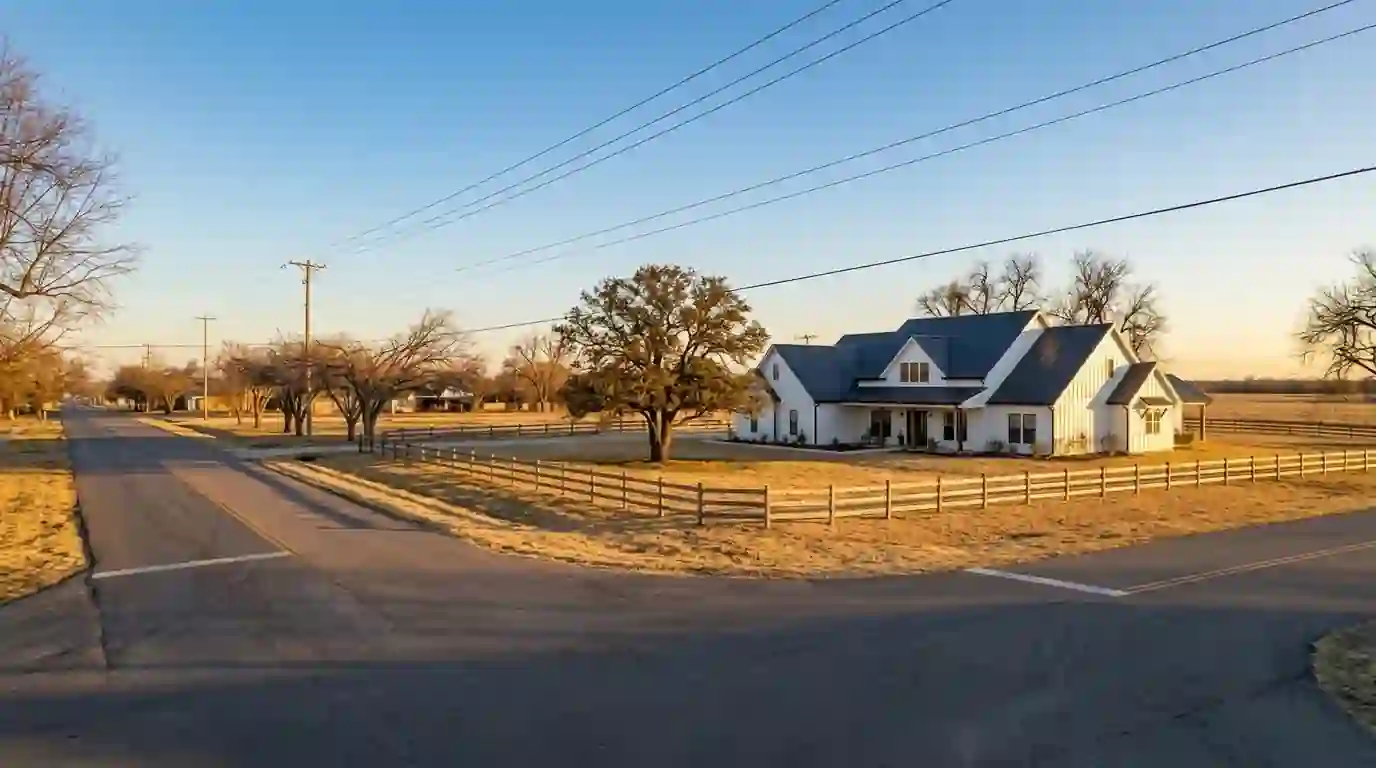
Asphalt shingles cost less up front, are easy to repair and suit most Oklahoma City neighborhoods. Metal, especially standing seam or stone-coated steel, lasts longer, sheds wind well and reflects summer heat, but hail can dent some panels cosmetically. Your budget, how long you will stay, your insurer's terms and your HOA usually decide it.
More Oklahoma City homeowners are asking about metal roofs every year, usually right after a hailstorm has cost them a second or third shingle roof. Metal has real strengths here, but it is not the right answer for every house or every budget.
This guide compares the two on the things Oklahoma weather tests hardest: hail, wind and heat. Then it covers the questions that matter at home: noise, looks, resale, insurance and repairs. When we say metal, we mean residential standing seam panels and stone-coated steel, not the exposed-fastener panels used on barns.
The two roofs in plain terms
An architectural asphalt shingle is a fiberglass mat soaked in asphalt and topped with ceramic granules. It is the most common roof in the metro because it is affordable, fast to install, and works on almost any pitched roof. Standard and Class 4 impact-resistant versions are both widely available.
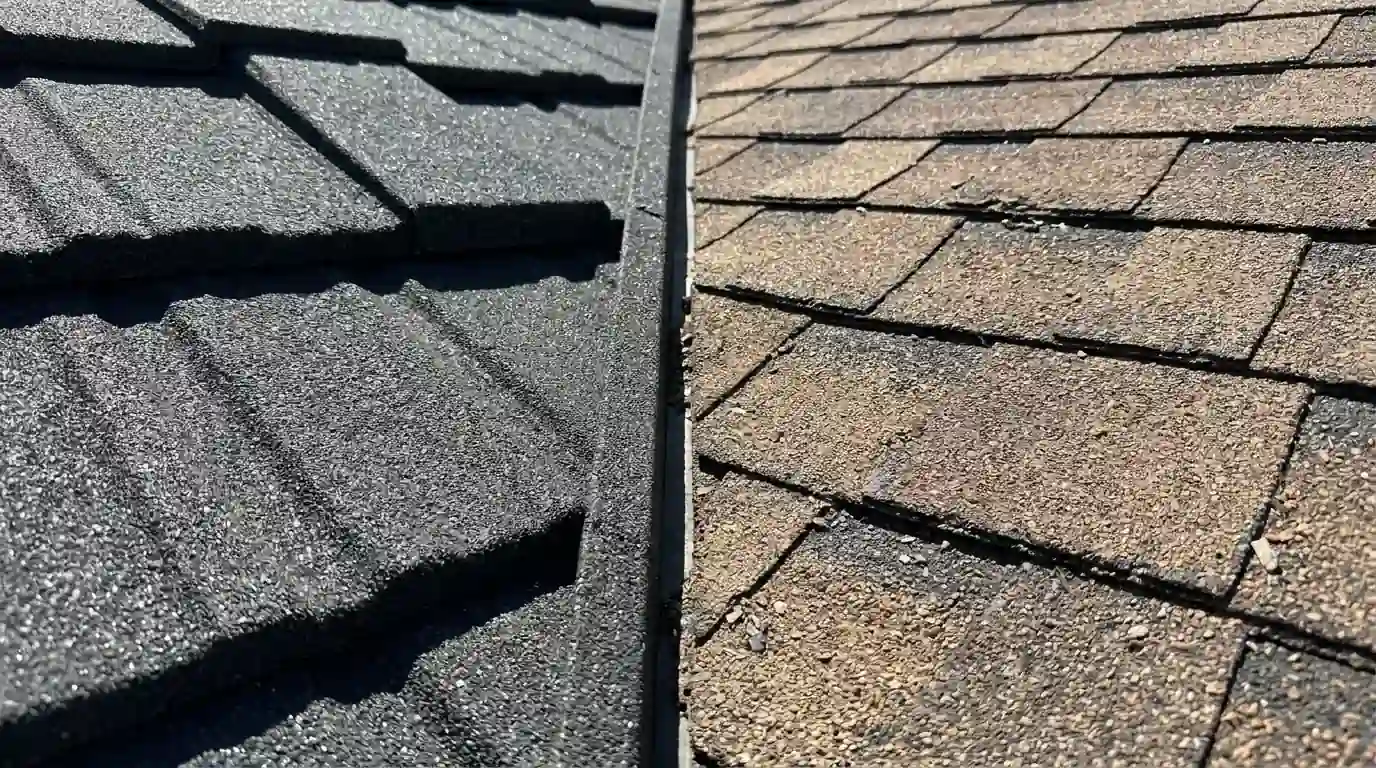
Standing seam metal uses long steel or aluminum panels joined by raised seams, with hidden fasteners under the seams. Stone-coated steel is pressed steel shaped like shingles, shakes or tile and coated with stone chips. Both sit on underlayment over a solid deck, just like shingles.
Hail: dents versus bruises
Hail is the big one in Oklahoma. Metal rarely lets a hailstone puncture through to the deck, which is its main advantage. But smooth standing seam panels can dent, and those dents stay visible forever. Whether that is a problem depends on your eyes and your insurer, since many policies treat purely cosmetic dents differently from damage that lets water in.
Asphalt shingles do not dent; they bruise and lose granules, which shortens their life without always being obvious. Class 4 shingles narrow the gap with metal on medium-size hail. Stone-coated steel tends to hide small dents better than smooth panels because of its texture.
Panel thickness matters more than most people realize. A heavier gauge steel panel resists denting far better than a thin one, and some manufacturers offer impact-rated metal tested to the same top class as Class 4 shingles. Ask what gauge and rating you are being quoted, because two metal roofs can perform very differently in the same storm.
Wind: straight-line gusts and edges
Oklahoma's straight-line winds and tornado-adjacent gusts lift whatever they can grab, usually starting at an edge. A well-installed standing seam roof has few edges to lift and resists uplift strongly when its clips and fasteners match the manufacturer's spec.
Shingles depend on their sealant strip bonding in the sun and on correct nailing. When installed to high-wind instructions with a proper starter course, modern architectural shingles carry high wind ratings. Most wind failures we see on shingles come from old roofs whose seal strips have let go, or from short nails and missed nailing lines.
Heat: attic temperatures and shingle aging
Summer heat cooks Oklahoma roofs, and that heat ages asphalt fastest on south and west slopes. Metal with a reflective finish throws back much more sunlight than dark shingles, which can keep attic temperatures lower and ease the load on your air conditioning.
Shingles can come in lighter or reflective granule colors, but they still absorb more heat than most metal finishes. Either way, good attic ventilation matters as much as the roof surface. A metal roof over a poorly vented attic will still trap heat.
Winter matters too. Oklahoma City swings from hard freezes to mild afternoons, and metal expands and contracts with every swing. Standing seam systems use clips that let panels slide slightly, which is why proper installation matters. Shingles handle the same swings by flexing, though old, brittle shingles crack more easily in a deep cold snap.
Noise in rain and hail
People worry that metal will roar in a thunderstorm. On a house, metal goes over a solid deck and underlayment, and an attic full of insulation sits between it and your bedroom. Most homeowners hear little more than with shingles.
Hail on metal is louder, and some homeowners notice it. If you have a vaulted ceiling with little or no attic space, ask about a sound-deadening underlayment, since that is where the difference shows most. A porch or patio cover with no ceiling under it will always sound louder in metal than a closed roof.
Look, neighborhood fit and resale
Standing seam has a clean, modern line that suits farmhouse and contemporary styles and is common on newer homes around Edmond and Guthrie's rural edges. Stone-coated steel imitates shingles, shake or tile, so it blends better in subdivisions where everyone else has asphalt.
If you live in an HOA neighborhood or a historic district like Heritage Hills or Mesta Park, check the rules before choosing. Some restrict materials or colors. For resale, a newer roof of either type helps, and some buyers see metal as a premium feature, though appraisers may not credit it dollar for dollar.
Cost, lifespan and repairs
Metal costs more to install, often by a wide margin, because of the material and the skilled labor it takes. It also lasts much longer when it is not wrecked by a huge storm. Asphalt costs less now, but in Oklahoma's hail belt you may replace it more than once in the time a metal roof lasts.
Repairs differ too. Replacing a few shingles is quick and cheap. Fixing a metal panel can mean ordering a matching panel and removing trim, and color matching on faded paint can be tricky. Walking on a metal roof also takes more care, which matters when a satellite dish, solar array or chimney needs service later.
- Roof size, pitch and number of valleys or dormers
- Panel gauge, finish and profile, or shingle grade and impact rating
- Tear-off of existing layers and decking repairs
- Trim, flashing and snow or ridge details
- How long you plan to own the house
Getting a straight answer for your house
Before you choose, call your insurance agent and ask how each roof type is rated, whether cosmetic hail dents on metal are covered, and whether a Class 4 shingle or a metal roof earns a credit. Those answers can swing the long-term math.
Sapphire installs both asphalt and metal with our own crews. We will look at your roof pitch, attic, neighborhood rules and plans for the house, then explain where each option fits. Call us any time; we answer 24/7.