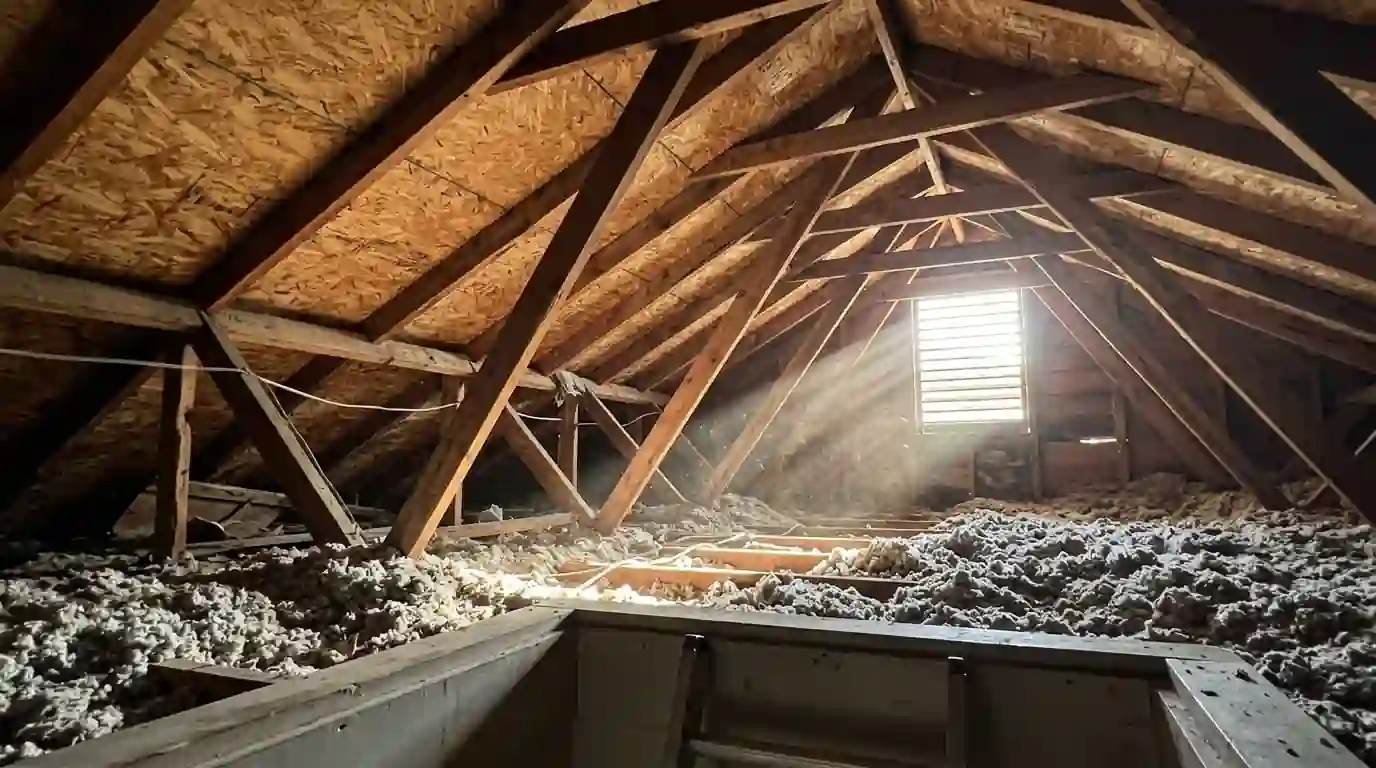
On a July afternoon an unvented Oklahoma City attic can get far hotter than the air outside. That heat bakes shingles from underneath, dries out their asphalt, and raises cooling bills. Balanced ventilation pulls cooler air in at the soffits and lets hot air out near the ridge, keeping the deck and shingles cooler and drier.
When people think about what wears out a roof in Oklahoma, they think of hail. Heat is the quieter enemy. Shingles are sitting in direct sun for long summer days, and if the attic beneath them is trapping heat, they are being cooked from both sides.
This guide explains how roof ventilation is supposed to work, the common ways Oklahoma City homes get it wrong, and the signs that your attic is shortening the life of your roof. It also covers winter, when the same attic can trap moisture instead of heat.
How hot an Oklahoma attic really gets
Oklahoma City summers routinely bring stretches of upper-90s and 100-degree days with strong sun. A dark shingle roof absorbs that sun, and the heat radiates down into the attic. Without good airflow, attic air can climb well above the outdoor temperature by late afternoon.
That heat does not leave at sunset. The deck, rafters and insulation store it and release it into the evening, which is why upstairs bedrooms in many older two-story homes stay warm long after dark and the air conditioner keeps running.
Many Oklahoma homes also have ductwork and the air handler in the attic. When the attic is an oven, cooled air loses some of its chill before it ever reaches the vents, and the equipment works harder. Lowering attic temperature helps the roof and the cooling system at the same time.
How heat shortens shingle life
Asphalt shingles stay flexible because of oils in the asphalt. Repeated high temperatures drive those oils out faster, leaving shingles brittle. Brittle shingles crack under foot traffic, lose granules faster and break more easily when hail hits them.
Heat also shows up as blistering, small raised bubbles that pop and leave bare spots, and as curling and cupping at the edges. These signs usually appear first on south and west slopes and on roofs over attics with little or no exhaust ventilation.
Intake and exhaust: how ventilation should work
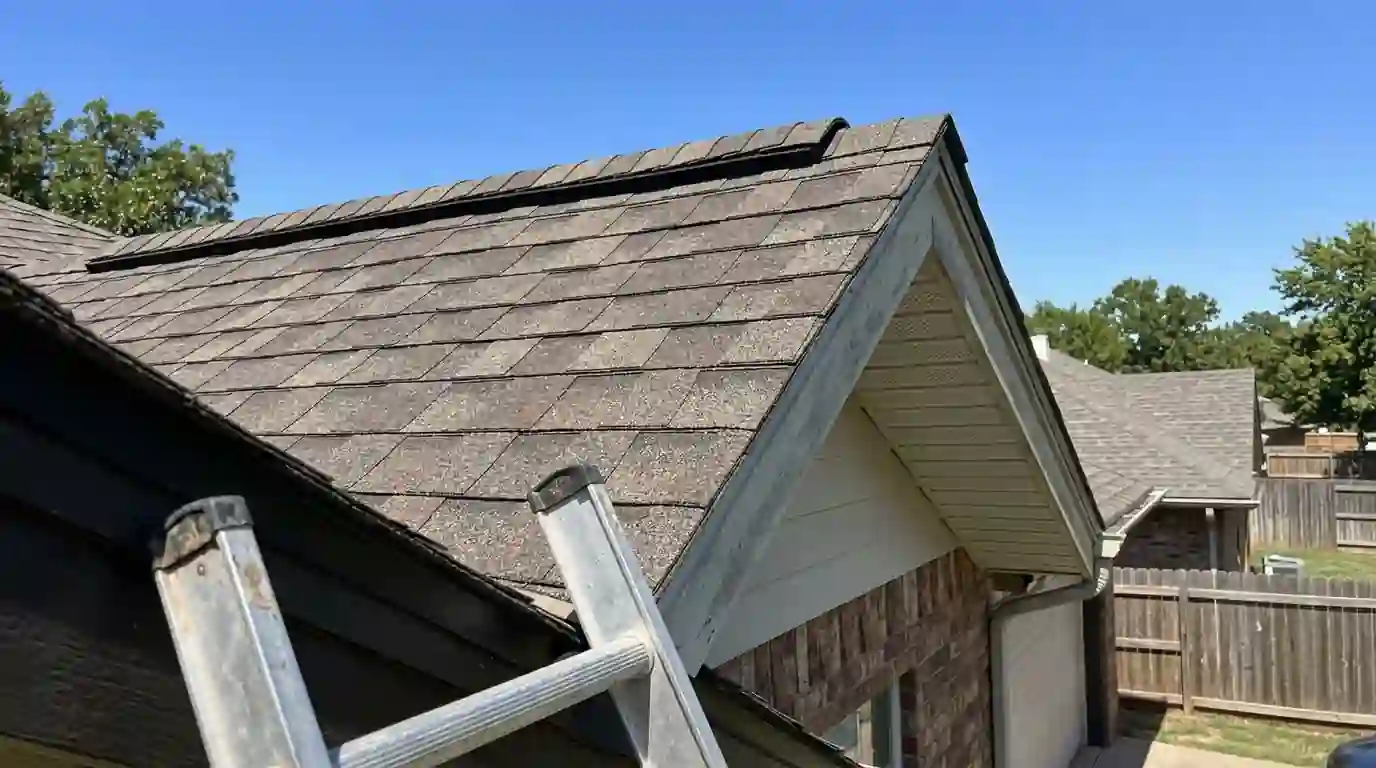
A ventilated attic works like a chimney. Cooler outside air enters low, through vents in the soffits under the eaves, and hot air leaves high, through ridge vents, box vents or a powered fan near the top of the roof. Moving air carries heat and moisture out with it.
The key word is balance. Building codes and shingle makers call for a minimum amount of net free vent area based on attic floor size, roughly split between intake and exhaust. Too little intake starves the system, and too much exhaust with no intake can pull conditioned air out of the house.
- Soffit vents: the most common intake, under the eaves
- Ridge vent: continuous exhaust along the peak
- Box or slant vents: individual exhaust vents near the ridge
- Turbine vents: wind-driven exhaust, common on older OKC homes
- Powered attic fans: electric exhaust, which needs enough intake to work safely
Common ventilation mistakes on OKC homes
The most common problem we find is blocked intake. Blown insulation gets pushed into the eaves and covers soffit vents, or the soffits were never cut for airflow at all, especially on homes that got new vinyl or aluminum soffit wrapping without vents. The exhaust vents at the top then have nothing to pull from.
Another mistake is mixing exhaust types. A ridge vent next to box vents or a power fan can short-circuit, with one exhaust pulling air in through another instead of through the soffits. The attic near the eaves stays hot and stagnant.
Older central Oklahoma City homes bring their own quirks. Some have gable vents only, with no soffit intake, and low-slope additions or enclosed porches tied into the main roof can create dead air pockets. Each roof needs a plan for its actual shape rather than a standard vent count.
Winter: moisture, frost and decking
Ventilation matters in Oklahoma winters too. Warm, moist air from showers, cooking and breathing rises into the attic through gaps around lights, fans and the attic hatch. On a cold night it meets the underside of a cold deck and condenses, sometimes as frost that melts and drips when the sun comes out.
Over several winters, that moisture leads to dark stains on decking, rusty nail tips, damp insulation and eventually soft spots in the deck. Bathroom fans that vent into the attic instead of outside make it worse and are worth fixing. So do dryer vents with disconnected ducts and gaps around recessed lights, which let warm, damp air pour straight into the attic all winter.
Signs your attic is not breathing right
You can spot many ventilation problems without special tools. Look inside the attic on a sunny afternoon and on a cold morning, and look at the roof from the yard.
- Attic air that feels like an oven on a mild sunny day
- Upstairs rooms that stay hot long after sunset
- Shingles curling, blistering or losing granules faster on one slope
- Frost on nail tips or dark staining on the decking in winter
- Insulation packed into the eaves with no light showing at the soffits
- Rusted nails, damp insulation or a musty attic smell
Fixing ventilation during a roof job
The best time to correct ventilation is when the roof is being replaced, because the deck is open. A crew can cut or extend a ridge vent slot, remove extra exhaust vents that short-circuit the system, and add baffles at the eaves so insulation cannot block soffit intake.
Many shingle manufacturers spell out ventilation requirements in their installation instructions, and poor ventilation can affect how a manufacturer treats a premature failure. Ask your roofer how they plan to balance intake and exhaust, and to show you the math if the attic is unusual.
How Sapphire checks ventilation
On an inspection, our crew looks at the attic as well as the roof. We check the soffits for real airflow, count the exhaust vents, look for staining and frost marks on the decking, and note where insulation blocks the eaves. Then we explain what we found in plain language.
If ventilation needs work, we can fix it on its own or as part of a repair or replacement, and we handle attic insulation too. Call Sapphire any time; we answer 24/7 from our offices in south Oklahoma City and Guthrie.