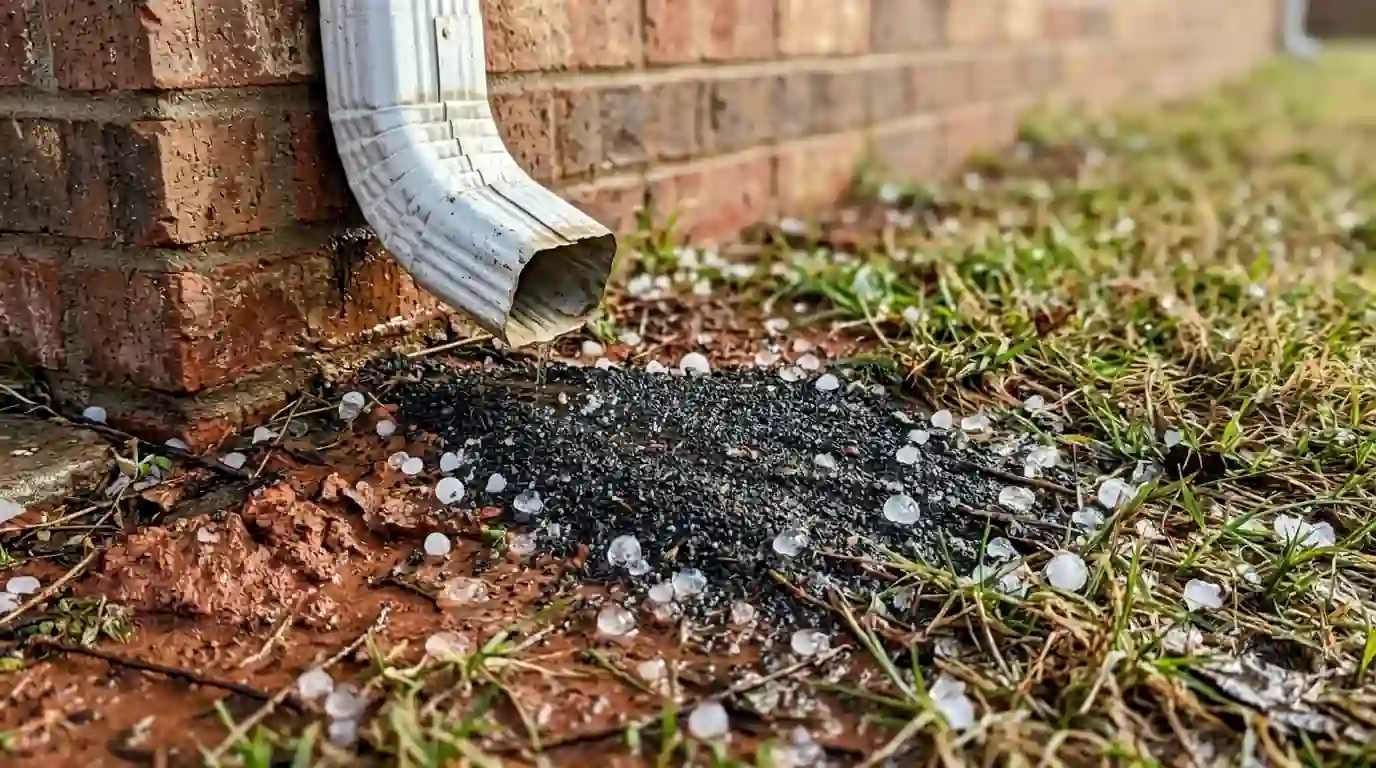
Start on the ground. Look for fresh dents in gutters, downspouts, AC fins and mailboxes, piles of shingle granules at downspout outlets, and split fence boards or shredded leaves. Those clues tell you hail big enough to matter hit your house. An inspector then confirms roof damage by checking soft metals, shingle bruises, exposed mat and fractures under the surface.
After a hailstorm rolls across Oklahoma City, most roofs look fine from the street. Hail damage on asphalt shingles is usually small: a dark spot the size of a nickel, a patch of missing granules, a soft place you can only feel with a thumb. That is why so many homeowners wait months to find out their roof took a hit, and by then the leak or the claim deadline has caught up with them.
This guide walks through what you can check yourself without a ladder, what a roof inspector looks for once they are up top, and how to tell real hail damage from ordinary wear. The goal is to know whether you need a closer look, not to diagnose the roof from the lawn.
Why hail damage hides from the street
A hailstone hitting an architectural shingle knocks granules loose and can crack the fiberglass mat underneath. From 30 feet away, the shingle still lies flat and the color barely changes. The damage shows up later, when sun and rain wear through the exposed asphalt and water finds the crack.
Oklahoma City roofs also carry a lot of normal aging marks. Granule loss along the drip edge, blistering on the south slope and lichen on north-facing shingles can all look similar to a casual eye. Telling them apart takes a close look at the pattern, which is why a ground check is only step one.
Ground clues that tell you hail was big enough
The fastest way to judge a storm is to look at the soft, thin things around your house. If they took dents, your shingles were hit by the same stones. Walk the whole perimeter in daylight, ideally within a day or two of the storm, and take photos with your phone as you go.
Write down the date of the storm and the size of the hail you saw, even roughly (pea, quarter, golf ball). Hail around one inch across and larger is where shingle damage becomes likely, and your notes help line up the damage with the right storm date later.
- Round dents in gutters, downspouts and the metal drip edge
- Dings in AC condenser fins and the top of the outdoor unit
- Spatter marks or dents on mailboxes, grills, car hoods and patio furniture
- Split or freshly marked wood fence boards and deck rails
- Shredded leaves and stripped bark on the storm-facing side of trees
- Cracked or holed window screens and vinyl siding
Check the downspouts and gutters for granules
After a hailstorm, look at the ground where each downspout empties. A small pile of dark, sand-like granules there is normal on an older roof, but a heavy fan of granules right after a storm is a strong sign that hail scrubbed the shingle surface. Gutter troughs can hold even more, so peek in from a stepladder at a single-story eave if you can do it safely.
Compare the downspouts on different sides of the house. Hail usually comes in on a driving wind, so the slopes facing the storm (often west, northwest or southwest in Oklahoma City) catch more impacts. More granules on one side matches that pattern.
What an inspector checks first: soft metals
Once on the roof, a good inspector starts with the soft metals: roof vents, pipe boots, ridge vents, flashing, turbine vents and the tops of the gutters. These dent easily and keep a clear record of hail size and direction. A dent you can measure on a box vent tells the inspector roughly how big the stones were on that slope.
Soft metal dents alone do not prove the shingles were damaged, and insurers know that. They do show the storm hit the roof with real force, and they guide the inspector to the slopes where shingle damage is most likely.
Bruises, exposed mat and fractures on the shingles
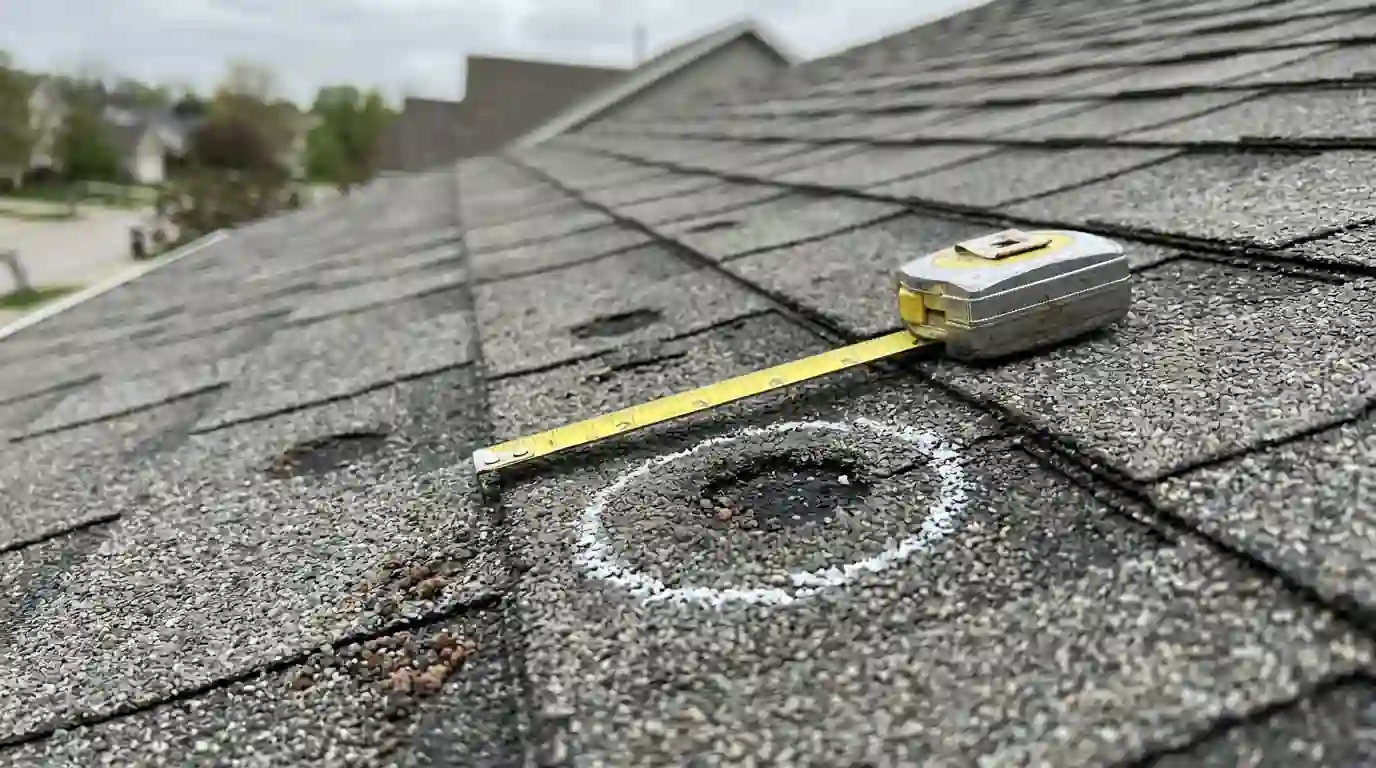
On the shingles themselves, hail damage looks like random, circular spots where granules are missing and the black asphalt shows through. A fresh hit often feels soft or spongy when pressed, like a bruise on an apple. The spots have no pattern, which separates them from the straight-line wear of foot traffic or the uniform aging of an old roof.
The more serious damage is underneath. A strong impact can fracture the fiberglass mat, which you can sometimes feel as a give or crease when you gently lift the shingle tab. That crack lets water reach the deck over time, even if the surface looks minor. Inspectors usually chalk a test square, often ten feet by ten feet, on each slope and count the hits inside it.
Damage that is not hail
Not every bare spot is a hailstone. Blisters on aging shingles pop open and leave small pits with sharp edges. Mechanical damage from foot traffic, tree branches or a dropped tool tends to sit in lines or in one area. Manufacturing defects show up as repeating marks across many shingles in the same position.
Telling these apart matters because insurers pay for storm damage, not for wear or defects. Clear photos with a tape measure or coin for scale, taken on several slopes, make the difference between a confident finding and a guess.
How to look without getting hurt
Please do not climb onto a roof after a storm. Wet shingles are slick, granule-covered surfaces roll under your feet, and storm-weakened decking can give way. Oklahoma City roofs with steeper pitches, common on newer two-story homes in the north and northwest suburbs, are dangerous even when dry.
Instead, use binoculars from the yard or a neighbor's driveway, or zoom in with your phone camera from a window that looks over a lower roof section. Look for missing shingles, lifted tabs and dents in the vents. Anything you see there is worth a professional look.
When to call and what happens next
If you found dented metals, heavy granule runoff or visible marks, have the roof inspected before you talk to your insurer. Sapphire answers 24/7, and our own crew will walk the roof, photograph the soft metals and shingles slope by slope, and explain what we found in plain terms.
If the damage is real, you decide whether to open a claim, and you stay in charge of it. We document what is up there and meet the adjuster on site if you want us to. If the roof is fine, you have photos showing its condition after the storm, which helps if a later storm hits the same house.