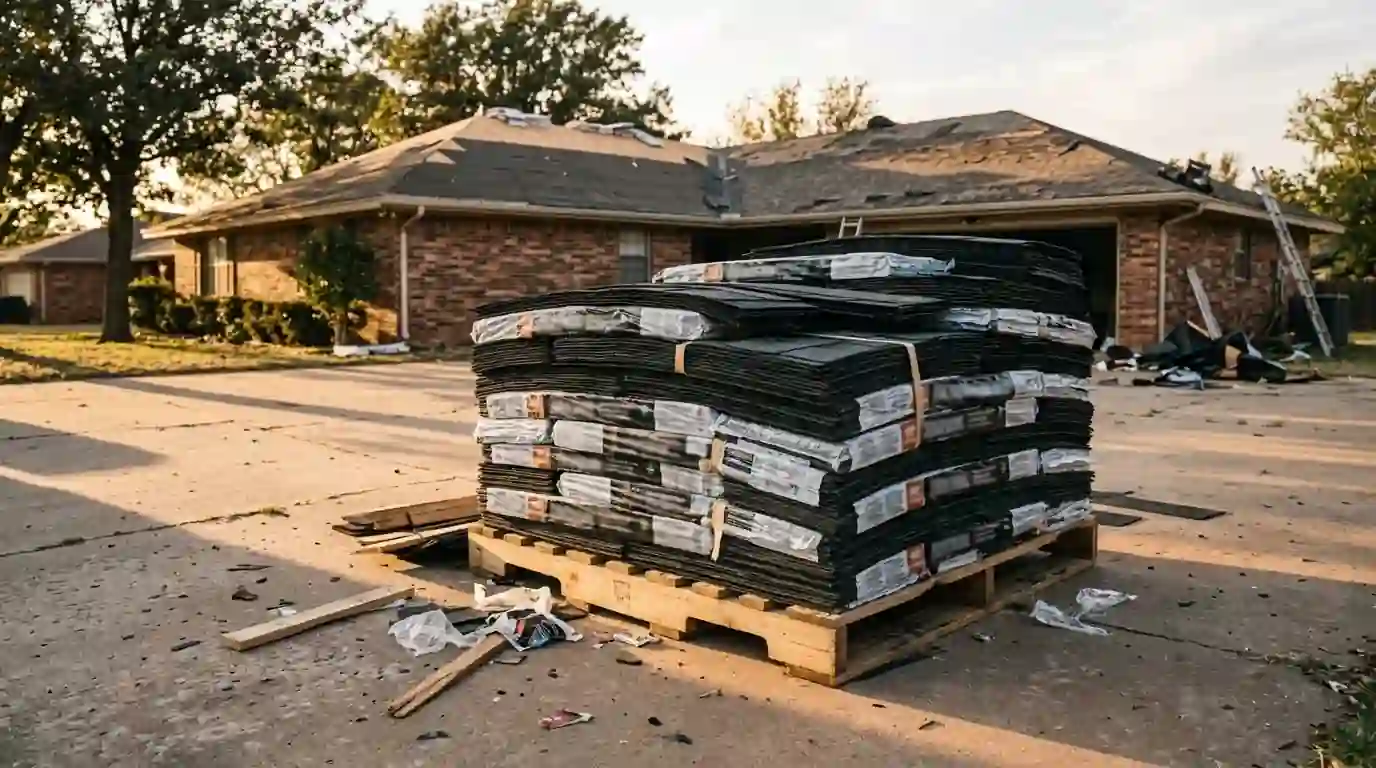
Class 4 is the top rating under the UL 2218 impact test, where a two-inch steel ball is dropped onto the shingle without cracking it. Many Oklahoma insurers give a premium credit for a Class 4 roof, but the amount and the paperwork vary by company. Call your agent before you choose shingles and ask exactly what they require.
Hail is the reason most Oklahoma City roofs get replaced, and insurance premiums in the state have climbed with every bad storm season. That has pushed a lot of homeowners to ask whether a Class 4 impact-resistant shingle is worth choosing when the old roof comes off.
This guide explains what the rating does and does not mean, what we could verify about how Oklahoma handles impact-resistant roofs, and the specific questions to put to your insurance agent. We keep it general on purpose: your policy and your carrier decide the real numbers.
What the Class 4 rating actually tests
The most common rating comes from UL 2218, a lab test that drops steel balls of increasing size onto a shingle installed on a test deck. Class 4 is the highest level: the shingle has to survive a two-inch steel ball dropped from about 20 feet, twice on the same spot, without cracking through. Lower classes use smaller balls.
Other roofing materials, such as metal panels and some synthetic products, are often tested to a similar standard called FM 4473. Either way, the label is printed on the shingle wrapper and in the manufacturer's literature, and that is the documentation your insurer will ask to see.
What Class 4 does not mean
Class 4 does not mean hail-proof. A steel ball in a lab is not the same as a jagged, three-inch hailstone driven by 60 mph wind, and very large hail can still bruise or crack an impact-resistant shingle. What the rating buys you is more resistance to the medium-size hail that Oklahoma City sees most springs.
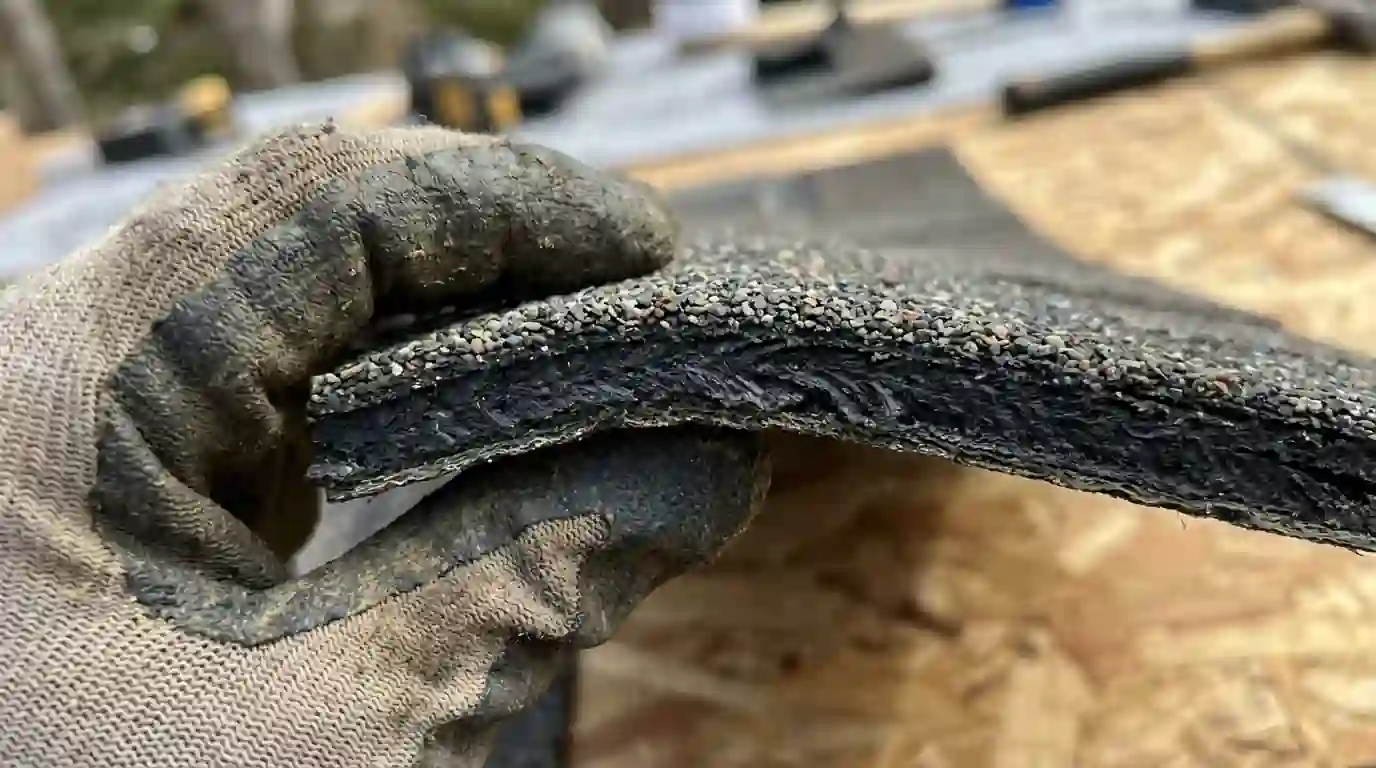
Most Class 4 asphalt shingles get their toughness from a rubberized (SBS-modified) asphalt or a reinforcing layer in the mat. They feel heavier and more flexible than a standard architectural shingle. Over many hot summers, that flexibility can fade, so a ten-year-old Class 4 roof will not perform exactly like a new one.
How Oklahoma insurers treat impact-resistant roofs
Many insurers writing homeowners policies in Oklahoma offer a premium credit for a roof that carries a Class 4 rating. The credit usually applies to the wind and hail portion of the premium, and the size of it varies widely by company and by policy. We could not find a state rule that sets one fixed credit for every carrier, so do not assume any number until your agent gives you one in writing.
Some carriers also look at roof age, roof material and how the roof was attached when they set your rate or your roof settlement terms. A new Class 4 roof can affect more than one line on your declarations page, which is another reason to talk to your agent before the job, not after.
The Strengthen Oklahoma Homes program and FORTIFIED roofs
In 2024 Oklahoma passed the Strengthen Oklahoma Homes Act, which set up a grant program run by the Oklahoma Insurance Department. It helps eligible homeowners upgrade to the IBHS FORTIFIED Roof standard with the hail supplement. That standard goes beyond shingles: it calls for stronger deck attachment, a sealed roof deck, secured roof edges, impact-resistant shingles and wind- and rain-resistant attic vents.
The department has said that homes with a FORTIFIED designation may qualify for lower wind premiums from insurers, while noting that the savings vary by company. Grant rounds, eligibility rules and approved contractors are set by the department, and the program has a set end date unless lawmakers renew it. Check the Oklahoma Insurance Department's current information before you plan around it.
Questions to ask your insurance agent
Get answers in writing, by name of the person you spoke with and the date. A quick call before you sign a roofing contract can save a lot of back-and-forth later.
- Do you offer a premium credit for a Class 4 roof, and on which part of the premium?
- What proof do you need: the shingle wrapper, an invoice listing the product, photos, or an inspection?
- Does the credit change if the roof is FORTIFIED rather than only Class 4?
- Does a new roof change how my roof claims would be settled (replacement cost or actual cash value)?
- Does my wind and hail deductible change with a Class 4 roof?
- If a storm damages the new roof, will you pay to replace it with Class 4 again?
Paperwork that proves your roof is Class 4
Insurers usually want proof tied to your address, not just a brochure. Keep the final invoice that names the exact shingle product line, photos of the shingle bundles on your driveway with the wrapper label visible, and photos taken during installation. Store copies with your policy, because you may need them at renewal or after a storm years from now.
If you sell the house, the same paperwork helps the buyer get the credit too. Sapphire photographs every phase of a replacement and gives you the product details, so you are not hunting for a wrapper in the trash a month later.
When a Class 4 roof makes the most sense
The case is strongest when you are already replacing the roof after a storm and plan to stay in the house for several years. The added material cost over a standard architectural shingle is smaller as a share of a full replacement, and the premium credit, if your carrier offers one, keeps paying year after year.
It makes less sense on a roof you are repairing in patches, because mixing impact-resistant and standard shingles usually does not qualify for a credit. It also matters less on a low-slope section where shingles are not the right product in the first place.
How Sapphire handles a Class 4 replacement
We start with an inspection and explain the condition of your decking, vents and flashing, because a Class 4 shingle is only as good as what it is nailed to. If you choose impact-resistant shingles, our crew installs them to the manufacturer's instructions, including the nailing pattern, starter course and ridge products the rating assumes.
We will not tell you what your insurer will pay or credit, because only they can. What we can do is give you clear product details and photos for your agent, and answer your call 24/7 if you have questions while you decide.