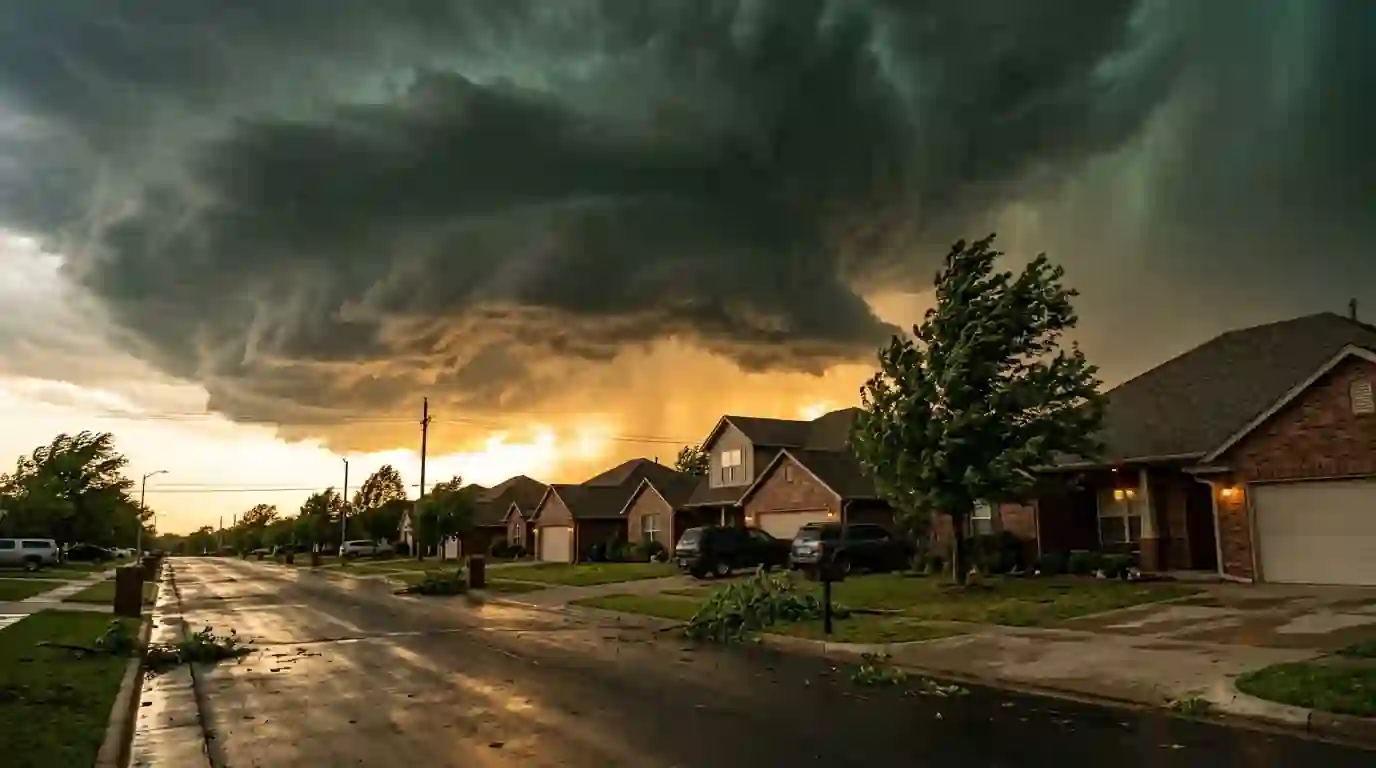
Before spring storms, photograph your roof, clear gutters, trim limbs over the house, fix loose shingles and flashing, and read your wind and hail deductible. During a storm, stay inside and away from windows. Afterward, walk the yard for dents and debris, cover any opening, take dated photos and have the roof inspected before calling your insurer.
In Oklahoma City, spring is when roofs earn their keep. Hail, straight-line wind and heavy rain stack up between roughly March and June, and many homes see more than one damaging storm in the same season. A little preparation in February or early March makes everything after a storm easier.
This checklist breaks the season into three parts: what to do before storms arrive, how to protect yourself and the house while one passes, and the first steps after the sky clears. None of it needs a ladder on the roof itself.
Before the season: photograph your roof as it is now
The single most useful thing you can do is take clear, dated photos of your roof while it is undamaged. Shoot every side of the house from the yard, zoom in on each slope, and include gutters, downspouts, vents you can see, the chimney and skylights. Add a short video walk around the house.
Save the files somewhere other than your phone, such as cloud storage or an email to yourself. If a storm hits, you can show what the roof looked like before. If you have had the roof inspected in the last year, keep that report with the photos.
Before the season: gutters, limbs and loose parts
Clogged gutters overflow during heavy spring rain and push water behind fascia boards and into soffits. Clean them out once the last oak and pecan leaves have dropped, flush downspouts with a hose, and make sure the outlets carry water away from the foundation, which matters on Oklahoma's shrink-swell red clay.
Walk the yard and look up. Limbs that hang over the roof, dead branches in big trees and old satellite dishes or loose antennas can all turn into projectiles in 60 mph gusts. A spring roof checkup can catch the small items the wind likes to grab first.
- Clean gutters and downspouts, and reattach loose hangers
- Trim limbs back several feet from the roofline
- Remove dead branches from trees near the house
- Secure or remove unused dishes, antennas and loose trim
- Replace cracked pipe boots and reseal loose flashing
- Fix any lifted or missing shingles before wind finds them
Before the season: read your policy
Pull out your homeowners policy and find the declarations page. Note your wind and hail deductible, which in Oklahoma is often a percentage of your dwelling coverage, and whether your roof is paid at replacement cost or actual cash value. Write the dollar amount of the deductible down.
Also check how long you have to report a loss and keep your insurer's claim phone number and policy number somewhere you can reach without power or internet. Knowing these numbers in advance helps you make calm decisions after a storm.
Before the season: a storm kit for the house
Keep a few supplies in the garage for roof emergencies. A heavy-duty tarp sized for a section of roof, a few two-by-fours, a box of plastic sheeting, buckets and old towels let you handle a leak inside while you wait for help.
Know where your main water shutoff and breaker panel are, especially if water comes through a ceiling light. A flashlight with fresh batteries and a charged power bank keep you able to take photos and call for help. If your home has a storm shelter or safe room, check that it is clear of stored boxes before the first tornado watch of the year.
During the storm: protect people first
When a warning is issued, follow local alerts and get to your safe place. The roof can wait. Do not go outside to move cars or check for hail once the storm starts, because large hail and flying debris injure people every season.
Stay away from windows and skylights while hail is falling. If water starts coming in, put buckets under drips and move electronics and furniture, but do not climb into the attic during lightning or go onto the roof for any reason.
During the storm: note what you see
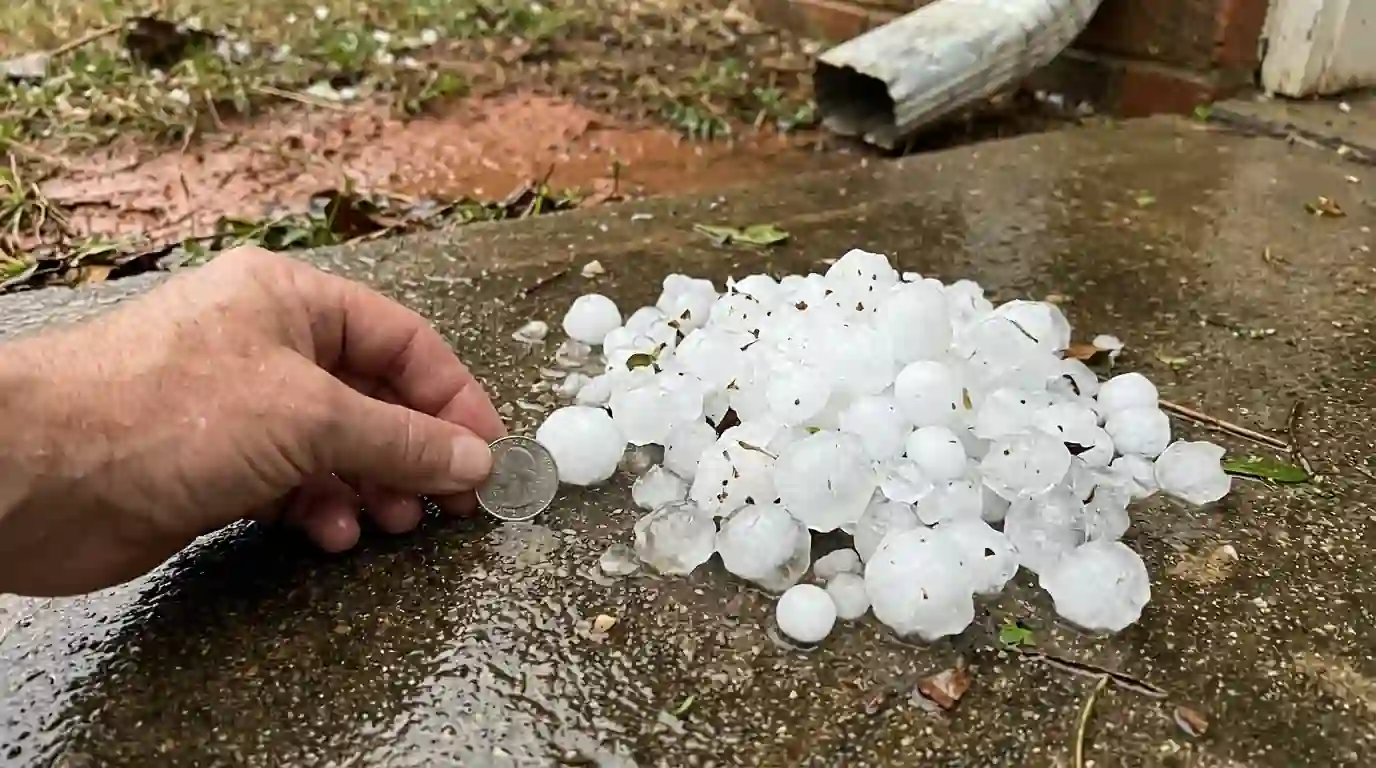
If you are safely inside, notice the time the hail started, how long it lasted and the size of the stones compared to coins or balls. A quick photo of hail on the patio next to a coin, taken through a door or window, is useful later.
Those notes help match your damage to the right storm date. When several storms hit in the same week, insurers and roofers need to know which one caused what.
Listen too. A sudden bang on the roof often means a limb, not hail, and a new drip sound in a wall or ceiling tells you where to check first once it is safe. Wind direction matters as well: if the rain and hail were blowing hard from the west, the west and north slopes are the ones to look at closely afterward.
After the storm: the first 48 hours
Once the storm is gone and it is safe, walk around the house in daylight. Look for missing shingles in the yard, dents in gutters and AC units, granules at downspouts, and branches on the roof. Inside, check ceilings, especially near exterior walls, and look in the attic for wet insulation or drips.
Photograph everything with the date showing, including the hail itself if any is still on the ground. If a limb punched through or shingles are gone and rain is coming, the opening needs a tarp right away. Prevent further damage, then document it.
- Walk the perimeter and photograph dents, debris and missing shingles
- Check ceilings, walls and the attic for water
- Cover any opening in the roof before more rain
- Keep receipts for tarps, buckets and other emergency supplies
- Have the roof inspected before deciding to file a claim
After the storm: getting the roof checked
Have a roofer you choose inspect the roof and show you photos before you call your insurer. That way you know whether there is real damage, how widespread it is, and whether it likely exceeds your deductible. Watch for crews that knock on your door minutes after the storm, and stick with a company with a local office.
Sapphire answers 24/7 during storm season and after. Our own crews tarp roofs, inspect slope by slope and explain what we find. We have offices in south Oklahoma City and Guthrie, so we are still here after the storm traffic leaves town.