After a hailstorm, choose a roofer with a real local office you can drive to, a written scope that lists materials and steps, and no demand for a large deposit before work starts. Ask for photos of the damage and of the finished job, get cleanup terms in writing, and never sign anything on the doorstep the day of the storm.
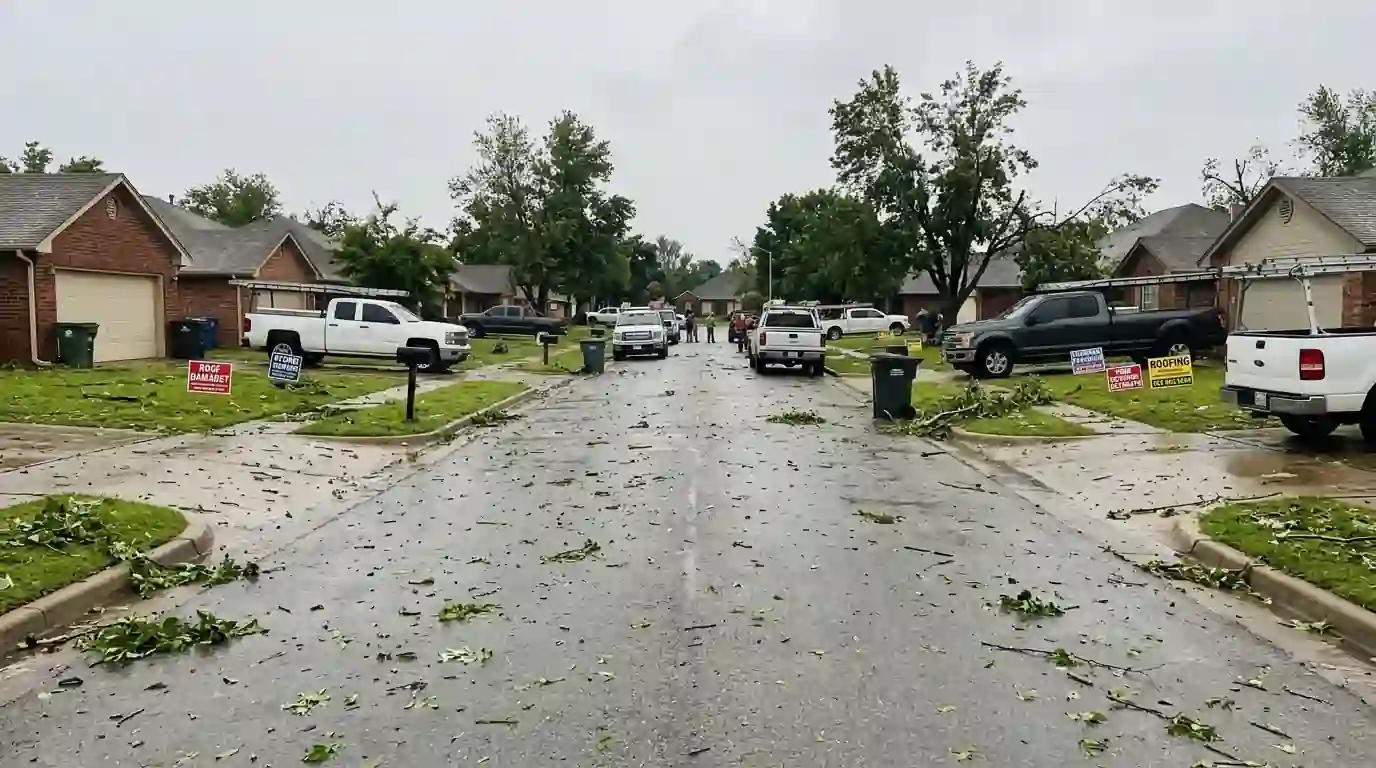
Within hours of a big hailstorm in Oklahoma City, neighborhoods fill with trucks, yard signs and people knocking on doors. Some are local companies doing honest work. Others follow storms from state to state, collect deposits and insurance checks, and are gone before the first leak shows up.
You do not need to be an expert to tell the difference. A handful of practical checks, most of which take a few minutes, will filter out most bad actors. This guide walks through them in the order you are likely to need them.
Slow down before you sign anything
The pressure after a storm is real. Someone says your roof is badly damaged, the neighbors are signing, and supplies will run out. Almost none of that requires a decision today. Hail damage usually does not get worse in a week, and a roof that is actually leaking can be tarped while you compare options.
Be especially careful with anything called an inspection agreement, authorization or contingency agreement handed to you on the porch. Read every page. Some of these bind you to that company for the whole job if your insurer approves the claim. You can always ask to take paperwork inside and read it later.
Check for a real local address
A roofer you can find later matters more than any sales pitch. Ask for the company's physical office address and look it up. A real office or shop in the metro, with a sign and a phone that is answered, is a good sign. A P.O. box, a hotel room, a temporary rental or an out-of-state address is not.
Look at the truck and yard sign too. Out-of-state plates or a brand-new company name that appeared after the storm are warning signs. Search the company name with Oklahoma City and look for a history of local work, not just a website built last month.
Ask for photos, not just a verdict
A trustworthy inspector shows you what they saw. Ask for photos of each slope, close-ups of damaged shingles with something for scale, and shots of dented vents and gutters. You should be able to tell which side of the house each photo came from.
Be wary of anyone who climbs up, comes down in five minutes and announces you need a new roof without showing you anything. Be even more wary of someone who wants to go up alone and then returns with damage that was not visible from the ground. Photos let you or a second roofer check the claim.
Ask what else they looked at. A thorough inspection covers the attic for stains or daylight, the gutters and downspouts, window screens, siding and the AC unit. Someone who only glanced at the front slope from a ladder has not earned the right to tell you what the whole roof needs.
Get a written scope of work
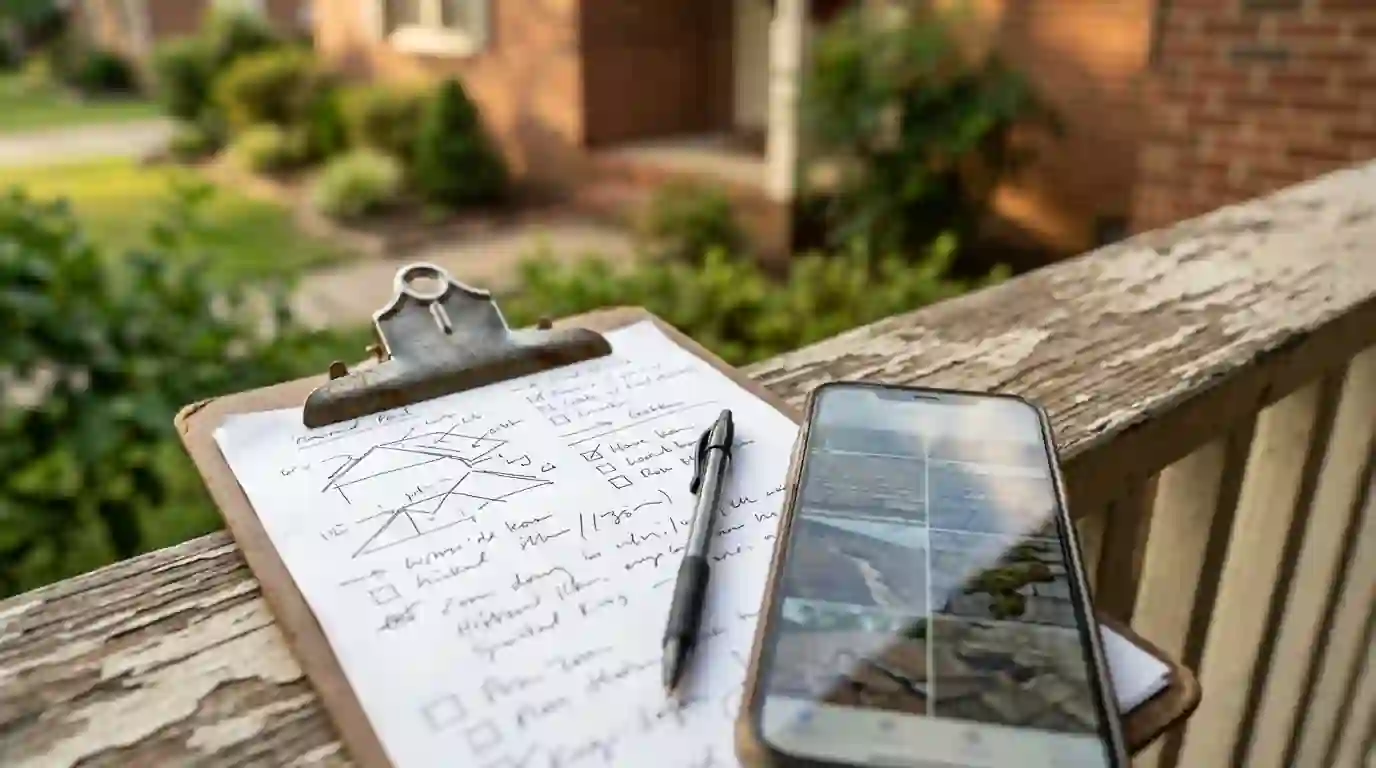
Before any work begins, get a written proposal that describes exactly what will be done. Vague lines like full roof replacement are not enough. The scope should name the products and explain how the job will run, so you can compare roofers on the same terms.
If you have an insurance claim, the scope should line up with your adjuster's estimate or explain the differences. You stay in charge of the claim; the roofer should never ask you to sign over your rights to deal with your insurer.
- Shingle or metal brand, product line and color
- Tear-off of how many layers, and disposal
- How decking repairs are handled and priced if rot is found
- Underlayment, ice and water shield, drip edge and starter
- Flashing, pipe boots and vents: new or reused
- Gutters, skylights and any other items included
- Start window, expected duration and cleanup terms
Keep deposits small and tied to progress
Large upfront payments are the most common way homeowners lose money after a storm. A roofer who wants most of the job paid before a single shingle arrives, or who wants you to sign over the whole insurance check at the start, is taking a risk you should not accept.
Reasonable terms tie payments to real progress: materials delivered, work completed, final walkthrough done. Pay by check or card to the company name, not to an individual, and keep receipts. Never pay in cash to someone you cannot find at a local office.
If your insurer sends a check with your mortgage company's name on it, the lender may hold the funds and release them in stages as work is inspected. A roofer who pushes you to endorse the whole check over to them on day one is skipping a step that exists to protect you.
Red flags with door-knockers
Not everyone who knocks is a scammer, but the same patterns show up after every Oklahoma hailstorm. Watch for these and walk away if you see more than one.
- Offers to cover, waive or absorb your deductible
- Pressure to sign today because of a deadline or limited materials
- Claims to be working with your insurance company or sent by it
- Asking you to sign a blank or partly filled document
- No local office address, or one that turns out to be a hotel
- Cash-only payment or payment to a personal account
Cleanup, nails and the finished job
Ask how the crew protects landscaping, AC units and windows, and how they clean up. A good crew tarps beds, uses magnets to sweep the yard, driveway and street for nails, and leaves gutters clear of shingle debris. Get that in the scope, because a flat tire or a nail in a child's foot is a lasting reminder of a careless job.
When the work is done, ask for photos of the finished roof and of anything hidden under it, such as replaced decking and new flashing. Keep the invoice and product details. If something goes wrong in a year, you will want to reach the same company at the same local address.
Where Sapphire stands
Sapphire has offices in south Oklahoma City and in downtown Guthrie, and you can drive to either one. Our own crews do the work. We photograph damage slope by slope, write out the scope before any work starts, and walk the finished job with you.
We do not pressure anyone to sign on the porch, and we do not offer to cover deductibles. Call us any time, 24/7, and take whatever time you need to compare.