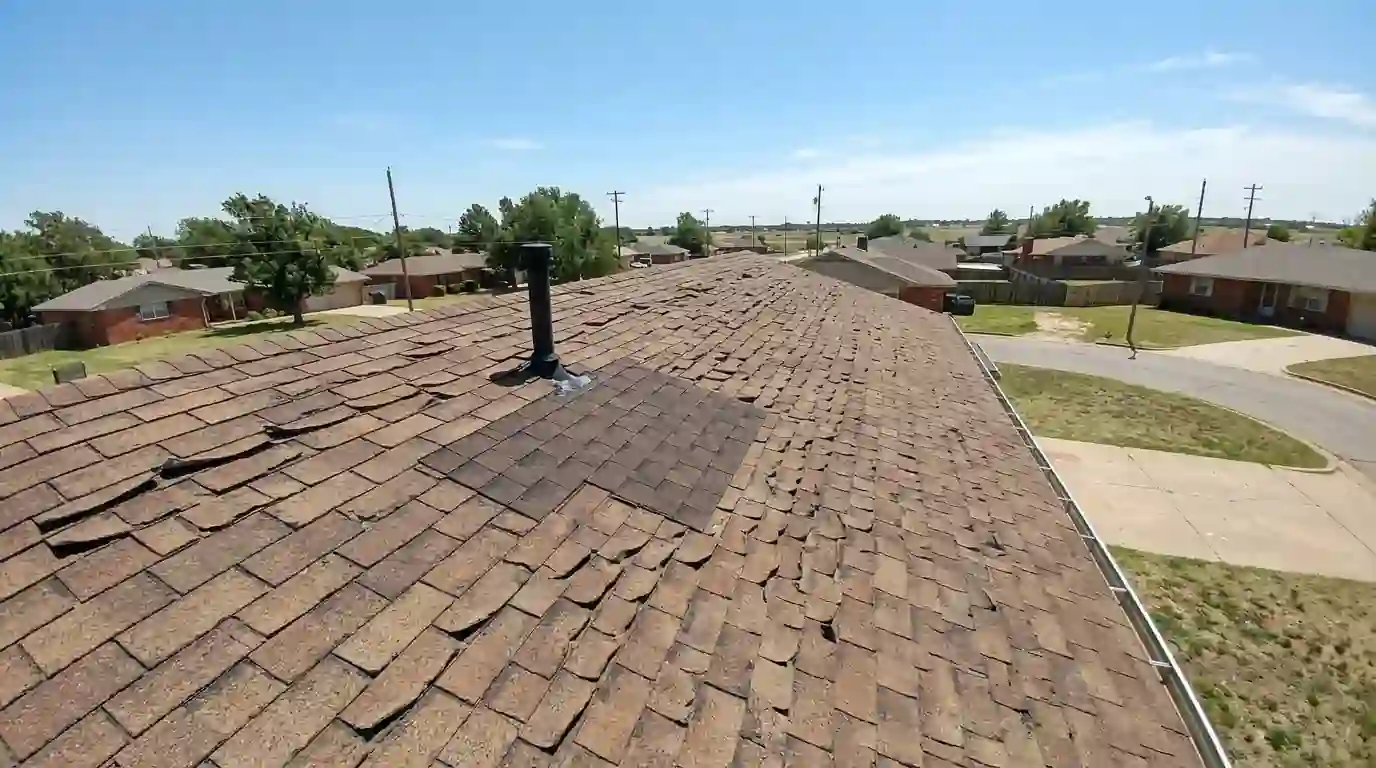
Repair makes sense when the roof is under about 15 years old, the damage sits in one area and the decking is sound. Replacement is the better call when damage is spread across several slopes, the shingles are near the end of their life, there are already two layers, or the deck is soft. Insurance and color matching can tip a close call.
Few roofing questions come up more often in Oklahoma City than this one. A storm passes, a few shingles land in the yard or a stain shows up on a bedroom ceiling, and you need to know whether a fix will hold or whether you are putting money into a roof that is on its way out.
There is no single rule, but there are six factors that settle most cases: the age of the roof, how far the damage spreads, how many layers are on the house, the condition of the decking, whether new shingles will match, and what your insurance covers. Here is how we weigh each one.
Start with the age of the roof
A standard architectural shingle in Oklahoma usually lasts somewhere in the high teens to low twenties in years, less on hot south and west slopes. Hail, heat and wind all shorten that. Three-tab shingles, still found on many older homes in Midwest City, Del City and south Oklahoma City, tend to wear out sooner.
If your roof is under about 12 to 15 years old and the shingles still bend without cracking, a repair is usually money well spent. Past 18 to 20 years, even a good repair is a patch on a roof that will need replacing soon, and you may pay twice.
If you do not know the roof's age, there are clues. Check closing papers or permits from when you bought the house, look for a date stamped on attic decking or a shingle wrapper left in the garage, and compare your roof to neighbors on the same street. Homes in a subdivision often got new roofs after the same storm, so the house next door may tell you when yours went on.
How far the damage spreads
Localized damage is a repair job: a lifted ridge cap, a section of shingles blown off one corner, a cracked pipe boot, a flashing failure at one chimney. A crew can fix those cleanly in a few hours with matching materials.
Spread-out damage is different. If hail bruised every slope, or wind lifted tabs across the whole windward side, repairing shingle by shingle breaks the seal on neighboring shingles and creates new weak spots. A rough guide is that once a quarter to a third of the roof needs work, replacement starts to make more sense.
Count the layers
Some older Oklahoma City homes have a second layer of shingles laid over the first. That adds weight, traps heat, and hides problems in the original roof and deck. Repairs on a two-layer roof are harder because new shingles do not seat well over the uneven surface below.
Building codes generally limit how many layers a roof can carry, and a two-layer roof normally has to be torn down to the deck when it is replaced. If you already have two layers and the top one is failing, plan for a full tear-off rather than another round of patches.
You can often spot a second layer from the ground. Look at the edge of the roof along the gutter: two stacked shingle edges, a thick and wavy look along the drip line, or a lumpy surface where old tabs show through the new ones all point to an overlay. The attic will not show it, so the edge is the place to look.
Check the decking underneath
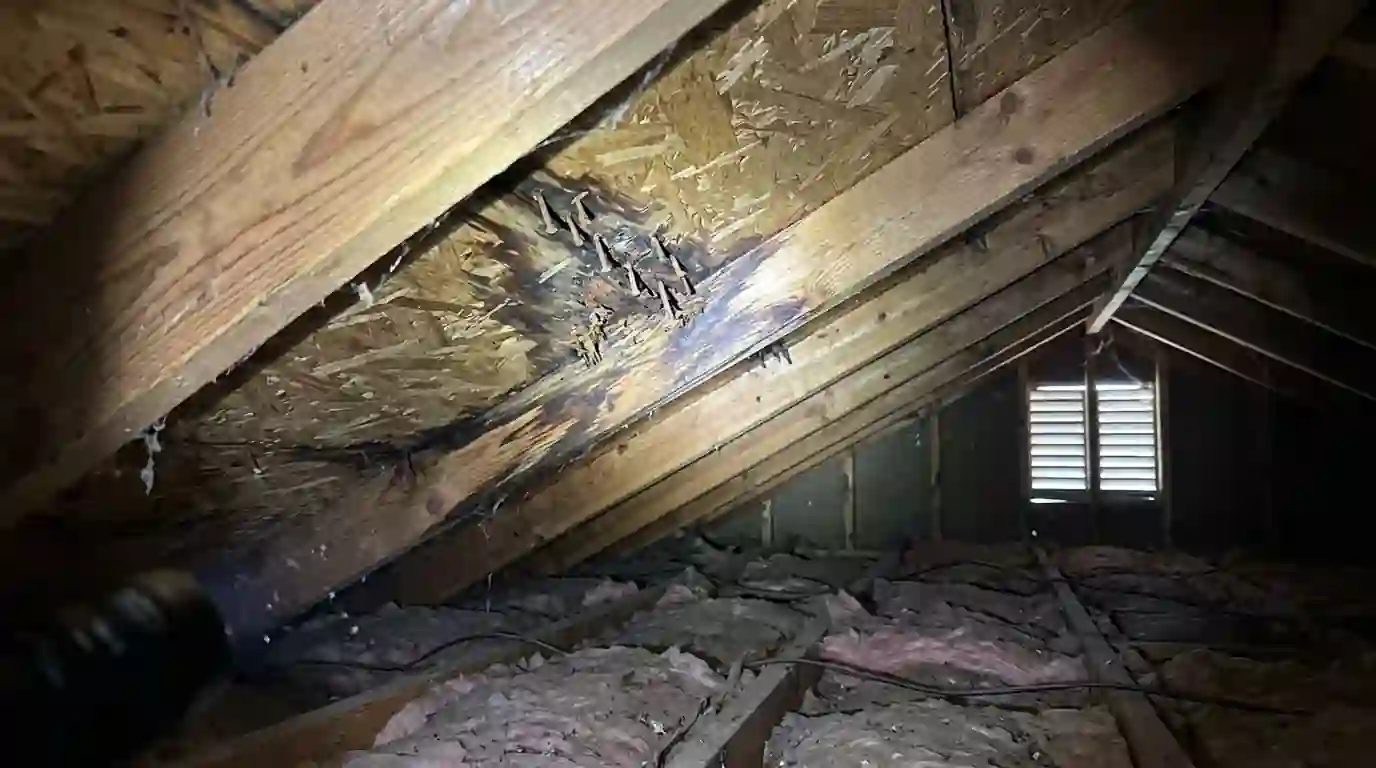
The deck is the plywood or OSB the shingles are nailed to, and on many pre-1970s homes it is spaced board sheathing. Soft spots you can feel when walking the roof, sagging between rafters, or dark stains on the underside from the attic point to rot or long-term leaks.
A repair can include replacing a few sheets of decking, but if rot shows up in several areas the problem is usually bigger than one leak. Poor attic ventilation, which is common in Oklahoma houses, cooks and moistens decking from below, and replacing the roof is the right time to fix both.
Will new shingles match?
Shingle colors and profiles change over the years, and older roofs fade under Oklahoma sun. A repair with today's version of your shingle can stand out as a patch of different color, especially on the front slope facing the street. Some lines are discontinued entirely.
Matching is mostly a looks question, but it matters to resale and to HOAs in neighborhoods like Gaillardia or Quail Creek that review exterior changes. Before a repair, ask to see the replacement shingle next to your roof in daylight. If it will not blend, that is a real factor in the decision.
- Same brand and line still made: repairs usually blend after a season
- Same line, new color blend: noticeable from the street on front slopes
- Line discontinued: closest match may differ in profile, not just color
- Rear or hidden slopes: matching matters far less
What insurance changes
If the damage came from a covered storm, your policy may pay for repair or replacement depending on how widespread the damage is and what your adjuster finds. Insurers look at the number of damaged shingles per slope and whether repairs are possible without harming surrounding shingles.
Your deductible matters too. Many Oklahoma policies carry a separate wind and hail deductible, often a percentage of your dwelling coverage. If a repair costs less than that deductible, the claim will not pay anything, and opening it can still show up on your claims history. Know your deductible before you decide whether to file.
Signs that point clearly to replacement
Some roofs make the decision for you. These are the conditions where we usually tell homeowners a repair would be short-lived.
- Curling, cupping or cracked shingles across most slopes
- Bald patches where granules are gone and the asphalt shows
- Leaks in more than one area of the house
- Daylight visible through the decking from the attic
- Two layers of shingles already in place
- Repeated repairs on the same roof in the last few years
How Sapphire makes the call with you
Our crew inspects the whole roof, not just the spot that leaked, and checks the attic for decking and ventilation problems. We photograph every slope and show you what we found, then lay out both options with the reasons for each. If a repair will hold, we say so.
Call Sapphire any time, day or night. We have offices in south Oklahoma City and Guthrie, and our own crews do the work, whichever way you decide.